


Three companies spanning vehicle manufacturing, AI software and ride-hailing are joining forces to bring driverless taxis to Europe, North America and beyond.
Three companies spanning vehicle manufacturing, AI software and ride-hailing are joining forces to bring driverless taxis to Europe, North America and beyond.
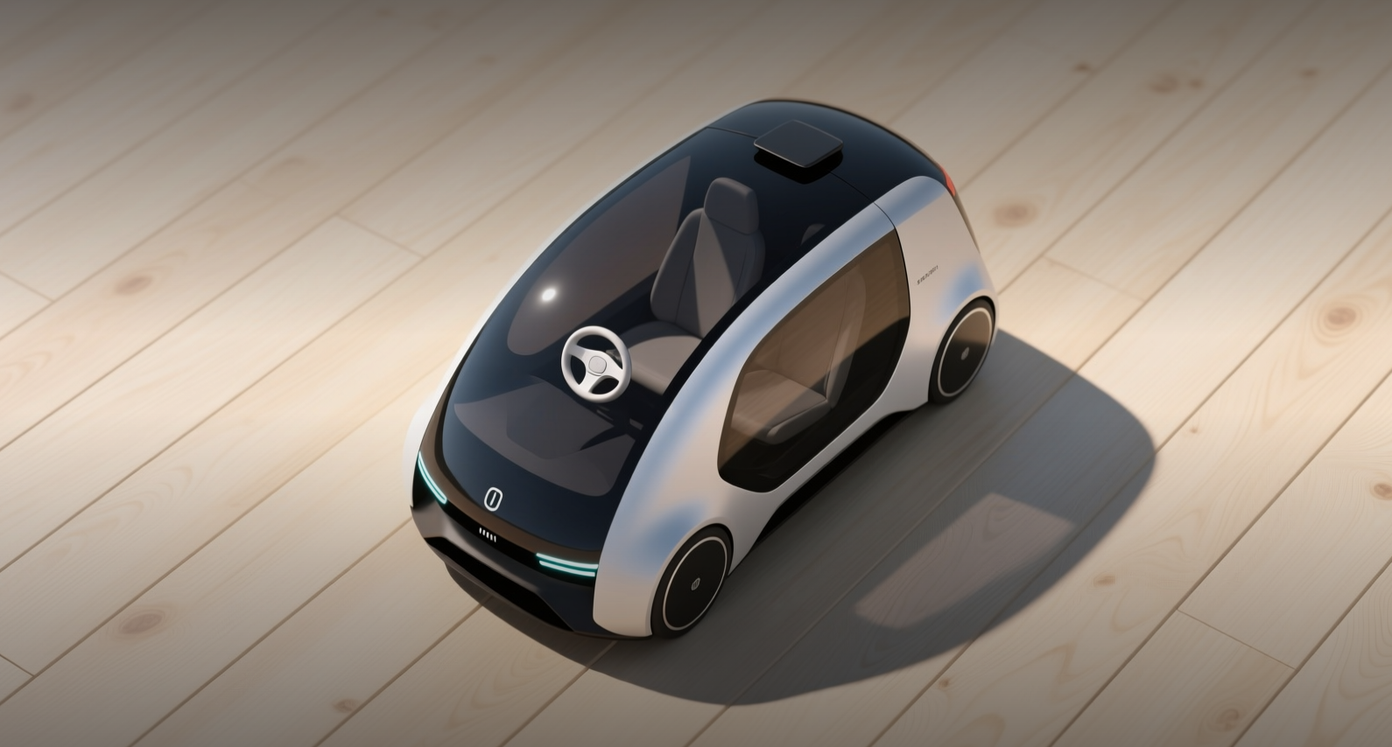
Three companies spanning vehicle manufacturing, AI software and ride-hailing are joining forces to bring driverless taxis to Europe, North America and beyond.
Stellantis, Wayve and Uber plan to deploy Level 4 driverless robotaxis globally, combining the automaker's L4-Ready Platforms with Wayve's AI driving technology and Uber's ride-hailing marketplace. The three-way partnership, announced June 17 at the MOVE 2026 conference in London, builds on existing bilateral agreements among the companies.
"This collaboration brings us closer to delivering a smarter, safer and more efficient mobility for our customers," Ned Curic, Chief Engineering and Technology Officer at Stellantis, said. "By combining our L4-Ready Platforms, designed from the ground up for safe and efficient driverless operation, with Wayve's adaptive AI and Uber's global network, we are accelerating the deployment of autonomous vehicles."
The non-binding memorandum of understanding covers vehicle integration, testing, validation and deployment across Europe, North America and additional markets. Stellantis will supply vehicles built on its L4-Ready Platform architecture, which includes embedded sensor suites and redundant safety systems engineered for high-utilization driverless operations. Wayve will provide its end-to-end AI driver, a mapless and hardware-agnostic system designed to adapt across regions without city-by-city mapping or re-engineering. Uber will deploy the vehicles on its global mobility network, connecting riders to autonomous trips through its app.
The partnership extends existing relationships among the three companies. Stellantis and Wayve recently signed an L2++ agreement for advanced driver-assistance features, while Wayve and Uber are already partnered to deploy autonomous rides in London, Tokyo and 10 other cities starting this year.
"This partnership brings together three leaders, each with our own strengths: Stellantis' vehicle expertise, Uber's global mobility platform and Wayve's embodied AI," Kaity Fischer, Wayve's Vice President of Commercial and Operations, said. "This is just another strong signal that the industry is converging around Wayve's technology as the way to scale AVs globally."
Stellantis's autonomous driving strategy relies on a five-partner ecosystem that includes Bolt, Nvidia, Pony.ai, Uber and Wayve — spanning AI development, software platforms, route planning and commercial robotaxi operation. The breadth of that group signals the automaker is building its autonomous strategy around integration rather than proprietary development, a platform-agnostic approach that contrasts with Tesla's fully vertical model and Waymo's closed system.
At MOVE 2026, Stellantis also demonstrated two technologies: a narrow-band 5G satellite connectivity system on the new Jeep Compass that extends vehicle coverage beyond terrestrial mobile networks, and the L4-Ready Platform robotaxi. Curic joined a panel discussion titled "The Great Uncoupling: Why the Future of Autonomous Driving is Software-Agnostic" alongside Wayve Chief Executive Alex Kendall.
"Successfully scaling autonomous mobility means bringing together the right vehicles, technology, and platform in a seamless way," Sarfraz Maredia, Global Head of Autonomous Mobility and Delivery at Uber, said. "Together with Stellantis and Wayve, we're excited to bring safe, reliable autonomy to more riders around the world."
The global robotaxi market represents a potential multibillion-dollar revenue opportunity for each partner. For Stellantis, the partnership offers a path to monetize its vehicle platforms beyond traditional sales. For Uber, autonomous vehicles could reduce its largest cost — driver payouts — which totaled more than $20 billion in 2025. For Wayve, the deal provides a commercial validation of its embodied AI approach against competitors such as Waymo, which operates its own fleet, and Mobileye, which targets a US robotaxi launch in 2027.
Each company retains the flexibility to pursue additional collaborations in the autonomous driving space, the MoU states.
This article is for informational purposes only and does not constitute investment advice.
