
Z.AI has completed a 1-gigawatt data center running entirely on Chinese-made chips, marking the largest known domestic-only AI training facility in China.
Z.AI has completed a 1-gigawatt data center running entirely on Chinese-made chips, marking the largest known domestic-only AI training facility in China.
Z.AI has completed a 1-gigawatt data center running entirely on Chinese-made chips, marking the largest known domestic-only AI training facility in China.
Z.AI's 1-gigawatt data center, built with only Chinese-made accelerators, represents the strongest signal yet that Beijing's AI labs can scale frontier model training without Nvidia's hardware, after US export controls cut the company off from advanced American chips.
"China's domestic AI chip ecosystem has reached a critical inflection point where it can support hyperscale training workloads," said a person familiar with the project, who asked not to be named discussing non-public information.
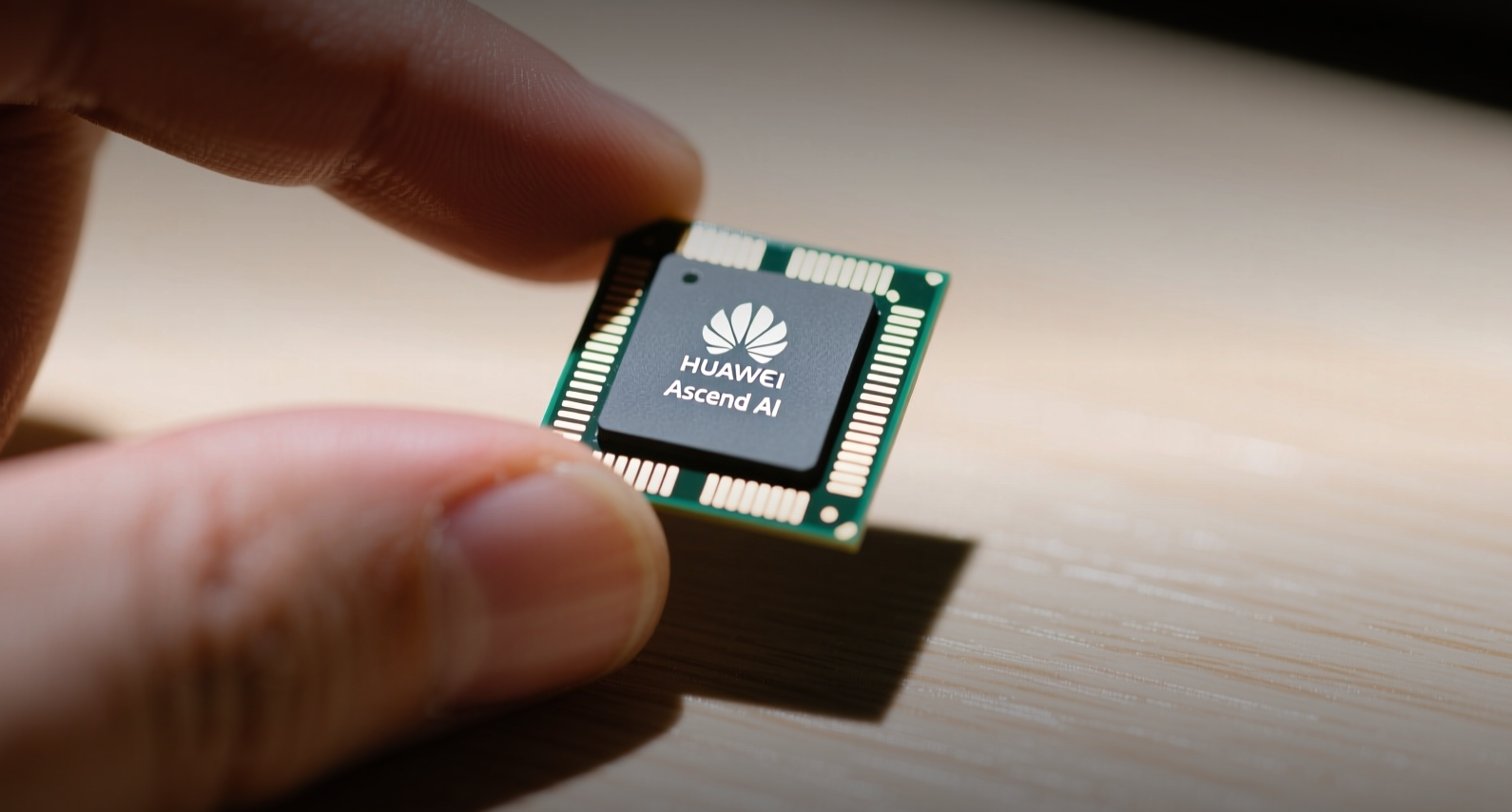
The facility, designed to draw enough electricity to power roughly 750,000 homes at peak, has begun partial operations to train Z.AI's GLM model family. The company now operates several computing clusters within the site, each containing more than 10,000 chips, the person said. Z.AI, formerly known as Zhipu, was added to the US Commerce Department's export blacklist in January 2025, cutting off legal access to Nvidia's most advanced processors. It has since trained recent GLM iterations on Huawei Technologies Co.'s Ascend accelerators using Huawei's MindSpore software framework, work the company described as the first major open model built on an entirely domestic stack.
The buildout lands as Chinese AI labs crowd the frontier. Beijing-based Moonshot AI's Kimi K3 model recently matched top US systems before running short of compute and pausing new sign-ups. Z.AI, fresh from a Hong Kong listing and on track for $1 billion in annual recurring revenue, is betting that owning the hardware stack — from chip to cluster to model — will give it a durable advantage. Its shares jumped nearly 12% on the day, giving the company a market valuation that reflects investor confidence in its domestic supply chain.
The Domestic Silicon Bet
The 1-gigawatt scale puts Z.AI's campus in the same weight class as the largest AI sites under construction in the US, where power availability has become the binding constraint on expansion. But the comparison flatters on paper more than in practice. China's leading domestic accelerators — Huawei's Ascend series, along with challengers such as Cambricon Technologies Corp. and Moore Threads — trail Nvidia's current Blackwell generation on performance per watt, according to published specifications. A gigawatt of Chinese silicon yields less usable training compute than an equivalent Nvidia-powered installation, meaning Z.AI must wire together more chips and burn more power to reach the same effective throughput.
The bottleneck, however, may shift from the processors themselves to the networking and memory subsystems that tie thousands of chips into a coherent training cluster — precisely where Chinese components lag furthest behind. That penalty is the real cost of going domestic.
Beijing has urged state-owned operators to fill new AI data centers with home-grown chips as part of a self-sufficiency drive that aims to source most of the country's AI compute domestically within a few years. China is preparing to spend roughly 2 trillion yuan ($295 billion) over five years on data center infrastructure across the country, with cloud giants Alibaba Group Holding Ltd. and China Telecom Corp. leading the buildout.
Investment Angle
For Nvidia, the development adds to a growing list of headwinds in its largest export market. The company's data center revenue has surged past $100 billion annually, but China accounted for a shrinking share as export controls tightened. Z.AI's domestic buildout, if replicated across other blacklisted labs, could accelerate the decoupling of Chinese AI infrastructure from American silicon — a shift that threatens to erode Nvidia's addressable market in the region. For investors in Z.AI (02513.HK), the data center validates the thesis that the company can scale without supply chain risk, though the real test will come when its next GLM model benchmarks against US frontier systems trained on Nvidia hardware.
This article is for informational purposes only and does not constitute investment advice.
