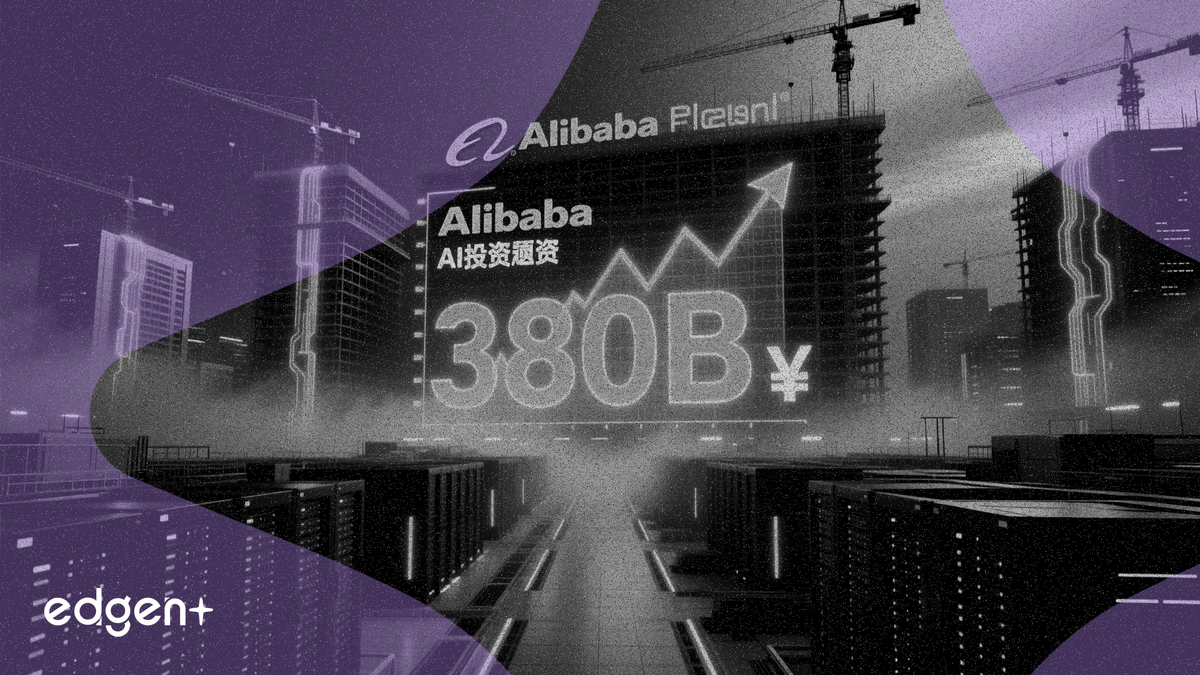
Alibaba está priorizando la cuota de mercado sobre los beneficios a corto plazo, señalando un ciclo masivo de gasto de capital para el sector de la nube de China mientras corre para cerrar la brecha de IA con sus rivales estadounidenses.
Alibaba Group Holding Ltd. planea invertir 380 mil millones de yuanes (56 mil millones de dólares) en centros de datos de IA durante los próximos tres años, un giro estratégico que llega cuando el CEO Eddie Wu Yongming confirma que los servidores de la compañía están casi completamente utilizados, señalando una expansión masiva para competir en la carrera global de la IA.
"Puedo decirles que hoy no hay una sola tarjeta en nuestro servicio que esté inactiva", dijo Wu durante la reciente llamada de resultados de la compañía, agregando que el retorno de la inversión para este gasto en infraestructura es "muy seguro".
El agresivo plan de gastos sigue a un trimestre en el que el beneficio de Alibaba se desplomó de 29,8 mil millones de yuanes a solo 86 millones de yuanes, un resultado directo de redirigir el flujo de caja hacia el desarrollo tecnológico. Los ingresos de la nube relacionados con la IA de la compañía han crecido a tres dígitos durante 11 trimestres consecutivos, mostrando una fuerte demanda a pesar de los altos costos.
Esta fuerte inversión podría consolidar la posición de Alibaba en el competitivo mercado de la nube de IA, pero puede presionar el flujo de caja libre a corto plazo, una estrategia deliberada que la compañía dice que es necesaria para capturar la oportunidad. La medida también presiona a rivales como Tencent y probablemente impulsará las carteras de pedidos tanto de fabricantes de chips nacionales como Huawei como de operadores de centros de datos como GDS Holdings.
Tencent y Alibaba divergen en el ritmo de gasto
Mientras Alibaba apuesta por un gasto agresivo, su rival Tencent Holdings está adoptando un enfoque más moderado. Tencent aumentó su gasto de capital en un 63% en el primer trimestre hasta los 31,9 mil millones de yuanes y ha señalado un "aumento sustancial" para 2026. Los analistas de Goldman Sachs proyectan que los gastos de capital de Tencent podrían alcanzar los 165 mil millones de yuanes para 2027, más del doble de su gasto de 2025.
Esta divergencia en la estrategia resalta la inmensa presión bajo la que se encuentran los gigantes tecnológicos chinos. Deben navegar en un mercado nacional donde la demanda de servicios de IA está explotando, mientras lidian simultáneamente con el acceso restringido a los chips más avanzados de fabricantes estadounidenses como Nvidia.
Las reglas de chips de EE. UU. complican las ambiciones de IA de China
El trasfondo de este gasto es la rivalidad tecnológica en curso entre EE. UU. y China. Aunque Washington otorgó recientemente licencias para que empresas como Alibaba y Tencent compren un número limitado de los potentes chips de IA H200 de Nvidia, no se han confirmado entregas. La política requiere que los chips no se utilicen para fines militares y que pasen por puertos estadounidenses.
Esto ha forzado a las firmas chinas a un dilema estratégico: esperar por hardware estadounidense restringido de alto rendimiento o invertir más fuertemente en alternativas nacionales de empresas como Huawei. Alibaba también está desarrollando su propio chip de IA, el Zhenwu, a través de su subsidiaria T-Head, con más de 100.000 unidades ya desplegadas en su plataforma de nube. La infusión de capital señala que el impulso de Pekín por la autosuficiencia tecnológica es ahora una parte central de la estrategia corporativa para sus campeones nacionales.
Este artículo es solo para fines informativos y no constituye asesoramiento de inversión.