
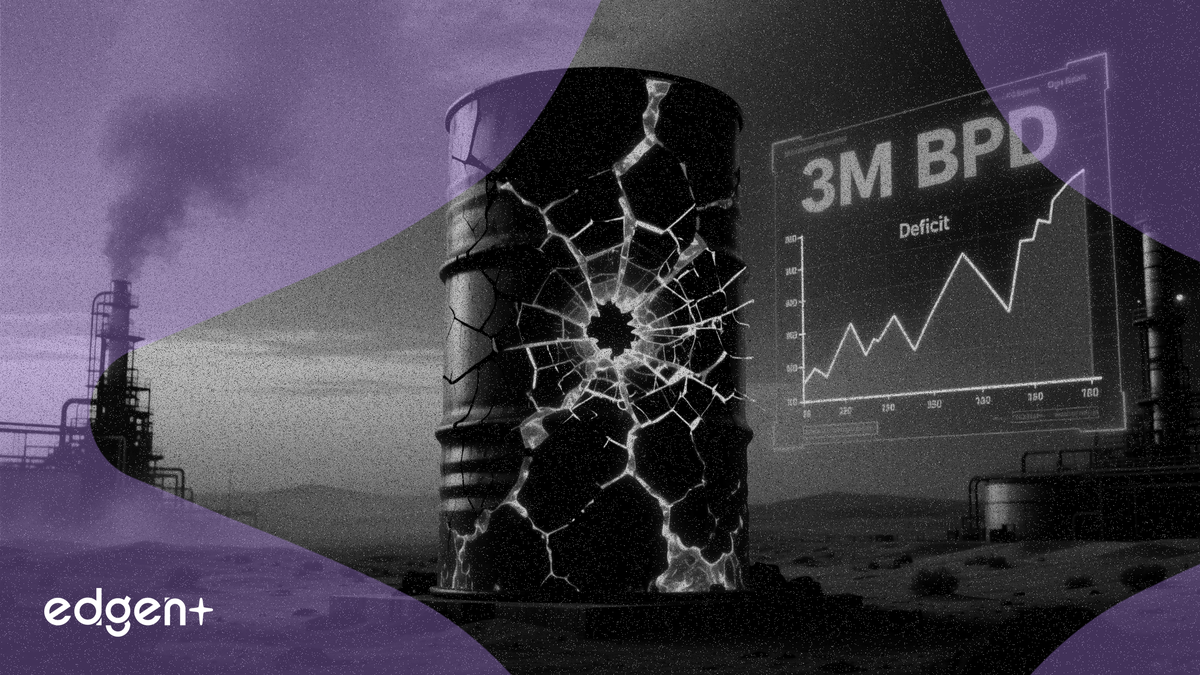
Years of underinvestment in oil refining left global markets with 3 million barrels per day less capacity just as the worst supply crisis in decades struck the Middle East.
Years of underinvestment in oil refining left global markets with 3 million barrels per day less capacity just as the worst supply crisis in decades struck the Middle East.
Years of underinvestment in oil refining left global markets with 3 million barrels per day less capacity just as the worst supply crisis in decades struck the Middle East.
Saudi Aramco warned that chronic underinvestment in oil refining removed 3 million barrels per day of capacity between 2020 and 2023, compounding a supply crisis that has already wiped 14 million bpd from global markets.
"Now we realise if you had those refineries you may have definitely mitigated the impacts of the crisis today," Musaab Al Mulla, vice president of market analysis and sustainability at Saudi Aramco, said Tuesday at the S&P Global Energy Middle East Petroleum and Gas Conference in London.
The Strait of Hormuz closure, triggered by the Iran war and a subsequent US naval blockade, has removed approximately 14 million bpd of oil supply from Middle East producers, Al Mulla said. Brent crude traded above US$100 per barrel during the first quarter, a 40 percent increase from pre-conflict levels in February, as cumulative supply losses reached 1 billion barrels, Kpler data shows.
The capacity gap means even a swift resolution to the Strait crisis would leave markets vulnerable for months. Amin Nasser, Aramco's chief executive, said in the company's earnings call that if trade flows resume immediately, "it will take a few months for the oil market to rebalance," but if disruption persists beyond a few more weeks, normalisation may not come until 2027.
Refining Capacity Gap Exposed
The 3 million bpd of refining closures during and after the pandemic created what Al Mulla called "a shock" to the system. OPEC has estimated global oil demand will grow by 1.5 million bpd in 2027, a pace that would widen the gap between processing capacity and consumption.
Aramco's own infrastructure illustrates the bottleneck. The company's East-West Pipeline, which bypasses the Strait of Hormuz by routing crude from eastern production facilities to the Red Sea port of Yanbu, reached maximum capacity of 7 million bpd during the first quarter. Aramco produced 11.1 million bpd in the fourth quarter of 2025, meaning the pipeline can handle only about 63 percent of normal output at full utilisation. The company operates refining capacity of 4.1 million bpd, making it the fourth-largest refiner globally, but that does not absorb the surplus crude trapped by the shipping disruption.
Supply Rebound Faces Infrastructure Limits
Middle Eastern producers are expected to ramp up output sharply once the Strait reopens. BMI, a unit of Fitch Solutions, projects Iraq's production will jump 34.1 percent in 2027, with the UAE rising 33 percent, Kuwait 26.3 percent, Bahrain 15.7 percent and Saudi Arabia 14.5 percent. OPEC's oil production has collapsed to 26-year lows, with more than 10 million bpd of crude wiped off global daily volumes.
But not all wells can be reactivated quickly, analysts note, and the refining bottleneck will persist regardless of how fast crude flows again. The 3 million bpd of lost refining capacity represents processing capability that cannot be rebuilt overnight.
Aramco posted net income of US$32.5 billion for the quarter ending March 31, a 25 percent increase from the same period in 2025, as higher prices offset lower export volumes. The company's financial results show that while the supply disruption has been costly for consumers, it has been lucrative for producers with alternative export routes.
The crisis has demonstrated continued dependence on conventional oil supply, Nasser said. "Recent events have clearly demonstrated the vital contribution of oil and gas to energy security and the global economy, and are a stark reminder that reliable energy supply is critical."
This article is for informational purposes only and does not constitute investment advice.
