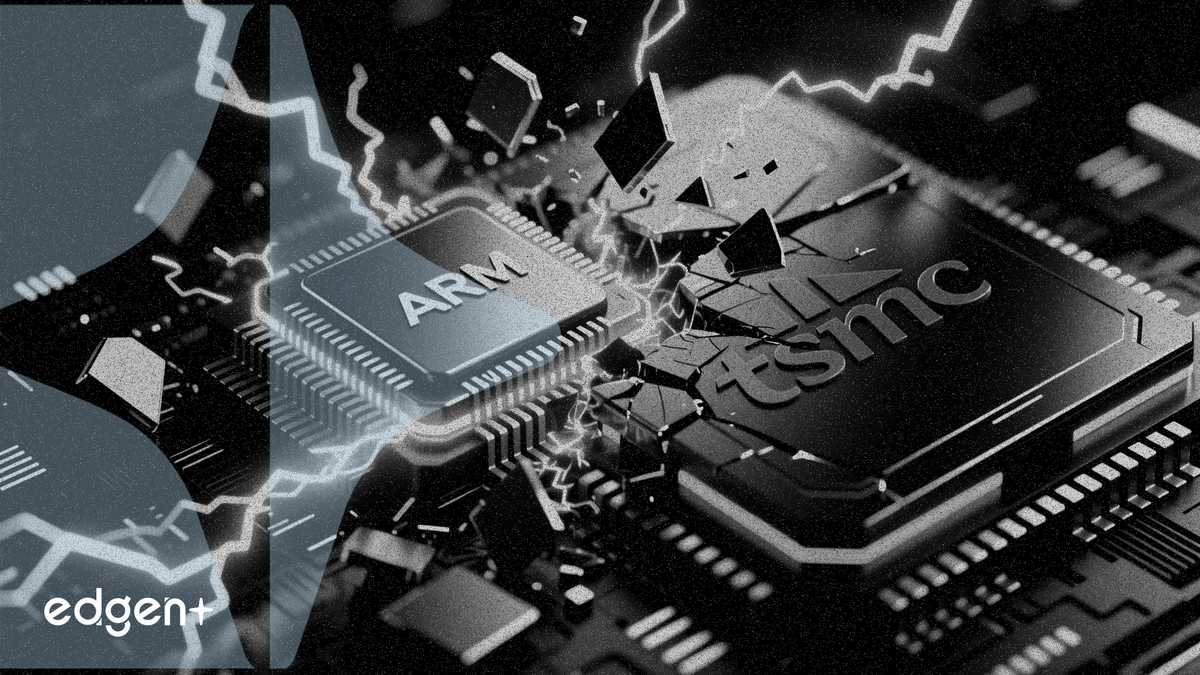
In a strategic pivot that could reshape the semiconductor industry, Arm Holdings is moving beyond its lucrative design-licensing model to manufacture its own chips.
Arm Holdings, the British firm whose architecture is central to 99 percent of all smartphones, announced it will develop and build its own data center central processing units (CPUs), a direct challenge to established foundries like TSMC and giants like Intel and Advanced Micro Devices. The company sees a path to capturing 15 percent of a data center market it projects will be worth $100 billion in the coming years.
The move represents a fundamental shift for the Softbank-backed company, which has historically operated as a high-margin intellectual property (IP) house, providing the blueprints for other companies to build chips. Management has a line of sight into more than $2 billion in CPU demand across its 2027 and 2028 fiscal years, signaling a clear rationale for the strategic change, though it is maintaining a conservative $1 billion revenue forecast for that period due to expected supply constraints.
This new venture comes as Arm’s core business continues to show strong performance. The company reported fiscal fourth-quarter revenue climbed 20 percent to $1.49 billion, with both license and royalty revenues growing robustly. Royalty revenue from data centers doubled, driven by near-total market share in data processing units (DPUs) and SmartNICs, while the adoption of its newer Armv9 architecture commanded higher royalty rates in the smartphone segment.
At stake is Arm’s ability to transition from a low-capex design house to a full-stack manufacturer, a move fraught with financial and operational risk. The company is targeting $15 billion in CPU revenue by 2031, but will have to navigate complex supply chains and secure foundry capacity, areas where it has little historical experience. The pivot also introduces a potential conflict of interest, as it will now compete with some of its largest IP-licensing customers, such as Amazon and Alphabet, who have developed their own Arm-based chips.
A New Battlefield: The $100 Billion Data Center Prize
Arm’s decision is a clear response to the explosive growth in data center demand, fueled by the rise of artificial intelligence. While its architecture is already present in chips like Amazon's Graviton and Alphabet's Axion, Arm now wants to capture the full value of the chip, not just a licensing fee. The company believes it can achieve a significant foothold, forecasting it could eventually take a 15 percent share of the burgeoning market.
This ambition is already taking physical form. The company is expanding its presence in Southwest Austin, building out new lab space to support its growing research and development efforts in the U.S. This expansion points to a tangible commitment to the new strategy, moving from blueprints to physical infrastructure.
From Blueprints to Bricks: A High-Risk Pivot
The transition from a fabless designer to a manufacturer is one of the most difficult maneuvers in the semiconductor industry. It requires immense capital expenditure and introduces entirely new operational challenges. As noted in its recent guidance, Arm anticipates supply constraints will be a major hurdle, with significant CPU revenue not expected to materialize until the fourth quarter of its 2027 fiscal year.
Furthermore, the move invites scrutiny from regulators. According to reports, Arm is already set to face a U.S. antitrust probe over its technology licensing, and entering the manufacturing space could add another layer of complexity to its competitive and regulatory landscape. The biggest challenge, however, may be managing the dual roles of supplier and competitor to the very companies that built their success on Arm's designs.
For investors, the move presents a difficult calculus. Shares in Arm have nearly doubled this year on excitement over its AI-related prospects, pushing its forward price-to-earnings ratio to a steep 73, based on fiscal 2027 consensus. While the potential reward of successfully capturing a piece of the data center manufacturing pie is enormous, the path is filled with significant supply chain, execution, and competitive risks.
This article is for informational purposes only and does not constitute investment advice.