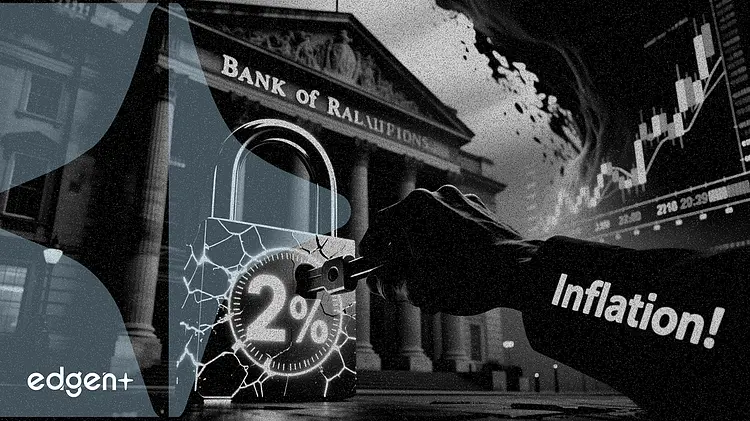
Le gouverneur de la Banque d'Angleterre, Andrew Bailey, a déclaré que la banque centrale peut tolérer temporairement une inflation supérieure à son objectif de 2 %, réduisant fortement la probabilité d'une hausse des taux en juin.
Le gouverneur de la Banque d'Angleterre, Andrew Bailey, a déclaré que la banque centrale peut tolérer temporairement une inflation supérieure à son objectif de 2 % en raison de la faiblesse de la demande intérieure, retirant ainsi effectivement une hausse des taux en juin de la table et faisant baisser les rendements des gilt. Les propos tenus vendredi à la conférence économique de Reykjavik représentent le langage le plus dovish de Bailey depuis que le conflit en Iran a fermé la voie maritime du détroit d'Ormuz fin février.
« Dans un contexte de faible activité réelle et d'incertitude quant à l'ampleur et à la persistance du choc, tolérer une inflation au-dessus de l'objectif pendant un certain temps pour soutenir l'économie réelle est la manière appropriée de gérer cet arbitrage », a déclaré Bailey. Il a averti que cette tolérance diminuerait si des effets de second tour — où les hausses des prix de l'énergie alimentent les négociations salariales et poussent les prix à la hausse — commençaient à se matérialiser.
Ce changement de ton a déjà resserré les conditions financières en supprimant les trois baisses d'un quart de point que les marchés intégraient pour 2026 avant le déclenchement du conflit iranien. Les swaps de taux n'impliquent désormais qu'une seule hausse de 25 points de base d'ici la fin de l'année, contre trois hausses attendues fin avril. Le rendement du gilt à 2 ans a chuté de 8 points de base suite à ces déclarations, tandis que la paire GBP/USD a reculé de 0,3 % à 1,3447, testant sa moyenne mobile exponentielle à 200 jours à 1,34. Le pétrole brut Brent, qui avait culminé au-dessus de 138 dollars le baril en avril au plus fort du choc énergétique, est depuis retombé à environ 99 dollars à mesure qu'un cadre de cessez-le-feu américano-iranien prenait forme.
Ce pivot dovish place la BoE en porte-à-faux avec la Réserve fédérale sous la direction du nouveau président Kevin Warsh, où les marchés intègrent une probabilité de 80 % d'une hausse des taux en décembre. Avec le taux directeur britannique à 3,75 % et le taux des fonds fédéraux entre 3,50 % et 3,75 %, toute divergence dans les trajectoires politiques élargirait l'écart de taux en défaveur de la livre sterling, poussant potentiellement la paire GBP/USD vers le niveau de support de 1,33. La dernière fois que la BoE et la Fed ont divergé sur leur orientation politique, c'était au second semestre 2024, lorsque la BoE avait abaissé ses taux de 5,25 % tandis que la Fed les maintenait, faisant passer la livre sterling de 1,30 à 1,25 en trois mois.
Inflation et arbitrage sur le marché du travail
L'inflation des prix à la consommation au Royaume-Uni est passée à 3,3 % en mars contre 3 % en février, bien au-dessus de l'objectif de 2 % de la BoE, avant de s'atténuer à 2,8 % en avril grâce à une mesure gouvernementale ponctuelle. L'inflation des services, la composante la plus rigide et la plus résistante au resserrement monétaire, s'élevait à 4,5 % en mars. Bailey a fait valoir que la faiblesse persistante du marché du travail — le chômage est monté à 5 % tandis que les offres d'emploi ont atteint un plus bas de cinq ans — réduit le risque que la hausse des coûts de l'énergie s'incruste dans les revendications salariales.
« La faiblesse persistante de l'activité et du marché du travail au Royaume-Uni devrait réduire l'intensité des effets de second tour liés à la hausse des prix de l'énergie », a déclaré Bailey, tout en reconnaissant que ces effets seraient d'autant plus forts que la hausse des prix de l'énergie serait persistante. Le Fonds monétaire international a récemment revu à la baisse ses prévisions de croissance pour le Royaume-Uni en 2026, les ramenant de 1,2 % à 0,7 %, soit la plus forte révision pour un seul pays dans ses perspectives actualisées.
La décision du 18 juin et la voie à suivre
La prochaine réunion du Comité de politique monétaire le 18 juin sera le premier test du nouveau cadre de Bailey. Les marchés attribuent désormais une faible probabilité à une hausse des taux, un revirement brutal par rapport à avril où trois hausses consécutives étaient pleinement anticipées. Le MPC maintient le taux directeur à 3,75 % depuis décembre 2025, date à laquelle il avait procédé à la dernière baisse du cycle d'assouplissement entamé en août 2024 depuis un sommet de 5,25 %.
Bailey a noté que la BoE a déjà resserré sa politique « considérablement » par rapport aux attentes du marché en supprimant la perspective de baisses de taux, et que cela a contraint les prêteurs à renégocier les prêts hypothécaires et les prêts aux entreprises. Les taux clés indiqués sur les prêts hypothécaires ont augmenté depuis le début du conflit, a-t-il déclaré, même si le taux directeur est resté inchangé. La question pour la réunion de juin est de savoir si les faucons du MPC — qui ont averti que des anticipations de croissance des salaires comprises entre 3,5 % et 4 % sont incompatibles avec l'objectif d'inflation de 2 % — accepteront le cadre de tolérance de Bailey ou pousseront à une hausse préventive pour contenir les effets de second tour avant qu'ils ne s'installent.
Cet article est fourni à titre informatif uniquement et ne constitue pas un conseil en investissement.