
Canada's retaliation targets roughly 700 US products, from steel and motorcycles to processed cheese, in the sharpest escalation of the trade dispute since talks collapsed.
Canada's retaliation targets roughly 700 US products, from steel and motorcycles to processed cheese, in the sharpest escalation of the trade dispute since talks collapsed.
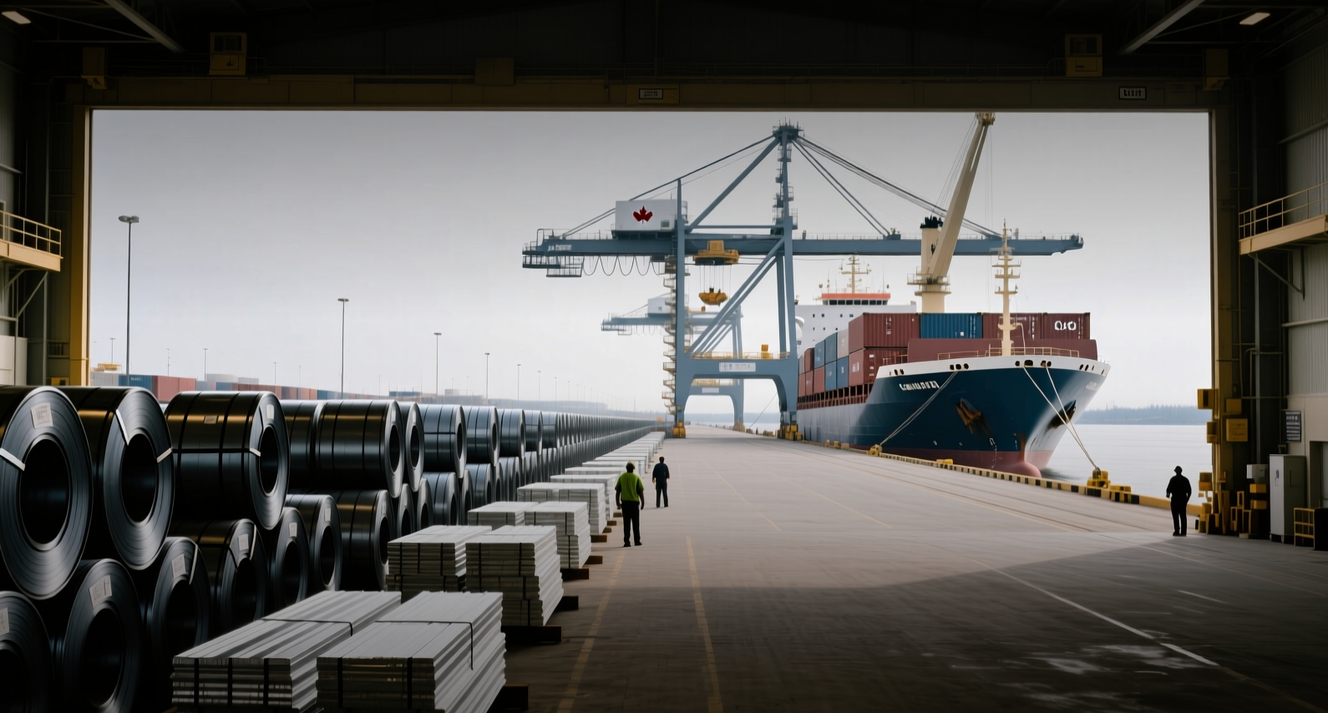
Canada will impose tariffs of 15% to 50% on about $20 billion of US goods from Sept. 8, doubling duties on American steel and aluminum as the collapse of trade talks deepens the rift between the historic allies.
"An intensified trade war will hurt the country more than the US," said Karl Schamotta, chief market strategist at global-payments firm Corpay. "Countertariffs will not help. They raise the cost of living while doing little to shift trade balances."
The retaliatory duties target roughly 700 products — steel, aluminum, motorcycles, washers, dryers, chain saws, processed cheese, clams and frozen octopus — equal to about 7 percent of total US imports. US steel and aluminum, already subject to a 25 percent tariff, will now face 50 percent. The measures respond to President Donald Trump's new 50 percent tariff on about $20 billion of Canadian imports that took effect Saturday, covering roughly 5 percent of what Canada ships to the US annually.
Ottawa also unveiled C$7.5 billion (US$5.4 billion) in loans and income supplements for affected firms and workers. The escalation carries outsized risk for Canada, which sends about 70 percent of its goods exports to the US, and casts doubt on the future of the US-Mexico-Canada Agreement that governs trade across North America.
Trump said Monday he would double tariffs on Canadian automobiles to 50 percent from 25 percent on non-US content next year, drawing a warning from Ontario Premier Doug Ford that Canada could respond with a surcharge on electricity exports to the US. Ontario previously imposed a temporary 25 percent surcharge on power supplied to three US states during an earlier phase of the dispute. Trump then threatened Ford with "far worse" consequences and renewed his calls for Canada to become the 51st US state.
Prime Minister Mark Carney said it became evident during negotiations that Washington was intent on destroying Canada's auto, steel and aluminum industries. He said Canada could restart talks only if the US arrives "with the right attitude toward our industries," rejecting what he called an approach treating Canada "as a subsidiary of the United States."
The dispute carries heavy economic consequences because of Canada's reliance on the US market. Canadian exports to the US account for about 70 percent of the country's total, while Canada ranks as the US's second-largest goods trading partner this year after Mexico. The countries sold each other $880 billion in goods and services last year.
Oxford Economics estimates the new US measures will lift the effective tariff rate on Canadian exports to the US to 6.9 percent from 5.1 percent, with plastics, electrical machinery and wood and paper products accounting for much of the increase. Manufacturers in Quebec, New Brunswick and Ontario face the greatest impact, the firm said.
The breakdown marks a sharp reversal from days earlier, when officials sounded close to a compromise. US Trade Representative Jamieson Greer said Canada declined to finalize a deal "under the terms agreed earlier this week," citing "new demands and walk-backs of other commitments." Carney blamed "last-minute changes in the US proposed terms" that were "unfair, uneconomic, and called into question the reliability of any deal."
Trump, who invoked Section 338 of the Tariff Act of 1930 — a Depression-era provision never before used to impose tariffs — escalated the rhetoric Tuesday by threatening to rename Lake Ontario to "Lake America." No further negotiations are scheduled.
The last time the two countries traded retaliatory tariffs, in 2018 over steel and aluminum, the dispute was resolved within months after the USMCA replaced NAFTA. This time the stakes are higher: Trump has said he does not intend to renew the existing agreement in its current form, and the collapse of talks leaves businesses on both sides of the border facing uncertainty over costs, supply chains and future investment.
This article is for informational purposes only and does not constitute investment advice.
