
A fresh military escalation in the Strait of Hormuz sent oil prices soaring over 5% and investors rushing to the US dollar, reversing hopes of a diplomatic resolution to the Middle East conflict.
A fresh military escalation in the Strait of Hormuz sent oil prices soaring over 5% and investors rushing to the US dollar, reversing hopes of a diplomatic resolution to the Middle East conflict.
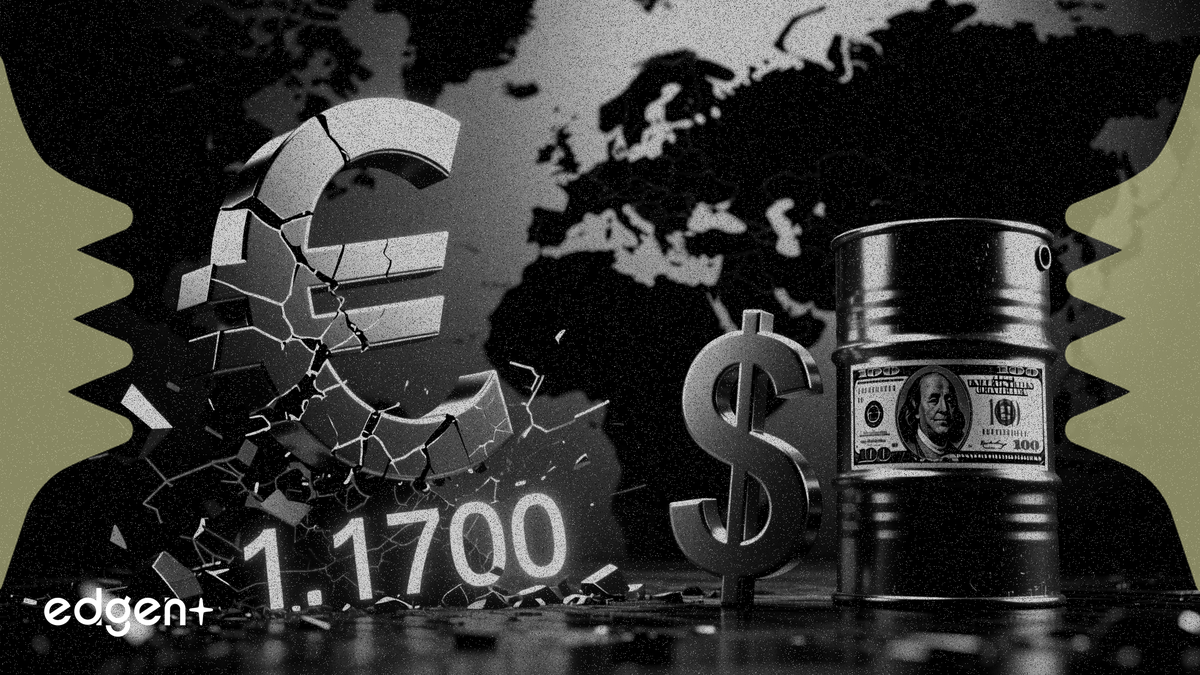
(P1) The euro fell below the key 1.1700 level for the first time in three weeks after Iran attacked ships in the Strait of Hormuz and a UAE oil port, sending Brent crude prices up 5.8% and fueling a flight to safety in the US dollar.
(P2) "The longer oil prices stay elevated above $100 a barrel, the more the fiscal stimulus from the tax cuts passed in 2025 shifts from being a stimulus to acting as a shock absorber," said Brock Weimer, analyst for investment strategy at Edward Jones.
(P3) The dollar index, which measures the greenback against a basket of major currencies, climbed 0.28% to 98.44. The move in oil to $114.44 per barrel pushed US 10-year Treasury yields 6 basis points higher to 4.438%, while the pan-European STOXX 600 index fell nearly 1 percent. In contrast, spot gold fell 2.13% against the stronger dollar.
(P4) The conflict introduces significant new risk into a market that had just begun pricing in a potential de-escalation, complicating the outlook for central banks. Markets have already abandoned bets on a Federal Reserve rate cut this year, and the oil-driven inflation threat could force both the Fed and the European Central Bank to maintain a hawkish stance.
Monday's sharp market repricing comes after reports late last week of a new diplomatic proposal from Iran, which had briefly sent crude prices down 4.4% and lifted emerging-market assets. The military action, which included setting a UAE oil port ablaze, shattered that optimism and put the global economic impact of the two-month-long disruption of the Strait of Hormuz back into focus. Roughly a fifth of the world's seaborne oil and gas transits the strait.
The surge in energy prices is reigniting inflation fears on both sides of the Atlantic. Germany's 10-year bond yield, a benchmark for the eurozone, rose 5 basis points to 3.08% as traders weighed the inflationary shock. The EUR/USD pair specifically fell 0.24% to settle at $1.1692. The last time a geopolitical shock in the region caused a similar spike in oil, the ECB was forced to delay its planned easing cycle, a scenario that now appears to be back on the table. The escalation, which followed a pledge from the U.S. President to use the Navy to force the strait open, saw broad-based selling in equities, with the Dow Jones Industrial Average falling 1.13%.
This article is for informational purposes only and does not constitute investment advice.

