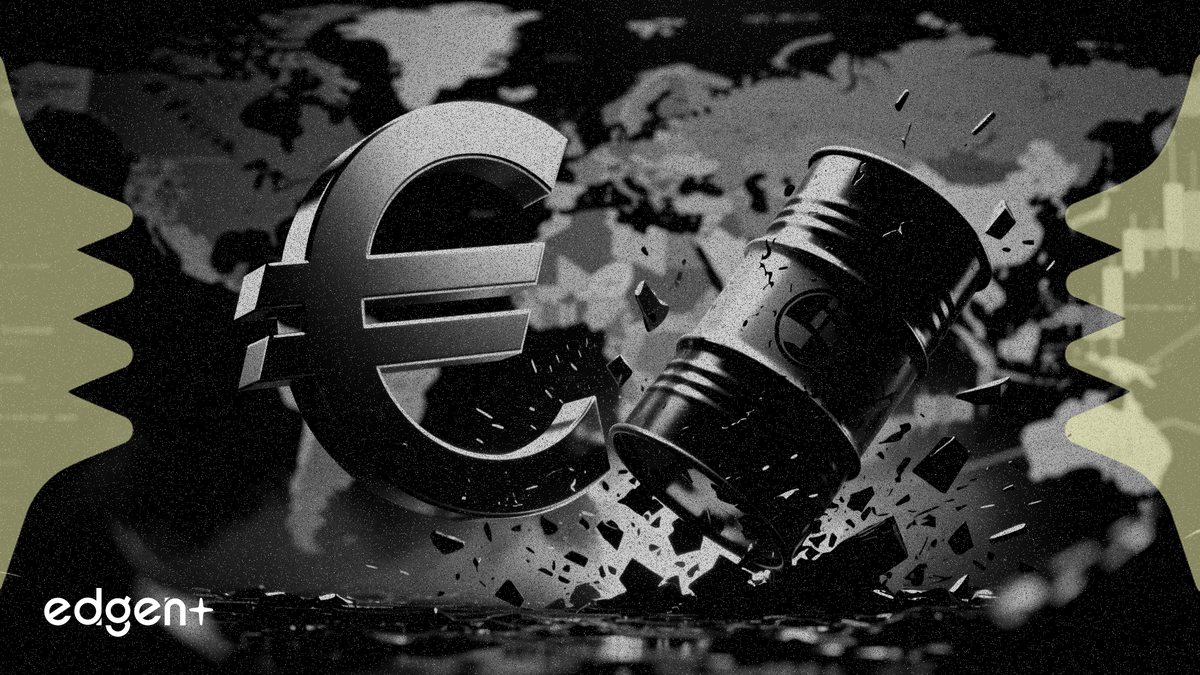
A potential US-Iran ceasefire agreement is rewriting the script for foreign exchange markets, weakening the dollar and boosting the euro as falling oil prices temper inflation expectations.

The Euro climbed 0.37 percent to 1.1645 against the dollar on Monday as optimism for a US-Iran ceasefire agreement sent oil prices tumbling and forced a re-evaluation of the Federal Reserve’s policy path.
"A deal that reopens the Strait of Hormuz would be a significant disinflationary impulse," said Arslan, a finance MBA and expert in investor psychology, in a note. "That can pull the market away from higher oil prices and a tougher Fed policy, triggering an outsized relief move in risk assets."
The potential for de-escalation sent West Texas Intermediate crude prices plunging nearly 5.5 percent to $91.66 a barrel, offering relief from the energy shock that has kept global inflation elevated. In response, the US Dollar Index (DXY) fell 0.33 percent to 98.99 as traders unwound bets on a more hawkish Fed. The move provided a sharp contrast to the dollar's recent strength, which followed an April US Consumer Price Index report that showed energy costs surging 17.9 percent over the last 12 months.
For markets, a durable agreement that restores energy flows is paramount. A reopening of the Strait of Hormuz could return up to 6.1 million barrels per day of oil supply that was disrupted during the conflict, according to data from the U.S. Energy Information Administration, directly countering the inflationary pressures that have kept the Fed on a cautious footing.
The dollar's slide has brought the growing policy divergence between the Fed and the European Central Bank into sharp relief. While the prospect of lower energy prices may give the Fed more room to consider rate cuts later this year, ECB officials have maintained a hawkish stance. Governing Council member Yannis Stournaras said a temporary overshoot of the ECB's inflation target might warrant cautious tightening.
Money markets have taken the cue, pricing in a 77.64 percent probability of an ECB rate hike at its June 11 meeting. This stands in contrast to Fed expectations, where futures had recently implied a roughly 30 percent chance of a rate hike by the first quarter of 2027 after minutes from the central bank’s April meeting showed concerns about sticky inflation. The potential for an Iran deal and lower oil prices could unwind that hawkish pricing, further pressuring the dollar.
The key test for the Euro's newfound strength will be whether the diplomatic framework translates into a physical normalization of energy markets. The drop in oil flows through the Strait of Hormuz to 14.6 million barrels per day in the first quarter of 2026, down from 20.7 million pre-conflict, highlights the scale of the disruption. A sustained recovery in crude supply would be needed for the Fed to confidently treat the recent inflation shock as temporary.
This week, traders will watch for US housing data, Durable Goods Orders, and the Fed’s preferred inflation gauge, the Core Personal Consumption Expenditures (PCE) Price Index, to assess the underlying strength of the US economy. Across the Atlantic, speeches by ECB policymakers will be scrutinized for further clues on the bank's commitment to a June rate increase, which could provide further support for the single currency.
This article is for informational purposes only and does not constitute investment advice.