



GIGADEVICE and NIO-SW will co-develop automotive-grade chips, linking a fabless designer to China's No. 2 EV maker.
GIGADEVICE and NIO-SW will co-develop automotive-grade chips, linking a fabless designer to China's No. 2 EV maker.
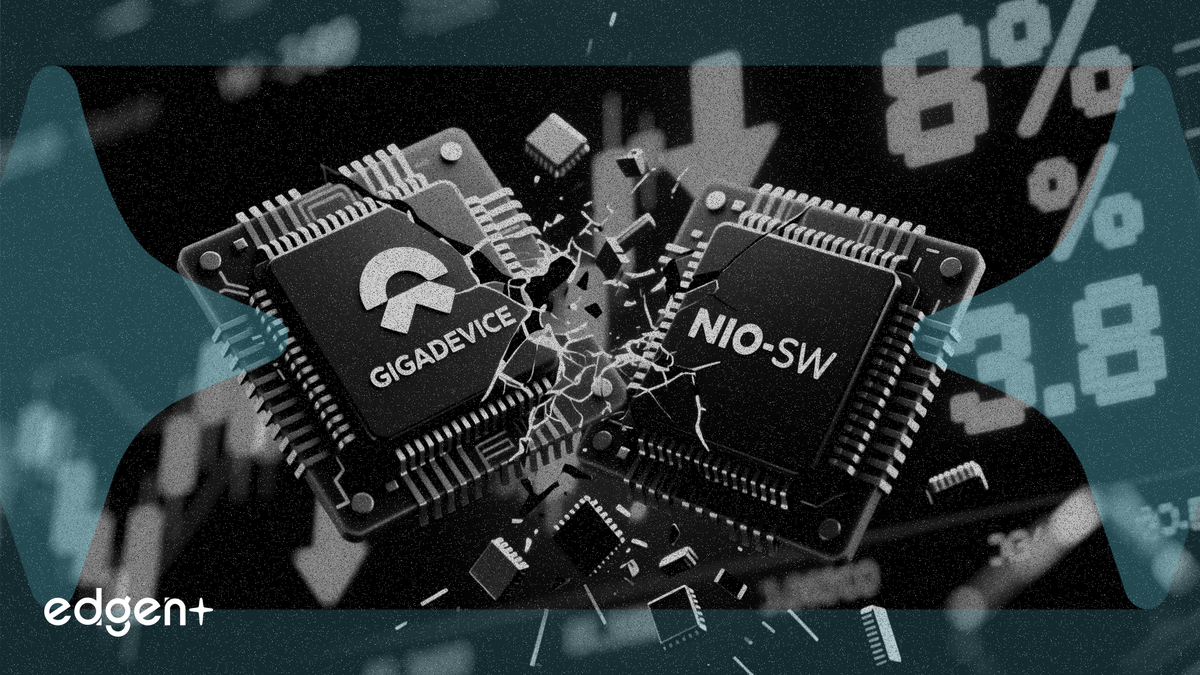
GIGADEVICE and NIO-SW will co-develop automotive-grade chips, linking a fabless designer to China's No. 2 EV maker.
China's push for self-reliant automotive semiconductors deepened as GIGADEVICE (03986.HK) and NIO-SW (09866.HK) signed a strategic pact to co-develop chips across the entire vehicle value chain.
The partnership covers collaborative innovation spanning chip design, validation, and integration into NIO-SW's intelligent electric vehicle platforms, according to the companies' joint statement. Both sides will combine GIGADEVICE's expertise in chip design with NIO-SW's vehicle manufacturing capabilities to develop automotive-grade semiconductors and next-generation electronic and electrical architectures.
GIGADEVICE shares fell 8 percent, with short selling reaching HK$28.83 million, or 1.6 percent of turnover. NIO-SW dropped 3.8 percent, with short selling of HK$57.82 million representing 17 percent of trading volume, Hong Kong exchange data show.
The deal positions GIGADEVICE to capture a share of the automotive semiconductor market, where chip content per vehicle is rising as EVs add more advanced driver-assistance systems and digital cockpits. For NIO-SW, securing a dedicated chip partner reduces reliance on global suppliers such as Nvidia and Qualcomm, which dominate the automotive chip market but face growing export restrictions to China.
The agreement marks a shift toward deeper vertical integration in China's EV supply chain. Unlike traditional automakers that purchase off-the-shelf chips from suppliers such as Nvidia's Drive platform or Qualcomm's Snapdragon Ride, NIO-SW is pursuing custom silicon tailored to its vehicle architecture — a strategy already adopted by Tesla and, more recently, BYD. Custom chips allow automakers to optimize performance per watt for their specific software stack and reduce per-vehicle component costs at scale.
GIGADEVICE, a fabless chip company listed in Hong Kong, designs microcontrollers and power management integrated circuits but has been expanding into higher-value automotive applications. The partnership with NIO-SW provides a captive customer for those efforts, mirroring a broader trend among Chinese EV makers to develop in-house or co-developed chips as a hedge against supply disruptions and US export controls. Chinese automakers have accelerated chip localization efforts since Washington tightened semiconductor export rules in 2022 and 2023, restricting access to advanced chips from US-based designers.
The collaboration also extends to next-generation electronic and electrical architectures — the centralized computing platforms that replace the dozens of distributed electronic control units in traditional cars. These architectures require more powerful system-on-chips capable of processing sensor data, running AI models, and managing over-the-air updates, creating a growing addressable market for semiconductor designers. Industry estimates project the automotive chip market will exceed $100 billion by 2030, driven by the shift to software-defined vehicles.
For GIGADEVICE, the deal provides a multiyear development pipeline tied to NIO-SW's vehicle roadmap, potentially accelerating its transition from low-margin microcontroller sales to higher-value automotive system-on-chips. The company's revenue diversification into automotive comes as the global chip market faces pricing pressure in mature segments such as consumer electronics. GIGADEVICE's Hong Kong-listed shares have declined 8 percent on the session, though the partnership's revenue contribution will take years to materialize given typical automotive chip development cycles of 18 to 36 months.
NIO-SW, for its part, gains greater control over the semiconductor content in its vehicles — a factor that could improve gross margins over time as custom chips replace more expensive merchant silicon. The partnership also insulates NIO-SW from supply chain bottlenecks that have periodically disrupted the global auto industry since the pandemic-era chip shortage of 2021. NIO-SW shares fell 3.8 percent, with elevated short selling suggesting some investors view the partnership's near-term costs as outweighing the long-term strategic benefits.
This article is for informational purposes only and does not constitute investment advice.
