
Gold's path through the second half of 2026 hinges on whether economic risks intensify or rate expectations shift, with the World Gold Council projecting a $4,100 floor and a $5,000 ceiling.
Gold's path through the second half of 2026 hinges on whether economic risks intensify or rate expectations shift, with the World Gold Council projecting a $4,100 floor and a $5,000 ceiling.
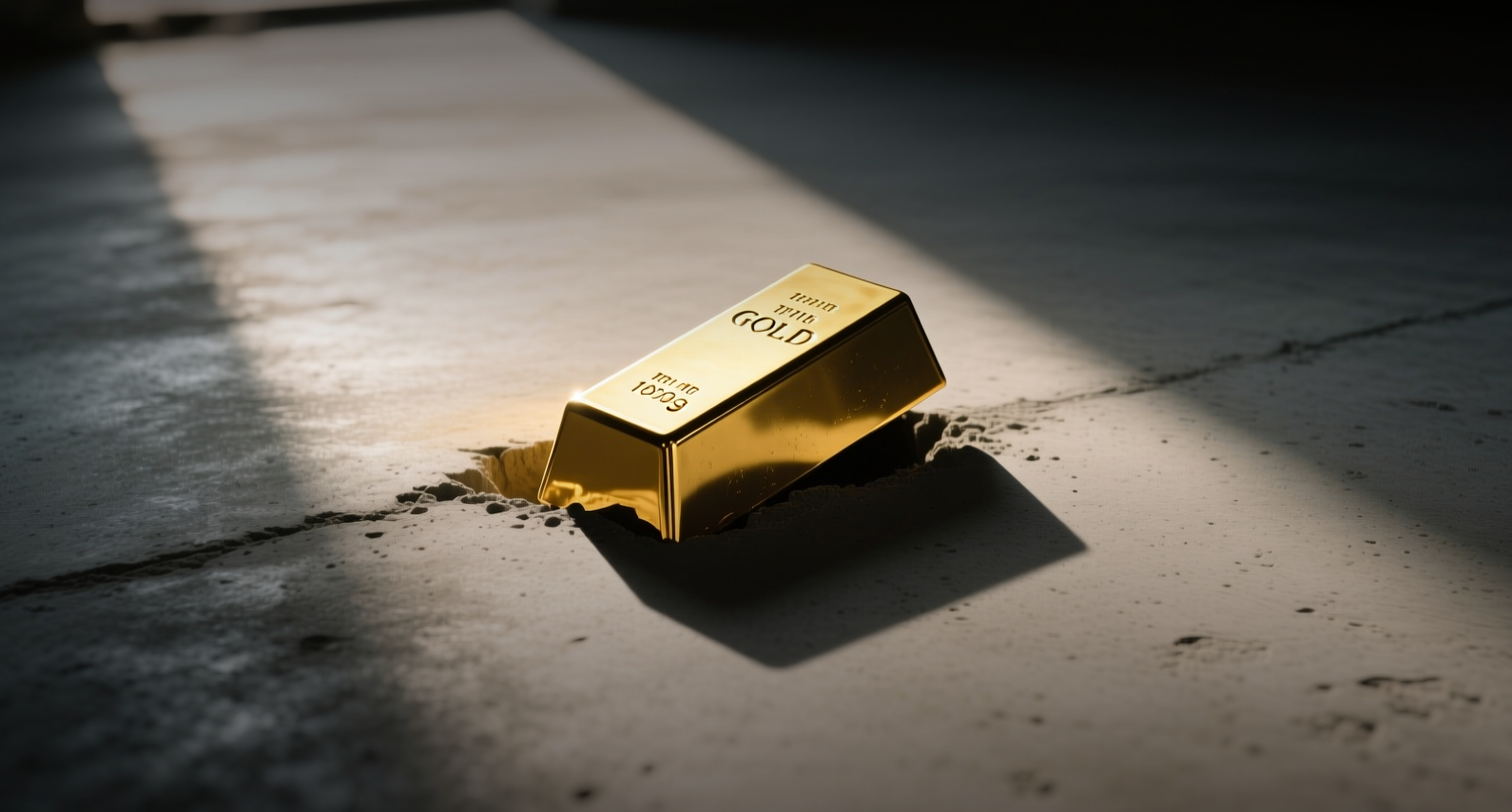
Gold at around $4,000 an ounce faces a narrow trading range near $4,100 in the second half, with upside to $5,000 if catalysts align, the World Gold Council said.
"Gold could resume its upward trend around $4,500 an ounce, but only a strong, clear signal may push it sustainably toward $5,000," Juan Carlos Artigas, head of research at the World Gold Council, said in the mid-year outlook.
The metal has fallen 27% from its all-time high above $5,600 in January, its worst quarterly performance in 13 years, as a hawkish Federal Reserve dashed rate-cut expectations and the dollar strengthened. The WGC's proprietary valuation framework suggests gold is reasonably aligned with current macro conditions, implying a range of plus or minus 5% around $4,100 an ounce if conditions hold, according to the report co-authored by Artigas, Taylor Burnette and Fergal O'Connor.
The $5,000 ceiling represents a 25% gain from current levels, a move the WGC said would require a worsening economy, renewed geopolitical shock, or a shift in interest-rate expectations. Goldman Sachs projects gold at $4,900 an ounce by end-2026, with central bank demand as the structural anchor, according to Samantha Dart, co-head of global commodities research at the bank.
Central bank buying provides structural support
Central banks have bought an average of 1,000 tonnes per year since 2022, and a record 45% of the 76 institutions surveyed by the WGC expect to increase their gold reserves over the next 12 months. Goldman Sachs now expects central banks to average about 60 tonnes per month through 2026, up from its earlier estimate of 29 tonnes under a previous methodology.
"Structurally, EM central bank diversification — following the 2022 freezing of Russia's reserves — remains the anchor of our $4,900 an ounce end-2026 forecast," Dart said.
The WGC estimates that an additional 20 to 30 tonnes of central bank purchases above the long-term average of about 600 tonnes per year translates to roughly a 1% increase in the gold price, through both direct buying and the positive signal it sends to investors.
India demand faces headwinds from duty hike
India, the world's second-largest gold market with net demand of 800 tonnes per year, has introduced measures that could curb consumption. The government raised the import duty on gold to 15% from 6% in April as part of efforts to conserve foreign exchange reserves amid pressure on the rupee during the US-Iran conflict.
The WGC's econometric analysis suggests the duty increase alone will reduce Indian jewelry, bar and coin demand by 50 to 60 tonnes, or about 10% year-over-year. Further economic deceleration could deter Indian consumers from buying on price pullbacks, while defaults on collateralized gold loans could increase supply.
Near-term headwinds and the path to recovery
Gold's decline accelerated in the second quarter, with the metal dropping 16% for its worst three-month stretch since 2013. The CBOE Gold Volatility Index spiked above 50% during the US-Iran conflict before retreating below 30%, though it remains above its 20-year average of 17%.
A death cross formed when the 50-day moving average fell below the 200-day moving average, a technical signal that often precedes further declines. The dollar index traded around 101, up about 3% year-to-date, as Fed Chair Kevin Warsh reiterated the central bank's commitment to bringing inflation back to its 2% target.
Goldman Sachs acknowledged these near-term headwinds but said they are expected to reverse over time. The bank's economists expect the Fed to hold rates steady this year before restarting the easing cycle in the second half of 2027, which would support a gradual rise in ETF positioning.
"Over the medium term, risks to our gold price forecast remain skewed to the upside on net," Dart said, pointing to concerns over Western fiscal sustainability as a potential driver of private investor diversification into gold.
This article is for informational purposes only and does not constitute investment advice.
