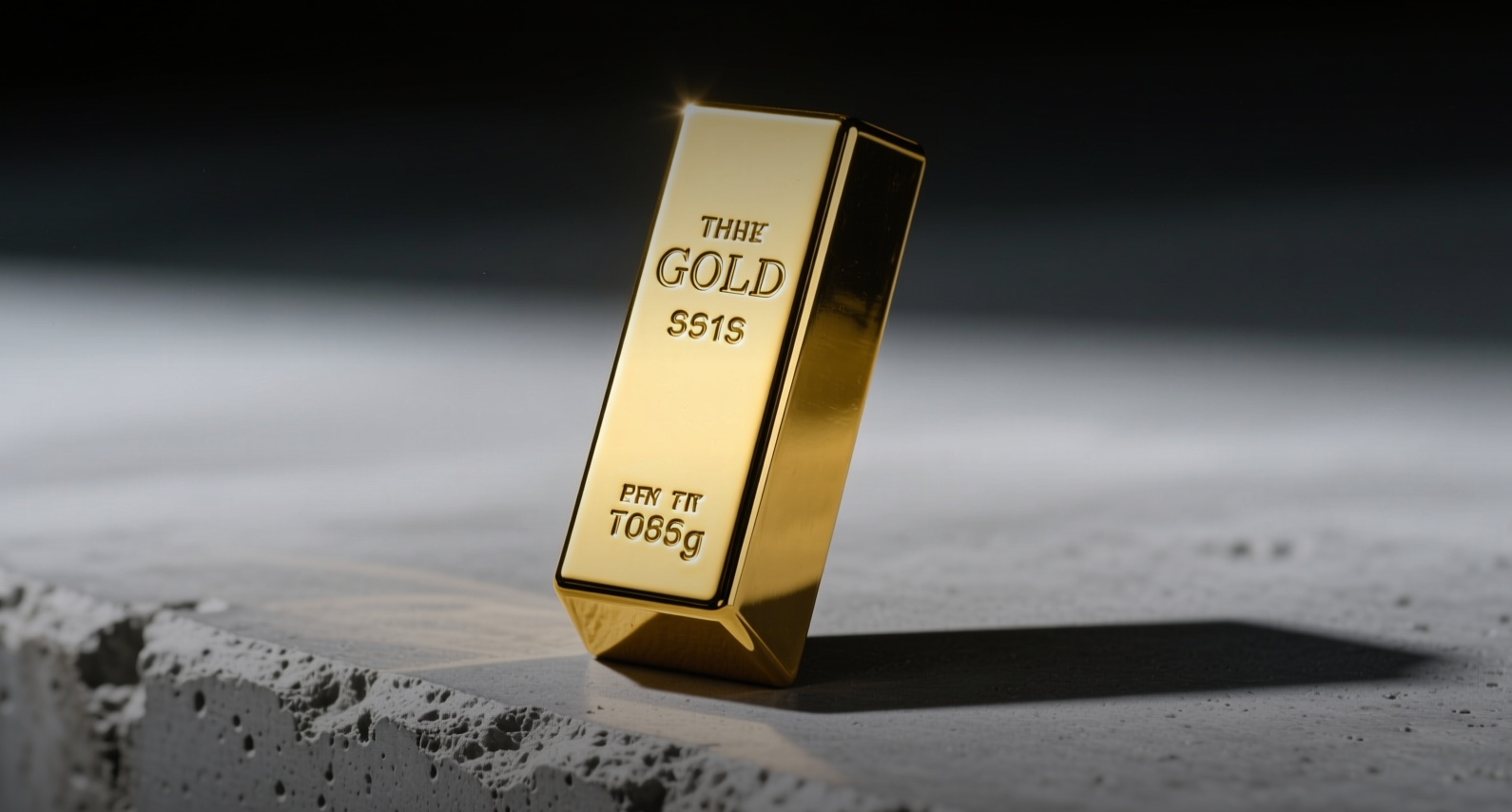
Gold held above $4,000 an ounce Wednesday, steadying after a softer U.S. PPI reading offset pressure from rising crude prices and Treasury yields as Strait of Hormuz tensions escalated.
"The $4,000 level has become a critical support threshold, first breached in October 2025, and the market is watching closely to see if it holds as competing macro forces pull the metal in opposite directions," said Omar Tariq, commodities analyst at Edgen.
Spot gold was at $4,036 an ounce as of the London morning fix, down 0.8% after a nearly 3% decline in the prior session. The metal remains about 28% below its all-time high of $5,595 set in January 2026. The June PPI print came in softer than expected, reducing immediate pressure on the Federal Reserve to deliver rate hikes. The CME Group's FedWatch tool now prices a 42% chance of a hike at the July 29 meeting, up from 8% a month ago, and a 75% probability for September.
A break below $4,000 could open a path toward $3,700, while a sustained hold supported by further disinflation data could drive a recovery toward $4,200 to $4,300, according to market pricing. The next catalyst is Fed Chairman Kevin Warsh's testimony before the House Financial Services Committee later Wednesday.
West Texas Intermediate jumped 9.4% to settle near $78 a barrel, while Brent crude closed above $83, after President Donald Trump announced plans to reinstate a blockade on Iranian ships transiting the Strait of Hormuz and impose a 20% charge on all other cargo moving through the waterway. Brent contracts for September delivery rose 4.1% to $86.73 a barrel Tuesday. The escalation followed a weekend exchange of U.S. and Iranian strikes that erased hopes tensions would ease.
Benchmark 10-year Treasury yields rose nearly 20 basis points since the start of July to 4.621%, the highest since May 19, as crude-driven inflation expectations pushed bond markets to reprice rate paths. Two-year notes jumped 18 basis points to 4.279%, the highest in 16 months.
Gold faces competing pressures: rising crude prices feed inflation expectations that could accelerate Fed tightening, a headwind for the non-yielding metal. At the same time, the Hormuz escalation bolsters safe-haven demand that supports prices above $4,000. The Joint Maritime Information Center said U.S. Central Command would begin enforcing the blockade Tuesday at 4 p.m. ET, raising the risk of further attacks on commercial shipping through the world's most important oil transit chokepoint.
"If the conflict expanded to target key facilities more broadly, oil could head to $100," said Saul Kavonic, senior energy analyst at MST Marquee. Higher crude prices would compound inflation pressures and complicate the Fed's path, potentially testing gold's $4,000 floor.
This article is for informational purposes only and does not constitute investment advice.