
The International Energy Agency's April report reveals a historic market shock, projecting the first annual decline in global oil demand since 2020 as the Hormuz blockade removes over 4% of the world's energy supply.
The International Energy Agency's April report reveals a historic market shock, projecting the first annual decline in global oil demand since 2020 as the Hormuz blockade removes over 4% of the world's energy supply.
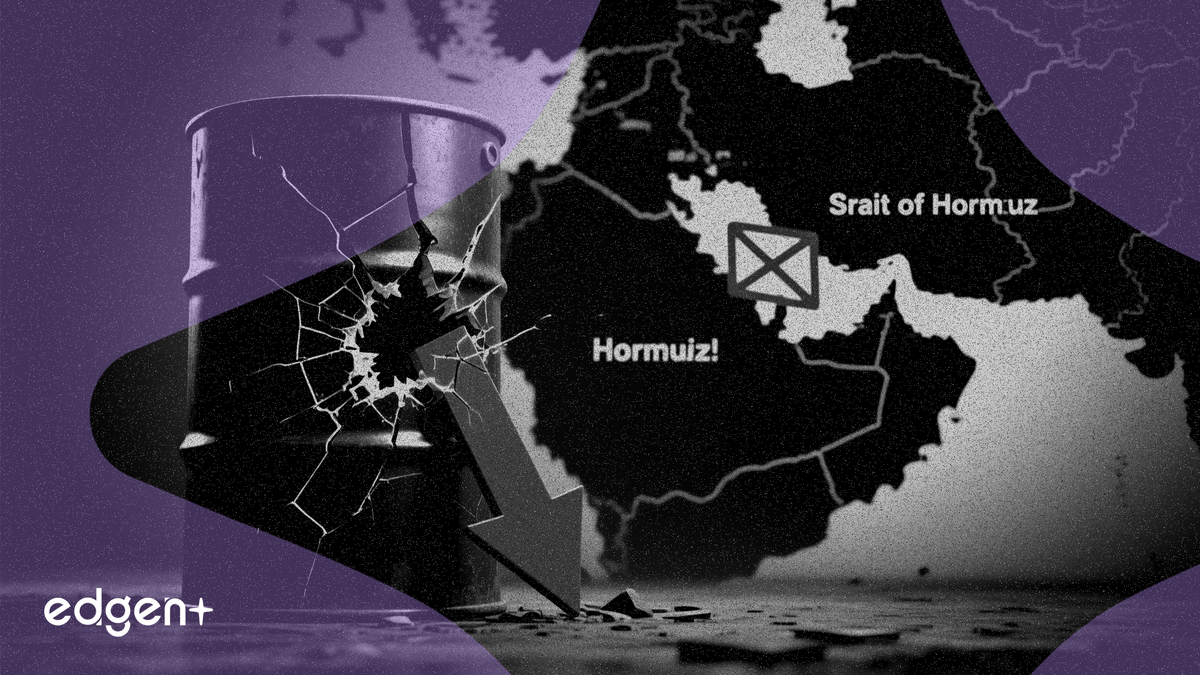
The global oil market is facing its largest supply disruption in history, according to the International Energy Agency, which now forecasts demand to shrink by 80,000 barrels per day in 2026. The dramatic reversal from a previously expected 640,000 b/d expansion comes as a blockade of the Strait of Hormuz chokes off a fifth of the world’s oil supply, sending Brent crude toward $102 a barrel.
"The correlation between economic activity and energy use is 0.9," Kurt Cobb, a communications consultant, wrote in a recent analysis for OilPrice.com. "A 4.5 percent reduction in energy availability is much more likely to result in a decline in economic activity closer to 4 percent than to one-half percent."
The supply shock has been immediate, with tanker traffic through the strait plunging over 80% from its typical 20 million barrels per day to just 3.8 million, the IEA report shows. This has forced production cuts in Saudi Arabia, Iraq, and the UAE. The loss includes not just crude but also 3% of the world's natural gas from Qatar, bringing the total energy removed from the market to an estimated 4.5%—a figure whose impact could rival the 4.3% drop in U.S. GDP during the Great Recession.
The crisis now threatens to trigger a severe global recession as the effects cascade from energy to other sectors. With the IEA warning that its base case of a mid-year resolution is uncertain, markets are bracing for sustained high prices and further demand destruction, particularly in energy-importing Asian economies.
The disruption's impact extends far beyond fuel prices. Rising costs for petrochemical feedstocks are set to increase prices for plastics, while higher diesel and fertilizer costs—nitrogen fertilizer is made from natural gas—point to significant food price inflation. The blockade has also stranded about one-third of the world's helium, a critical component for semiconductor manufacturing, threatening further strain on an already fragile supply chain. The cumulative effect is a broad-based inflationary shock that curtails consumer and business spending, risking a cascade of shrinking economic activity.
While Iran has achieved a short-term strategic victory by disrupting global trade, analysts suggest the move may backfire by accelerating a long-term pivot away from Hormuz. Three major trends are already underway: the expansion of U.S. oil and gas exports to Asia, the build-out of bypass pipelines in Saudi Arabia and the UAE that can already carry half of Hormuz's oil volume, and a renewed global push toward nuclear energy for energy independence. According to analysis from Ynetnews, these shifts could significantly erode the strait's strategic importance within three to five years, leaving Tehran with a depreciating asset.
Despite a record, coordinated release of 400 million barrels from strategic petroleum reserves, the IEA notes a growing "disconnect" between futures markets, where Brent remains near $100, and the physical market, where the shortage is acute. The agency warned that futures prices have yet to reflect the full severity of the crisis.
This article is for informational purposes only and does not constitute investment advice.