
The attack on three U.S. destroyers by Iran’s navy threatens to close the world’s most critical oil chokepoint, putting 20 percent of global supply at risk.
The attack on three U.S. destroyers by Iran’s navy threatens to close the world’s most critical oil chokepoint, putting 20 percent of global supply at risk.
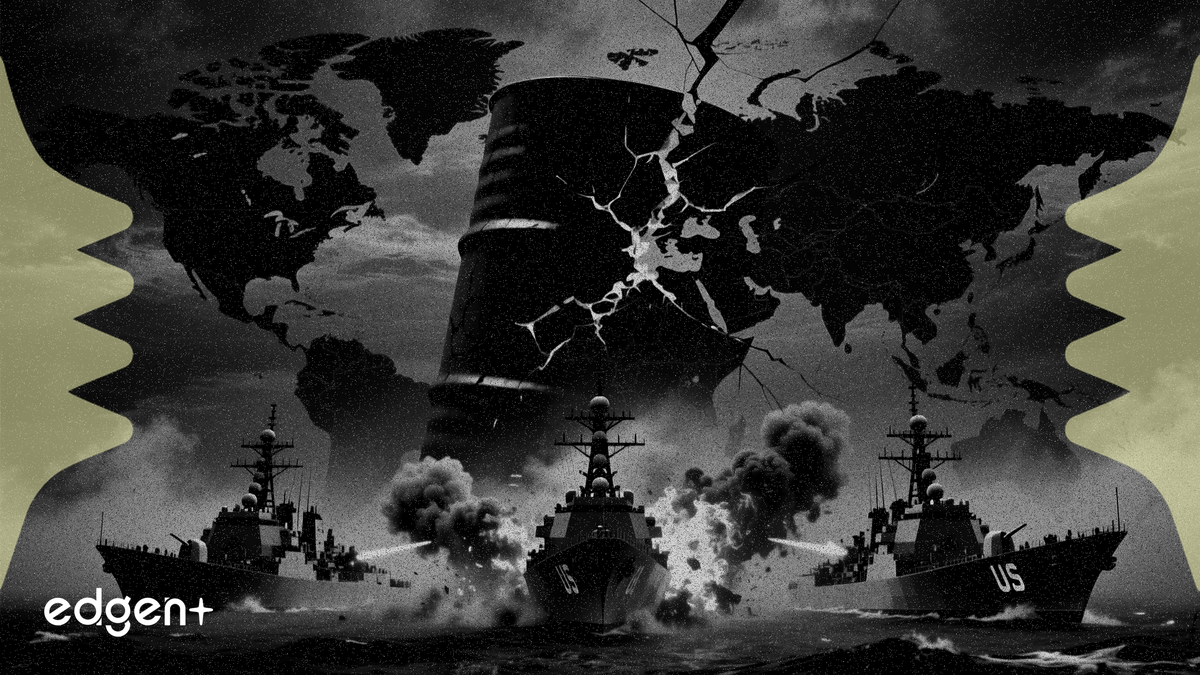
(P1) Iran’s navy attacked three U.S. destroyers near the Strait of Hormuz with missiles and drones, a major escalation that threatens to halt the passage of one-fifth of the world's oil supply. The attack on May 8 forced the American warships to retreat, deepening a crisis that has already paralyzed traffic through the vital maritime chokepoint.
(P2) "The effectiveness of the U.S. blockade is now in serious doubt, as Iran’s ‘shadow fleet’ has continued to move oil with impunity," said a senior fellow for maritime security at the Gulf Policy Institute. "This direct military engagement shows Tehran is willing to escalate to a level Washington may not have fully anticipated."
(P3) The immediate market reaction saw oil prices jump, with futures climbing over 5 percent on fears of a prolonged supply disruption. The conflict has trapped hundreds of ships and 20,000 seafarers inside the Gulf, according to maritime reports. The danger was highlighted by a separate attack on the Chinese-owned oil products tanker JV Innovation, which caught fire off the UAE coast.
(P4) At stake is not only the free flow of oil but the stability of the entire region, as diplomatic and military calculations are rapidly shifting. Just a day after President Donald Trump suspended a U.S. naval escort mission, the attack occurred, suggesting a coordinated response from Tehran. The incident now puts immense pressure on international efforts to de-escalate, with the U.S. and its allies weighing their next move.
Despite intensified U.S. sanctions and a heavy naval presence, Iran has successfully leveraged a so-called “shadow fleet” to continue its oil trade. According to maritime analytics group Tanker Trackers, sanctioned vessels linked to Iranian commerce have been observed approaching restricted maritime zones while still broadcasting tracking signals.
One such vessel, identified as the VINA/VALLEY, was reportedly involved in movements of Iranian LPG. The arrival of a larger, empty Iranian tanker in the same operational zone suggests Tehran is adept at managing its fleet to maintain shipping activity. This parallel, sanction-evading trade network undermines the core of Washington's economic pressure campaign and emboldens Iran to challenge the U.S. naval blockade directly.
As the physical blockade tightens, a flurry of diplomatic activity is underway to find an off-ramp. China's Foreign Minister Wang Yi met with his Iranian counterpart, Abbas Araghchi, in Beijing to discuss reopening the strait, a crucial issue for China, a key buyer of Iranian oil.
Simultaneously, the United States and Bahrain are pushing for a resolution at the UN Security Council to compel the reopening of the strait. These diplomatic tracks are running parallel to military realities on the ground, where the U.S. and Iran are edging toward what some officials describe as a potential limited agreement to halt the fighting, though major contentious issues would remain unresolved. The attack on U.S. assets, however, severely complicates any path toward a temporary truce.
This article is for informational purposes only and does not constitute investment advice.

