
Key Takeaways: Tehran's move to formalize control over the world's most critical oil chokepoint threatens to upend a fragile ceasefire and could send global energy prices sharply higher.
Key Takeaways: Tehran's move to formalize control over the world's most critical oil chokepoint threatens to upend a fragile ceasefire and could send global energy prices sharply higher.
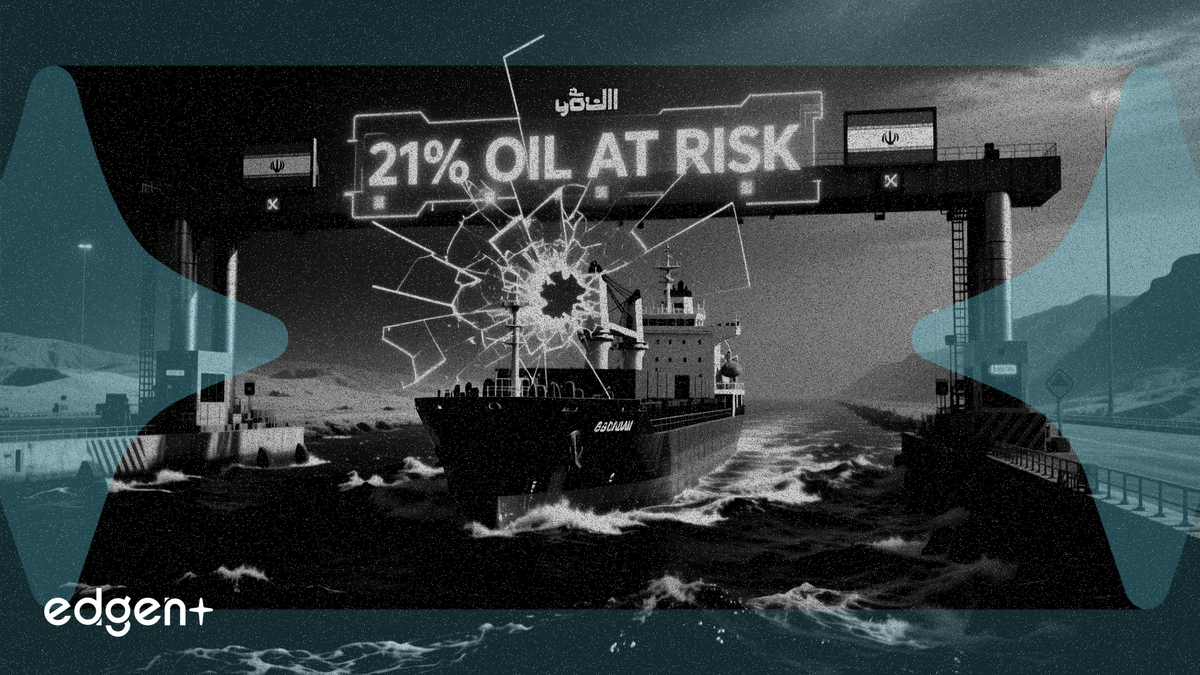
Iran is establishing a new government agency to tax and control all vessels passing through the Strait of Hormuz, a move that formalizes its grip on a waterway handling over 20% of global oil consumption and escalates tensions with the U.S. amid fragile peace talks.
"The agency, called the Persian Gulf Strait Authority, is positioning itself as the only valid authority to grant permission to ships transiting the strait," shipping data firm Lloyd's List Intelligence reported in an online briefing Thursday.
The move comes as the U.S. military reported intercepting Iranian attacks on three Navy ships in the strait on Thursday and exchanging fire on Qeshm Island. While hopes for a peace deal mediated by Pakistan have recently buoyed markets, Iran's new entity, which has already begun emailing passage application forms to shippers, has sent fuel prices skyrocketing and trapped hundreds of commercial vessels in the Persian Gulf.
At stake is the principle of freedom of navigation in a strait responsible for 21 million barrels of oil per day. Iran's assertion of sovereignty violates international maritime law and dares the U.S. to respond, potentially shattering the tenuous ceasefire that has held since April 8 and triggering a wider conflict that could drive oil prices well above current levels.
The escalation in the Strait of Hormuz puts immense pressure on a ceasefire that began on April 8, following a conflict that started with U.S. and Israeli strikes against Iran on February 28. While Pakistan continues to mediate, with Foreign Minister Ishaq Dar speaking with his Iranian counterpart, the on-the-ground reality is deteriorating. "We expect an agreement sooner rather than later," Pakistani Foreign Ministry spokesperson Tahir Andrabi said Thursday, though he declined to provide a specific timeline.
U.S. Central Command confirmed it conducted self-defense strikes after intercepting "unprovoked Iranian attacks" on three of its naval ships. Simultaneously, Iranian state media reported exchanges of fire with "the enemy" on Qeshm Island, the largest Iranian island in the Gulf, and explosions near the critical port city of Bandar Abbas. These clashes follow the failure of in-person talks hosted by Pakistan last month to secure a lasting agreement.
Maritime law experts assert that Iran's demand to vet or tax vessels is a clear violation of the United Nations Convention on the Law of the Sea, which guarantees peaceful passage through territorial waters. The new Persian Gulf Strait Authority formalizes a murky practice where Iran already controls a vetting lane in the strait's northern waters, imposing taxes on some cargo.
The U.S. and its Gulf allies are advocating for a U.N. Security Council resolution to condemn Iran's actions, but a previous attempt was vetoed by Russia and China, highlighting deep international divisions. The move also complicates the Trump administration's mixed strategy, which has wavered between threats of renewed bombing and a desire for a peace agreement.
A recent U.S. military effort to force open a shipping passage, dubbed Project Freedom, was suspended after just two days. A Saudi official, speaking on condition of anonymity, confirmed the kingdom refused to support the U.S. operation. "We told them that we are not part of this and that they can't use our territories and bases for this," the official said, revealing that Riyadh had sent a direct message to Tehran to clarify it would not be involved in U.S. attacks.
The new supreme leader, Mojtaba Khamenei, who replaced his father after he was killed in the war's initial strikes, is reportedly playing a key role in negotiations but has yet to appear in public. Iranian President Masoud Pezeshkian confirmed a recent two-hour meeting with Khamenei, praising his "sincere" behavior in remarks on state television.
This article is for informational purposes only and does not constitute investment advice.

