
Intensifying cross-border attacks between Iran and Israel on April 1st coincided with reports of a US-led push for a ceasefire, creating a volatile geopolitical landscape.
Intensifying cross-border attacks between Iran and Israel on April 1st coincided with reports of a US-led push for a ceasefire, creating a volatile geopolitical landscape.
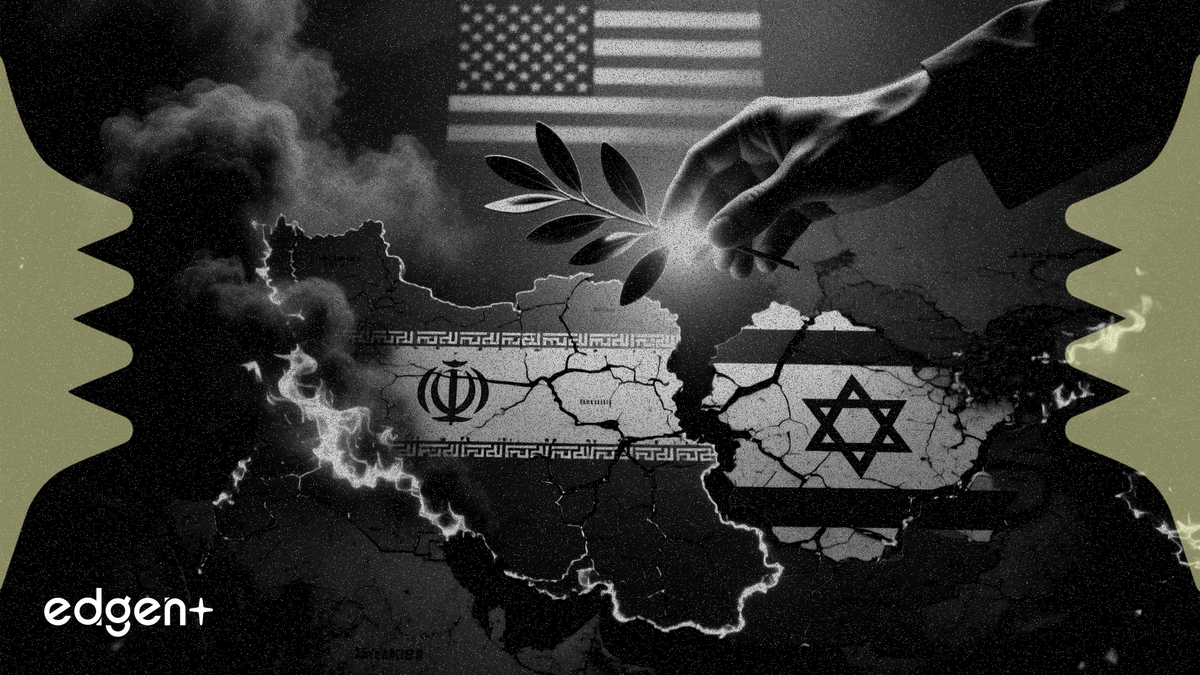
The 33-day conflict between Iran and Israel escalated sharply on Wednesday with both sides launching significant military strikes, even as the Trump administration reportedly initiated private ceasefire talks contingent on the reopening of the Strait of Hormuz.
"Iran will not change its positions in defending its national security," the deputy director of communications for the Iranian president's office said on social media, adding the country would ignore "fantasies and lies" from the US and Israel.
The rhetoric came as Iran’s Islamic Revolutionary Guard Corps claimed its 89th wave of attacks under its "True Promise-4" operation, using missiles and drones against US and Israeli targets. In response, the Israeli military announced a large-scale aerial assault on targets inside Iran. The US has reportedly lost 16 MQ-9 Reaper drones since the conflict began, while Iran claims to have downed 150 drones in total.
The escalating military exchange, which threatens to disrupt global energy supplies through the Strait of Hormuz, is creating significant market uncertainty. While a wider conflict could drive oil and gold prices higher, credible progress in the reported ceasefire negotiations, which President Trump is expected to address, could trigger a significant risk-on rally in global equities.
While the conflict intensified, diplomatic channels appeared active. President Trump has instructed Vice President Vance to privately convey ceasefire terms to Iran through intermediaries, according to media reports citing US officials. The core condition for a halt in US military pressure is the reopening of the Strait of Hormuz. The messages conveyed were described as "tough," warning that US patience is wearing thin and that strikes on Iranian infrastructure would increase without an agreement.
President Trump claimed on social media that Iran's new presidential administration had requested a ceasefire, a statement that Iranian Foreign Ministry spokesman Baghaei later dismissed as "false and baseless." Trump is scheduled to deliver a national address on what he termed an "important update" on Iran, where he is expected to reiterate a two-to-three-week timetable for withdrawing US troops.
Iran maintained a defiant public posture. President Pezeshkian, in a speech for the Islamic Republic Day, emphasized that the nation would rely on its people to defend its independence and security. The IRGC issued a direct threat, stating it would strike US "intelligence companies" if any assassination operations were carried out against Iran, and reiterated a warning against 18 specific US companies.
Iranian officials also strongly refuted US Central Command's claims of avoiding civilian targets, calling them "pure lies." They asserted they have "irrefutable evidence" that attacks on the Supreme Leader's residence and a school in Minab were "terrorist acts" carried out directly by the US military.
The international community remains divided on the conflict. Russian Foreign Minister Sergey Lavrov said on April 1st that Moscow was willing to mediate if asked. In contrast, French President Emmanuel Macron stated that France was "not participating" in the US-Israeli military strikes and had not been consulted beforehand.
Spain's Defense Minister also affirmed his country's refusal to support the military action, stating the US and Israel "cannot decide what rules apply to the world." Meanwhile, UK Prime Minister Starmer announced that his foreign secretary would host an international conference to discuss restoring navigation through the Strait of Hormuz. In the region, the UAE has reportedly banned Iranian citizens from entering or transiting the country and is said to be preparing to assist a US-led effort to control the strait by force.
This article is for informational purposes only and does not constitute investment advice.