
Iran's president publicly rejected threats from US President Donald Trump on Wednesday, deepening a military confrontation that has already triggered US strikes on 20 Iranian sites and Iranian missile attacks on a US base in Jordan.
Iran's president publicly rejected threats from US President Donald Trump on Wednesday, deepening a military confrontation that has already triggered US strikes on 20 Iranian sites and Iranian missile attacks on a US base in Jordan.
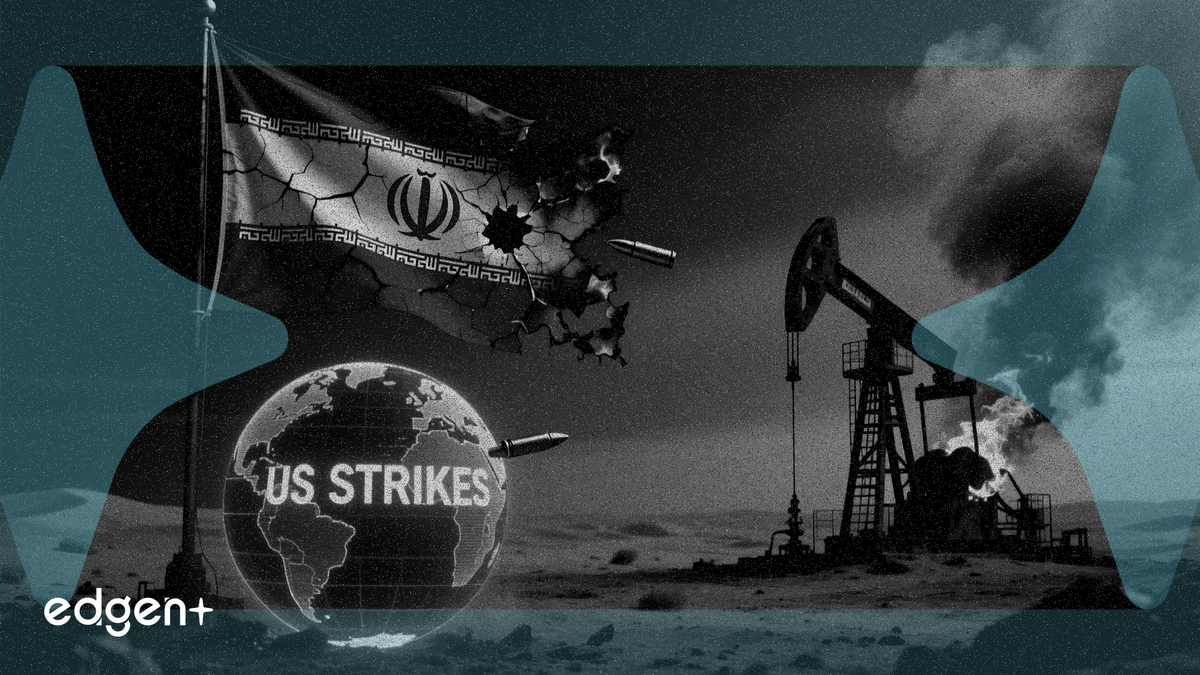
Iran's president publicly rejected threats from US President Donald Trump on Wednesday, deepening a military confrontation that has already triggered US strikes on 20 Iranian sites and Iranian missile attacks on a US base in Jordan.
Iran's president said the country would oppose any threats issued by Trump, hours after the US president warned that fresh strikes targeting Iranian power plants and bridges were imminent. The exchange marked the sharpest escalation between the two nations since the US launched retaliatory strikes following an Iranian drone attack that downed an American Apache helicopter near the Strait of Hormuz.
"The situation has moved beyond rhetoric into active military exchanges, and the risk of further escalation remains high," said Torbjorn Soltvedt, director of geopolitical risk at Verisk Maplecroft. "The Strait of Hormuz chokepoint, which handles about 21% of global oil consumption, is now the central variable for energy markets."
The US military struck approximately 20 Iranian sites in the initial round of retaliation, according to Trump. In response, Iran's Islamic Revolutionary Guard Corps said it launched long-range missiles targeting four locations at the US al-Azraq base in Jordan, including F-35 fighter jet hangars and a command-and-control center. The IRGC warned it was prepared to deliver a "crushing and decisive" response to any further US attack.
Trump escalated further on social media, declaring on Truth Social that "the Bully of the Middle East is DEAD" and claiming Iran's military had been "completely defeated," with large parts of its naval and air capabilities destroyed. He also described the US naval blockade against Iran as "the most successful blockade in the history of naval warfare," asserting that "nothing gets through unless we want it to."
Oil and Safe-Haven Assets in Focus
Brent crude futures rose as much as 4% in Asian trading on the escalation, with traders pricing in the risk of supply disruptions through the Strait of Hormuz. The last time US-Iran tensions reached a comparable level was in January 2020, after a US drone strike killed Qassem Soleimani, when Brent spiked above $71 a barrel before retreating within two weeks. The current confrontation involves direct military exchanges on a scale not seen in that episode.
Gold climbed 1.2% to above $2,400 an ounce as investors rotated into haven assets, while the US dollar index gained 0.3% against a basket of major currencies. Equity markets in Asia and Europe came under pressure, with the MSCI Asia Pacific Index falling 1.8% on the open.
What's at Stake
The confrontation carries direct implications for global energy markets, defense spending, and broader risk appetite. Iran's position astride the Strait of Hormuz means any sustained disruption could push oil prices significantly higher, feeding into inflation expectations at a time when central banks are already cautious about easing monetary policy. Trump's threat to target Iranian power plants and bridges signals a potential broadening of military objectives beyond the initial retaliatory strikes, raising the probability of a prolonged engagement.
The next 48 hours will be critical. Iran's president has now publicly committed to opposing US threats, narrowing the room for diplomatic off-ramps. If either side follows through on its stated escalation plans, the conflict could draw in regional proxies and affect shipping lanes beyond the Gulf.
This article is for informational purposes only and does not constitute investment advice.
