
Iran's IRGC launched ballistic missiles at Israel's Ramat David Airbase late Sunday, warning that any further Israeli aggression will trigger broader strikes across all US and Israeli assets in the region.
Iran's IRGC launched ballistic missiles at Israel's Ramat David Airbase late Sunday, warning that any further Israeli aggression will trigger broader strikes across all US and Israeli assets in the region.
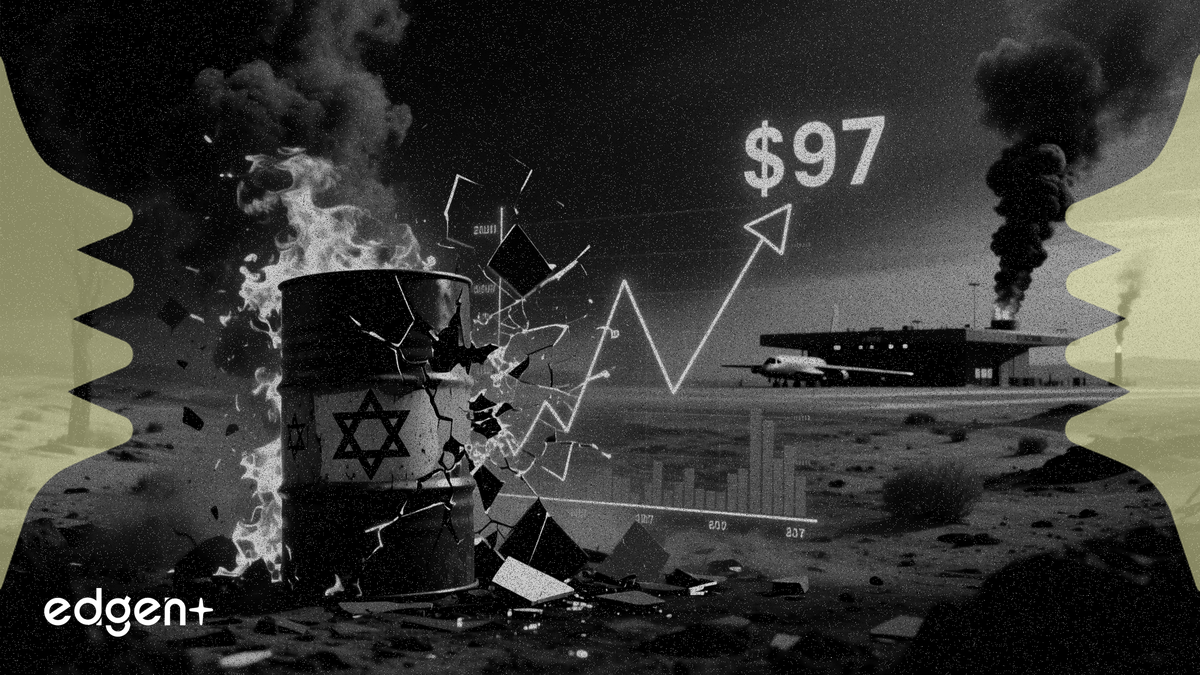
Iran's Islamic Revolutionary Guard Corps struck Israel's Ramat David Airbase with ballistic missiles late Sunday, warning the attack was only a "warning" and that any renewed Israeli aggression would trigger strikes across all US and Israeli targets in the region.
"The response of the IRGC Aerospace Force was merely a warning," the Guard said in a statement. "If Israel's aggression occurs again, the scope of Iran's response will be more extensive and will cover all American and Israeli targets in the region."
The strike came hours after Israeli forces struck Beirut's southern suburbs and the southern city of Tyre, which Lebanon's health ministry said killed two people and wounded 20 others, including four women and four children. Iran framed its retaliation as a response to what it called Israeli "crimes" and "mass killings" of civilians in southern Lebanon and the capital's outskirts.
Brent crude traded near $97 a barrel, according to data from the previous session, as traders priced in the risk of supply disruption through the Strait of Hormuz, a chokepoint that handles about 21 percent of global oil consumption. Gold rose on safe-haven demand while equity futures pointed lower, with the VIX expected to spike as investors rotated out of risk assets.
Escalation Risks and the Fragile Ceasefire
The missile barrage represents the most serious breach of the US-brokered ceasefire that took effect in early April, which had already been fraying. The US military reported it shot down four Iranian one-way attack drones near the Strait of Hormuz over the past two days and struck Iranian coastal surveillance radar sites on Qeshm Island. Iran separately fired seven ballistic missiles at Kuwait and Bahrain, six of which were intercepted, according to US Central Command.
The White House confirmed President Donald Trump had been briefed on the escalation. In an interview with Fox News, Trump said, "What I would suggest to Iran: You've shot your missiles, that's enough. Get back to the table and make a deal."
But Iran's negotiating position has hardened. An adviser to Supreme Leader Mojtaba Khamenei told CNN that talks with the US are "at a deadlock" and "the ball is in Trump's court," demanding Washington unfreeze billions in Iranian assets as a sign of good faith. Iran's parliamentary speaker, Mohammad Bagher Ghalibaf, accused Washington of giving Israel the "green light" for the Beirut strikes and warned that US bases and Israeli assets in the region are now "legitimate targets."
Market Fallout and the Oil Premium
The Strait of Hormuz remains the central risk factor for global energy markets. The US blockade has already redirected 129 commercial vessels attempting to enter or leave Iranian ports, and six ships have been disabled to ensure compliance. Any disruption to tanker traffic through the strait could push oil prices well above $100 a barrel, according to analysts.
The last time Iran directly targeted Israeli military infrastructure with ballistic missiles was in the opening days of the conflict in late February, which sent Brent above $105 before the ceasefire brought prices back to the mid-$80s. The current trajectory suggests markets are pricing in a prolonged period of elevated geopolitical risk, with the options skew on crude widening and defense sector stocks outperforming.
The conflict has already killed 3,558 people in Lebanon since March 2, according to the Lebanese health ministry, with another 10,870 wounded. The humanitarian toll is compounding economic pressure across the region, with the UN World Food Programme warning that 45 million people could fall into acute food insecurity if oil prices remain elevated.
This article is for informational purposes only and does not constitute investment advice.
