
The war in Iran has triggered the most severe oil shock in history, according to the IEA, forcing a global reassessment of inflation risks and economic growth.
The war in Iran has triggered the most severe oil shock in history, according to the IEA, forcing a global reassessment of inflation risks and economic growth.
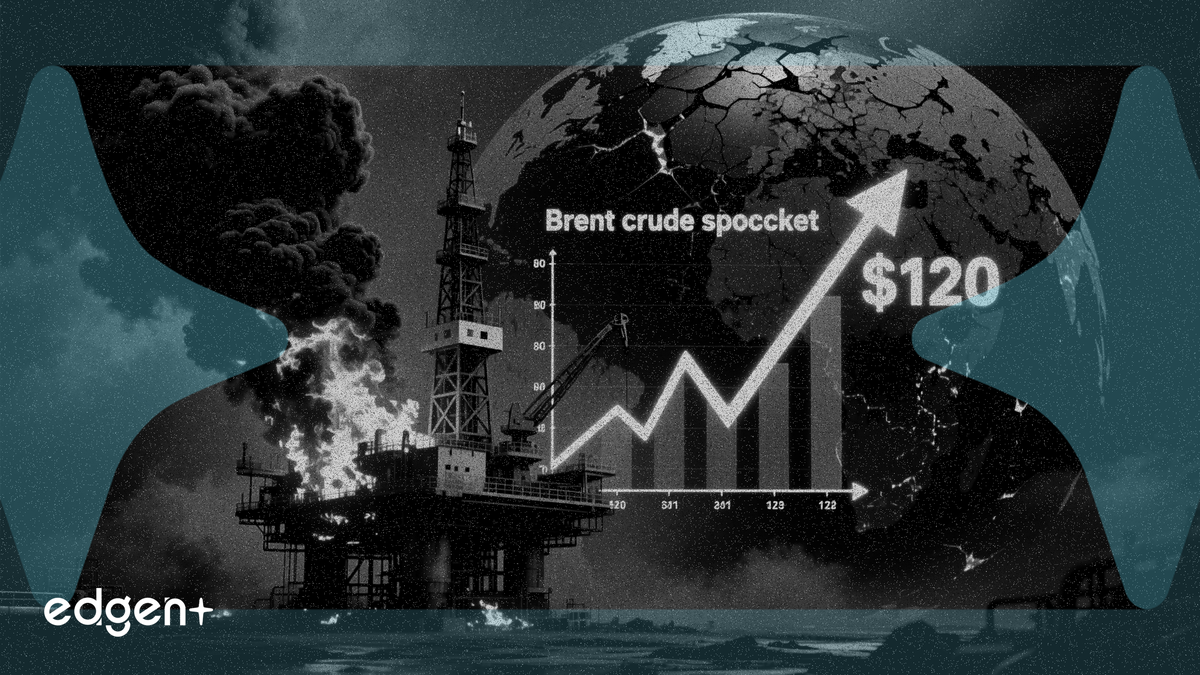
The war in Iran, now entering its third month, has pushed Brent crude prices above $120 a barrel and ignited a historic spike in chemical prices, fueling fears of a new wave of global inflation and prompting central banks to reconsider expected rate cuts. The conflict, which began on February 28, has disrupted a critical artery for global energy, with Iran’s actions in the Strait of Hormuz taking some 12 million barrels per day of crude oil supply offline.
"The global chemical supply disruption resulting from the Middle East conflict is transmitting faster and at a greater magnitude than we had anticipated," Goldman Sachs analysts wrote. The bank warned that investors are underestimating the inflationary impact on the global economy, noting that petrochemicals are found in more than 95 percent of finished goods.
The economic fallout is already materializing. U.S. nationwide average gas prices have climbed to over $4 from around $3 before the conflict, adding nearly $30 billion in additional fuel costs for consumers, according to researchers at Brown University. Global oil prices have climbed to a four-year high, a shock that economists say now rivals the surge triggered by Russia’s invasion of Ukraine in 2022.
The conflict has shifted conditions from precarious to worse for a U.S. economy that was already showing signs of strain, undercutting the Trump administration's narrative of a booming economy. "Broadly, the economy was in a precarious place even before the war began as job growth has come to a standstill," said Mark Zandi, chief economist at Moody’s Analytics. "The tail on the closure of the Strait of Hormuz is long and will linger for months to quarters."
The most immediate and perhaps underappreciated impact has been on the petrochemical market, which Goldman Sachs calls the "foundation of global manufacturing." Prices for these key inputs, used in everything from clothing and beauty products to cars and pharmaceuticals, have jumped more than 60 percent in recent weeks, the fastest rate on record.
This price shock is forcing an average 11 percent increase in the cost of goods sold for U.S. and European companies before accounting for other war-related costs like energy and transport, Goldman estimates. The bank reports that 20 percent of global chemical supply is already offline, leading to margin compression and production cuts.
The energy shock is feeding directly into inflation at a moment when price pressures had already proved difficult to tame, complicating the path forward for central banks. The U.S. Federal Reserve left interest rates unchanged in its latest meeting, citing a "high level of uncertainty about the economic outlook" caused by the war.
The conflict appears to have closed the door on interest-rate cuts that markets had anticipated for this year. According to the CME FedWatch tool, the chances of the central bank holding rates steady became a near certainty as the war pushed inflation to its fastest pace of Donald Trump’s presidency. "Fed rate cuts were on the cards," economist Justin Wolfers posted to X. "But then the U.S. invaded Iran. Now the outlook is very different." Similarly, the Bank of Canada is expected to keep its key policy rate on hold at 2.25 percent, with Governor Tiff Macklem expressing little concern about a near-term inflation spike.
Despite the head of the International Energy Agency, Fatih Birol, describing the current oil shock as the worst-ever—more serious than those in 1973, 1979, or 2022—some analysts argue that the global economy is more resilient than in the past. Global equity markets, though volatile, have remained above pre-war levels.
The key reason is that the global economy has become less oil-intensive. According to analysis from Stephen Jen, CEO of Eurizon SLJ Asset Management, the "oil intensity" of GDP is currently about a third of what it was in 1973. Adjusting for inflation and oil intensity, Jen's econometric estimates suggest that $100 a barrel today is equivalent to roughly $5 in 1973.
Furthermore, the U.S. is now broadly self-sufficient in hydrocarbon fuels as a result of the shale boom, making it half as sensitive to oil price increases as Europe or Asia. While a 50 percent crude oil price shock in the 1970s had a negative 1.0 percent impact on U.S. GDP over eight quarters, the analysis indicates it would likely only have a negative 0.2 percent impact at present.
For investors, the resurgence of inflation and stagflation fears has increased market volatility and spurred a potential flight from risk assets. Defending portfolios in this environment may involve turning to exchange-traded funds (ETFs) that offer exposure to inflation-hedged commodities or energy-sector companies that could benefit from the price surge.
This article is for informational purposes only and does not constitute investment advice.

