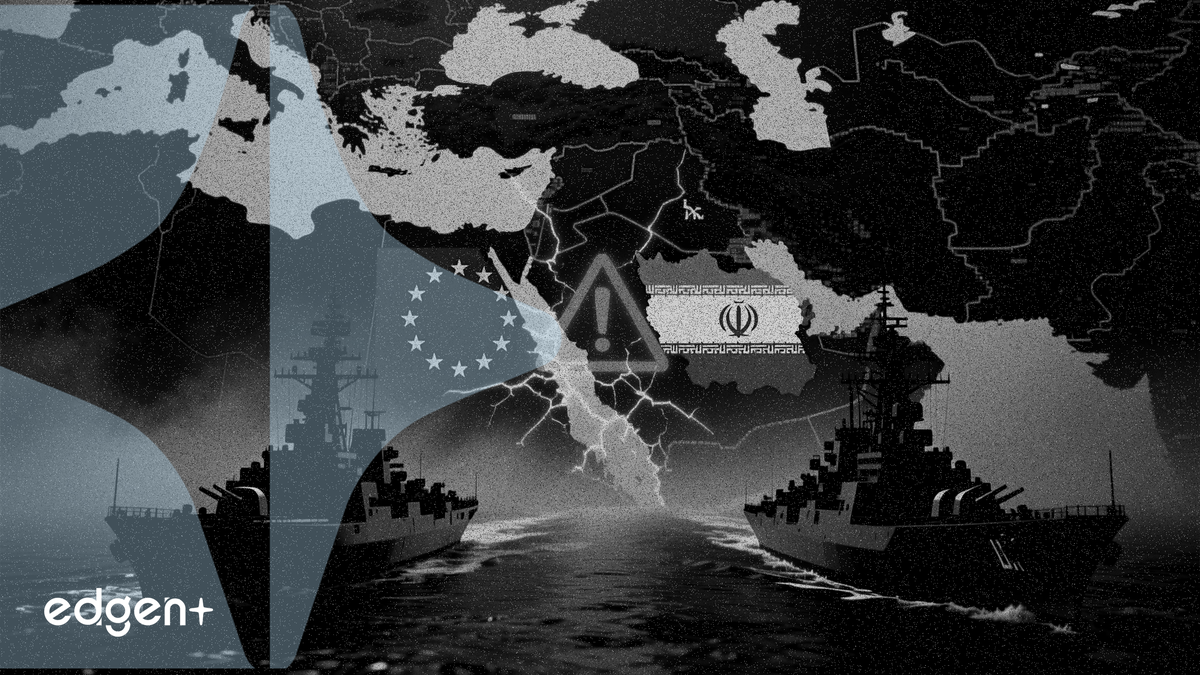
Iran's warning to France and the UK raises the stakes in a waterway that handles over 20% of global oil supply, threatening market stability despite ongoing diplomatic efforts.
Back
Iran's warning to France and the UK raises the stakes in a waterway that handles over 20% of global oil supply, threatening market stability despite ongoing diplomatic efforts.

Iran issued a direct warning to France and the United Kingdom against any military deployment in the Strait of Hormuz, stating such actions would escalate the crisis in the critical waterway as tensions with a U.S.-led coalition remain high. The declaration follows plans for increased naval presence from the European powers aimed at securing shipping lanes that have been disrupted by a wider conflict.
"Any external military deployment under the pretext of 'protecting shipping' is tantamount to exacerbating the crisis and militarizing this crucial waterway," Iranian Deputy Foreign Minister Gharibabadi said on May 10. In his statement, he asserted that only Iran has the capability and right to guarantee the strait's security and would not permit interference.
The warning comes as the UK deploys its Type 45 air defense destroyer, HMS Dragon, to the Middle East. The move is described as "prudent planning" for a potential multinational mission, led jointly by the UK and France, to secure the strait once conditions permit. U.S. Central Command separately reported that its naval blockade of Iranian ports has redirected 58 commercial vessels and disabled four since April 13, highlighting the active and ongoing military friction in the region.
This direct confrontation in rhetoric heightens risks for the global energy market, where the Strait of Hormuz serves as a chokepoint for a fifth of the world's oil supply. While a fragile U.S.-Iran ceasefire is technically in place, the continued military posturing could threaten the flow of liquefied natural gas (LNG) and trigger a significant spike in crude prices and broader market volatility, similar to the initial 8% jump in Brent crude futures when the conflict began in February.
Despite a month-old ceasefire, clashes have continued. U.S. forces have enforced a strict blockade on Iranian ports, with a U.S. Navy F/A-18 Super Hornet disabling two Iranian-flagged oil tankers on Friday by firing munitions into their smokestacks, according to CENTCOM. In response, Iran's Revolutionary Guard has issued threats of a "heavy assault" on U.S. bases and ships if its tankers are targeted. These exchanges occur even as both sides maintain the ceasefire is formally holding.
The military buildup is not limited to the UK. France announced its aircraft carrier, the Charles de Gaulle, is also heading toward the southern Red Sea to signal its readiness to secure the strait. This Western naval consolidation is occurring against a backdrop of Iranian military drills and statements from commanders that its missiles are "locked on" to U.S. targets in the region, awaiting an order to fire.
Parallel to the military posturing, diplomatic channels are being worked to de-escalate the situation. The United States is awaiting Tehran's response to a peace proposal aimed at formally ending the conflict and initiating broader talks. Qatar has emerged as a key intermediary, with its prime minister meeting top U.S. officials, including Secretary of State Marco Rubio, to facilitate communication.
Iran has publicly confirmed it is reviewing the U.S. offer, though its foreign ministry spokesman stated that Tehran would not respond to "deadlines or ultimatums." An Iranian foreign ministry advisor, Ali Safari, acknowledged receiving messages that the U.S. seeks to avoid further military escalation but warned that recent American attacks in the strait "cannot be ignored" and risk undermining diplomatic progress. The successful transit of a Qatari LNG tanker toward the strait, reportedly with Iran's approval, is being viewed as a potential confidence-building measure.
This article is for informational purposes only and does not constitute investment advice.