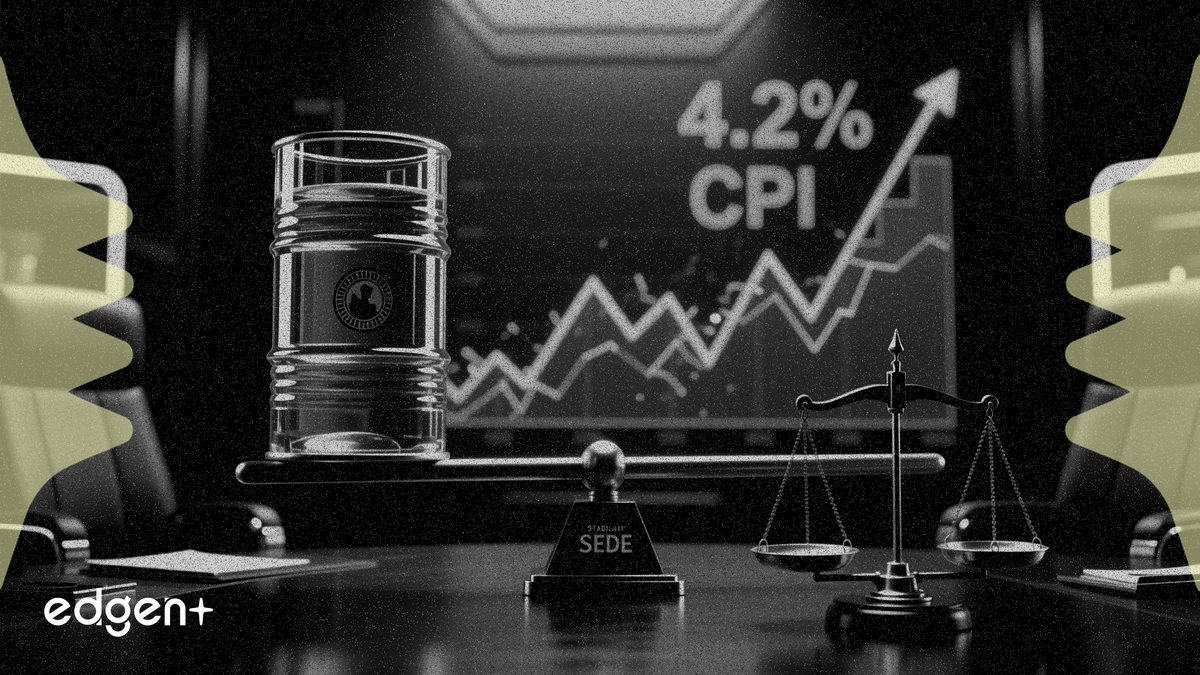
Larry Kudlow's proposal to deploy the Strategic Petroleum Reserve as a tool to influence Federal Reserve policy would create an unprecedented link between US energy stockpiles and interest rate decisions, giving the White House a new mechanism to push back against the central bank's inflation fight.
Former Trump economic adviser Larry Kudlow proposed using the Strategic Petroleum Reserve to steady Federal Reserve interest rate decisions, linking energy policy to monetary policy as inflation hit 4.2% in May, the highest annual reading in three years. The concept would give the Trump administration a direct tool to influence borrowing costs by managing oil supply and, by extension, gasoline prices — a key component of consumer inflation expectations.
"Using the strategic reserve as a monetary policy tool would effectively let the executive branch manage a key input into the Fed's inflation calculation," said Kudlow, who served as director of the National Economic Council under President Donald Trump. The proposal arrives as Fed Chair Kevin Warsh faces mounting pressure from the White House to cut rates, while inflation data pushes in the opposite direction.
The Consumer Price Index rose 4.2% year over year in May, accelerating from 3.8% in April and reversing much of the progress made toward the Fed's 2% target. Oil supply disruptions and Middle East instability have pushed crude prices higher, raising gasoline and transportation costs across the supply chain. US strategic petroleum reserves have meanwhile dropped toward levels not seen since the Reagan administration, limiting the government's buffer against supply shocks, according to energy analysts.
The Fed's next policy meeting on June 16-17 is widely expected to hold rates steady, though persistent inflation above target raises the probability of at least one rate hike by year-end. Overnight index swaps currently price a 62% probability of a hold in June, with the balance tilted toward tightening rather than the cuts Trump has demanded. The last rate change was a 25-basis-point cut in September 2024, leaving the fed funds rate at 4.75% to 5%.
Kudlow's proposal would weaponize the roughly 375 million barrels remaining in the Strategic Petroleum Reserve as a counterweight to the Fed's independence. By releasing crude into the market, the administration could push down gasoline prices — a politically sensitive metric that feeds directly into consumer inflation expectations and, by extension, the Fed's policy calculus. The last time the SPR was tapped at scale was in 2022, when the Biden administration released 180 million barrels to combat post-Ukraine invasion price spikes, temporarily lowering WTI crude by about 15%.
The plan faces significant operational hurdles. The SPR requires weeks to release crude at meaningful volumes, making it a blunt instrument for fine-tuning monetary policy. Moreover, drawing down reserves below 300 million barrels could leave the US vulnerable to genuine supply emergencies, particularly as domestic production growth slows and OPEC maintains production discipline.
For markets, the proposal introduces a new layer of uncertainty into both crude oil and interest rate expectations. WTI crude could see increased volatility if traders begin pricing in the probability of politically motivated SPR releases. The S&P 500, which has rallied this year partly on expectations of rate cuts, would face headwinds if the Fed is forced to hike instead — or if the oil reserve gambit is seen as undermining central bank credibility.
The broader question is whether the Fed under Warsh will tolerate what amounts to fiscal intervention in monetary policy. The last time a White House openly pressured the Fed on rates, during Trump's first term, then-Chair Jerome Powell held firm, keeping rates unchanged through most of 2019 despite repeated public attacks. Warsh, a former Fed governor himself, has given no indication he would be more accommodating.
This article is for informational purposes only and does not constitute investment advice.