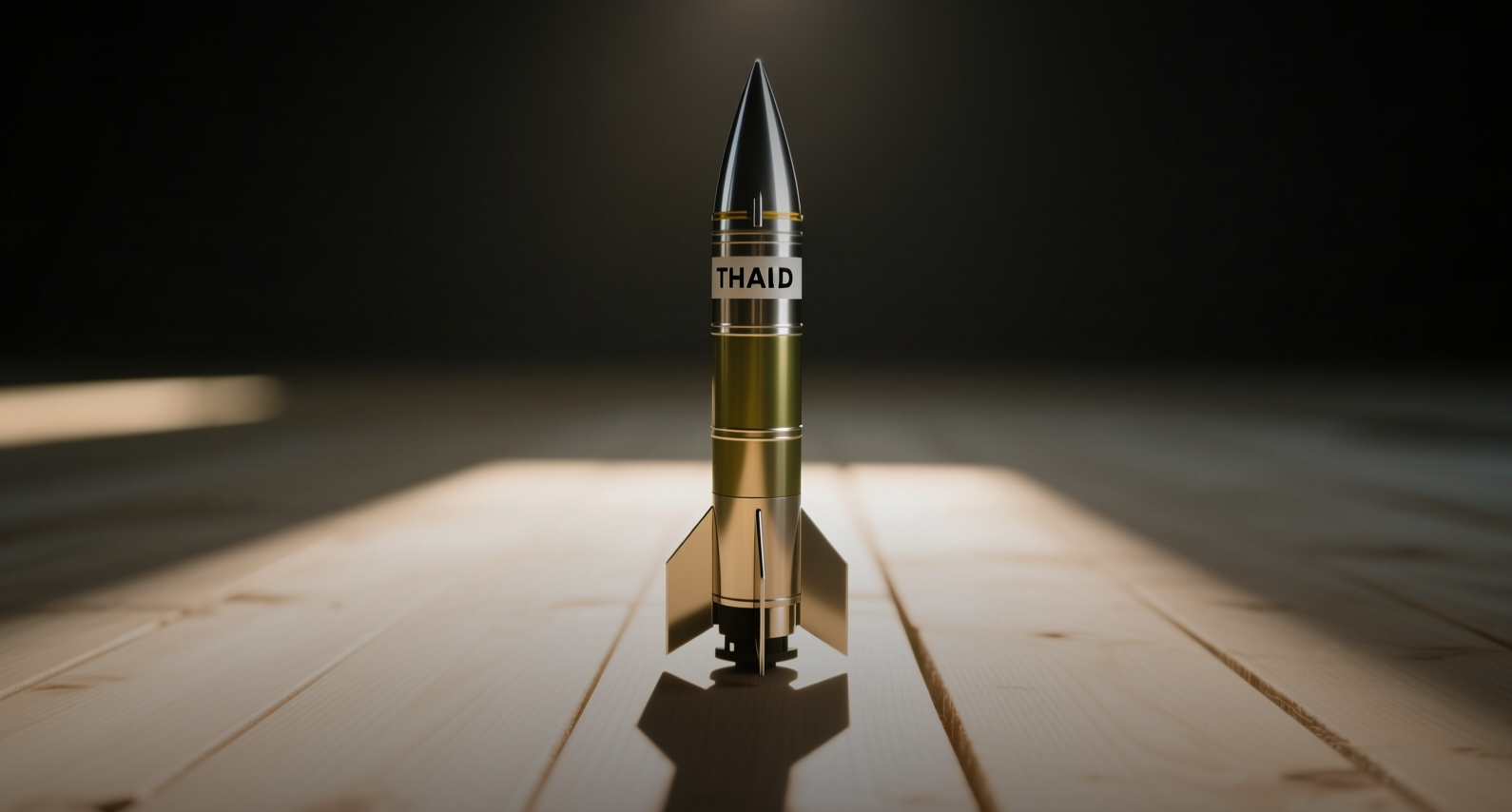
The Pentagon's largest-ever missile defense procurement signals a new era of production-at-scale defense contracting under the Department of War's Acquisition Transformation Strategy.
The U.S. Department of War awarded Lockheed Martin a seven-year contract worth up to $35 billion to quadruple production of THAAD interceptors, one of the first major procurements under its new Acquisition Transformation Strategy.
"This award represents a fundamental shift in how the Pentagon buys missile defense — moving from annual increments to multiyear, production-at-scale commitments," a Lockheed Martin spokesperson said in a statement. The contract is structured as an undefinitized contract action, allowing work to begin immediately while final terms are negotiated.
The award covers a seven-year period and aims to quadruple THAAD interceptor output. It is one of the first full-scale transitions from framework agreement to contract execution under the Acquisition Transformation Strategy, a Pentagon initiative designed to accelerate procurement timelines and increase production volumes across critical weapons systems.
The contract comes as the Pentagon ramps up missile defense spending amid heightened geopolitical tensions. The Department of War requested $21 billion in FY 2027 for munitions, counter-drone technologies and unmanned systems, a sharp increase from $13 billion for autonomous systems in FY 2026, according to DefenseScoop. THAAD, which intercepts short- to intermediate-range ballistic missiles, has become a cornerstone of U.S. and allied air defense architecture.
Pentagon's Acquisition Transformation Takes Shape
The THAAD award is part of a broader Pentagon push to scale weapons production through multiyear contracting. Under the Acquisition Transformation Strategy, the Department of War is shifting from single-year procurement cycles to longer-term commitments that allow contractors to invest in production capacity. The strategy mirrors approaches used in the Collaborative Combat Aircraft program, where the Air Force awarded separate contracts for air vehicles and mission autonomy software to accelerate delivery, with the service requesting $1 billion for CCA in FY 2027 alone.
Lockheed Martin's Missiles and Fire Control division, which produces THAAD, is expected to expand its manufacturing footprint to meet the increased production targets. The company did not disclose specific production volumes or facility expansion plans.
The last major multiyear missile defense procurement of this scale was the Ground-based Midcourse Defense system, which received approximately $15 billion over a decade. The THAAD contract, at up to $35 billion over seven years, represents more than double that commitment on an annualized basis, reflecting the Pentagon's assessment of a heightened ballistic missile threat from adversaries including North Korea and Iran.
What the THAAD Award Means for Defense Contractors
For Lockheed Martin, the contract adds roughly $5 billion per year to its backlog, providing long-term revenue visibility. The defense giant reported $71 billion in total backlog as of its most recent filing. For the broader defense sector, the award signals that the Pentagon is willing to commit to large-scale, multiyear production contracts, potentially benefiting suppliers across the missile defense supply chain including Raytheon Technologies, Northrop Grumman and Boeing.
The contract also validates the Pentagon's new approach to procurement. By committing to a seven-year production run, the Department of War gives Lockheed Martin the certainty needed to invest in dedicated production lines, tooling and workforce — a model it may apply to other critical munitions programs. Investors will watch for follow-on awards under the Acquisition Transformation Strategy, which could include long-range precision strike missiles, hypersonic weapons and next-generation interceptors.
This article is for informational purposes only and does not constitute investment advice.