Points clés :
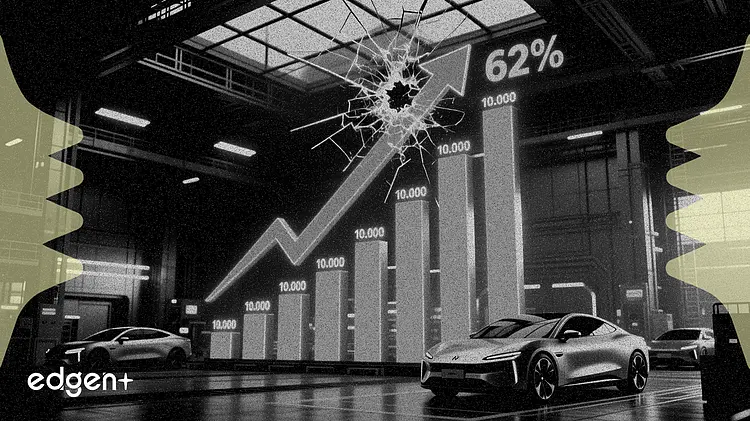
- NIO a livré 37 705 véhicules en mai, en hausse de 62,3 % sur un an
- Les livraisons mensuelles ont augmenté de 28,4 % par rapport à avril, soit la progression séquentielle la plus rapide de l'année
- Les livraisons cumulées ont dépassé 1,14 million de véhicules au 31 mai
NIO Inc. a livré 37 705 véhicules en mai, soit une hausse de 62,3 % par rapport à l'année précédente et un bond de 28,4 % par rapport à avril, alors que la stratégie multi-marques du constructeur chinois de véhicules électriques gagne du terrain avec le lancement de deux nouveaux SUV.
Le total de mai pour la société basée à Shanghai comprend 20 013 véhicules de la marque phare NIO, 12 029 de la marque familiale ONVO et 5 663 de la marque d'entrée de gamme FIREFLY, selon un communiqué publié lundi. Les livraisons cumulées depuis le début de l'année atteignent 150 526 unités, en hausse de 68,7 % par rapport à la même période l'an dernier.
« Le L80 a reçu un accueil très favorable de la part des utilisateurs depuis son lancement, accélérant encore l'adoption des BEV sur le marché des grands SUV cinq places », a déclaré NIO dans son communiqué, en référence au ONVO L80 lancé le 15 mai, dont les livraisons ont débuté le lendemain. La société a également commencé à livrer l'ES9, son SUV exécutif phare, le 28 mai.
Cette solide performance de mai positionne NIO pour défier son record trimestriel de livraisons de 63 023 véhicules, établi au quatrième trimestre 2025. Les livraisons cumulées de la société ont désormais atteint 1 148 118 depuis sa création en 2014.
La stratégie multi-marques prend de l'ampleur
L'approche multi-marques de NIO reflète la stratégie de son grand rival BYD Co., qui vend des véhicules sous les marques Dynasty, Ocean, Yangwang, Fangchengbao et Denza. Alors que BYD a livré environ 1,77 million de véhicules dans le monde au cours des cinq premiers mois de 2026, le total de 150 526 unités de NIO depuis le début de l'année représente environ 8,5 % du volume de BYD — mais à des prix de vente moyens nettement plus élevés.
Le prix de vente moyen de la marque NIO dépasse les 400 000 RMB (environ 55 000 $), le tout nouveau ES8 se classant comme le modèle le plus vendu au-dessus de ce seuil de prix, toutes énergies confondues, pendant cinq mois consécutifs jusqu'en mai. La marque ONVO cible la fourchette des 200 000 à 300 000 RMB, tandis que FIREFLY concurrence le segment inférieur à 200 000 RMB, créant ainsi une échelle de prix à trois niveaux.
Intensification du paysage concurrentiel
La croissance des livraisons de NIO de 62,3 % dépasse celle du marché chinois des véhicules électriques dans son ensemble, qui a progressé d'environ 35 % au cours des quatre premiers mois de 2026, selon les données de l'Association chinoise des voitures particulières. Le rival XPeng Inc. a livré 34 422 véhicules en mai, tandis que Li Auto Inc. n'a pas encore publié ses résultats de mai.
Le marché chinois des véhicules électriques reste extrêmement concurrentiel, Tesla Inc. ayant réduit à plusieurs reprises les prix de ses Model 3 et Model Y en Chine cette année. L'infrastructure d'échange de batteries de NIO — plus de 2 700 stations à travers la Chine — constitue une différenciation que le réseau Supercharger de Tesla ne peut égaler, bien qu'elle implique des dépenses d'investissement plus élevées.
Implications pour les investisseurs
Les actions NIO, cotées au NYSE, à la Bourse de Hong Kong et à la Bourse de Singapour, ont gagné environ 15 % depuis le début de l'année jusqu'à la clôture de vendredi. L'accélération des livraisons de NIO en mai suggère que la stratégie multi-marques gagne en traction opérationnelle, bien que la rentabilité reste la question clé pour les investisseurs. NIO a déclaré une perte nette de 5,0 milliards de RMB (690 millions de dollars) au premier trimestre 2026, en réduction par rapport à 5,2 milliards de RMB un an plus tôt.
Le lancement de l'ES9 dans le segment des SUV exécutifs premium — une catégorie dominée par les modèles à moteur thermique de BMW et Mercedes-Benz — représente le défi le plus direct de NIO à l'encontre des constructeurs automobiles de luxe traditionnels. Si l'ES9 maintient l'accueil reçu par l'ES8, il pourrait aider NIO à atteindre son objectif de marges brutes positives sur l'ensemble de ses trois marques d'ici la fin de l'année.
Cet article est fourni à titre informatif uniquement et ne constitue pas un conseil en investissement.