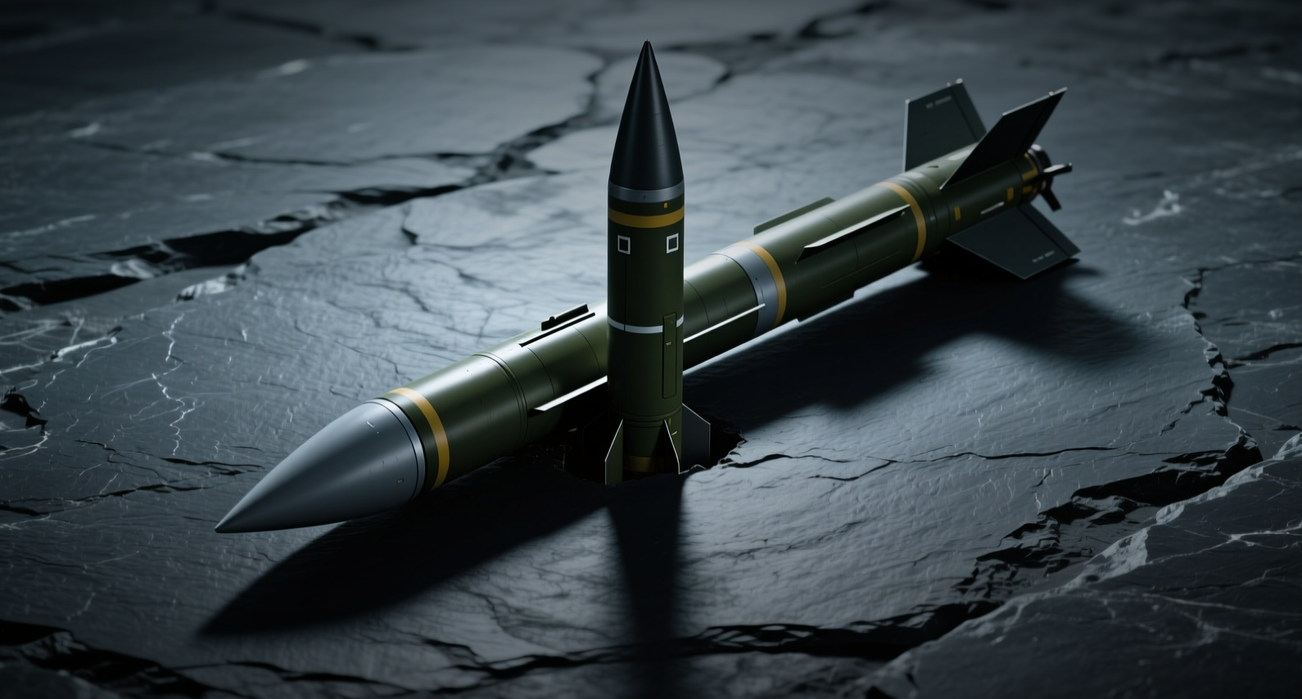
North Korea's short-range ballistic missile launch into the Sea of Japan on Thursday marks the sharpest escalation in a widening standoff with Tokyo, coming a day after Pyongyang threatened new "military options" against Japan's defense build-up.
North Korea fired a short-range ballistic missile into the Sea of Japan on Thursday, its first launch in six weeks, escalating friction with Tokyo after Pyongyang condemned Japan's first-ever test of a U.S.-made Tomahawk cruise missile.
"One effective way is to make Japan feel that its security has been exposed to greater danger," Kim Yo Jong, the powerful sister of leader Kim Jong Un, said in a Wednesday statement carried by North Korean state media.
The missile, launched from the eastern Wonsan area at about 5pm local time (0800 GMT), landed outside Japan's exclusive economic zone with no reported damage to aircraft or vessels, Japan's Defence Ministry said. Seoul's military detected the launch and was analyzing the missile's specifications with Washington, while Japan's coast guard urged ships to report any fallen objects.
The launch, timed to the 81st anniversary of the U.S. bombing of Hiroshima, sharpens a regional standoff in which Japan's military build-up — defense spending rose 9.7 percent to about $88.3 billion in 2025, the highest share of GDP since 1958 — has become the central flashpoint.
Japan's Build-Up Draws Pyongyang's Fire
The friction has built for weeks. In the run-up to Thursday's launch, Kim Yo Jong criticized Japan's first-ever test of a U.S.-made Tomahawk cruise missile and Tokyo's participation in U.S.-led exercises earlier this year, accusing Washington of backing Tokyo's "dangerous military moves." After the Tomahawk test last week, North Korean state media called the U.S. forces in Japan a "de facto war command" and vowed to keep expanding its nuclear program.
Prime Minister Sanae Takaichi has been arming Tokyo with new capabilities, announcing plans last week to deploy an Aegis destroyer in the Pacific. In a defense white paper released Tuesday, Japan cited growing military coordination between China, Russia and North Korea as a heightened security risk, and raised concern that Moscow could transfer nuclear and missile-related technology to Pyongyang in exchange for North Korean troops and weapons deployed for Russia's war in Ukraine. Japanese defense officials said they could not assess whether Russia had given North Korea direct military assistance but warned that close coordination in Ukraine could improve the performance of North Korean missiles.
The last time North Korea launched a missile into the Sea of Japan in January, the yen weakened and Japanese defense stocks such as Mitsubishi Heavy Industries and Kawasaki Heavy Industries outperformed the broader Topix, a pattern traders may watch again as Seoul and Washington prepare for the annual Ulchi Freedom Shield exercises later this month. North Korea has long decried those drills as rehearsals for invasion.
A Region in a Three-Way Squeeze
China, a key ally of North Korea, has joined Russia in condemning the expanding scope of U.S. military cooperation with Asian allies, expressing alarm at what it calls Japan's "new militarism." The alignment of Beijing, Moscow and Pyongyang against the U.S.-Japan-South Korea axis has turned the Sea of Japan into a fault line where a single launch can move regional risk premiums.
South Korea's dovish President Lee Jae Myung, who took office in June 2025, has reversed his predecessor's hawkish stance by offering Pyongyang talks without preconditions — an overture the North has yet to answer. Some analysts read Thursday's launch as a signal ahead of Kim Jong Un's expected visit to Russia this year. "Before heading to Russia, Kim may have wanted to demonstrate that Pyongyang had already tested these missile systems and achieved satisfactory results," said Ahn Chan-il, a North Korean-born researcher. "If the trip materializes, Kim is very likely to showcase them to Russia or seek to export them."
For investors, the immediate market impact is likely contained — the missile landed outside Japan's exclusive economic zone and Pyongyang's state media did not report the launch. But the medium-term risk is real: if Russia transfers missile technology to North Korea in exchange for troops and munitions, the region's defense calculus shifts, and Japanese and South Korean defense budgets — already at multi-decade highs — could climb further. The U.S., Japan and South Korea are monitoring for additional launches while analyzing the missile's flight distance, Seoul's defense ministry said Thursday.
This article is for informational purposes only and does not constitute investment advice.