

Nvidia agreed to acquire open-source AI model hub Hugging Face for $12.9 billion, extending its dominance from GPU hardware into the platform where developers distribute and choose open-weight models.
Nvidia agreed to acquire open-source AI model hub Hugging Face for $12.9 billion, extending its dominance from GPU hardware into the platform where developers distribute and choose open-weight models.
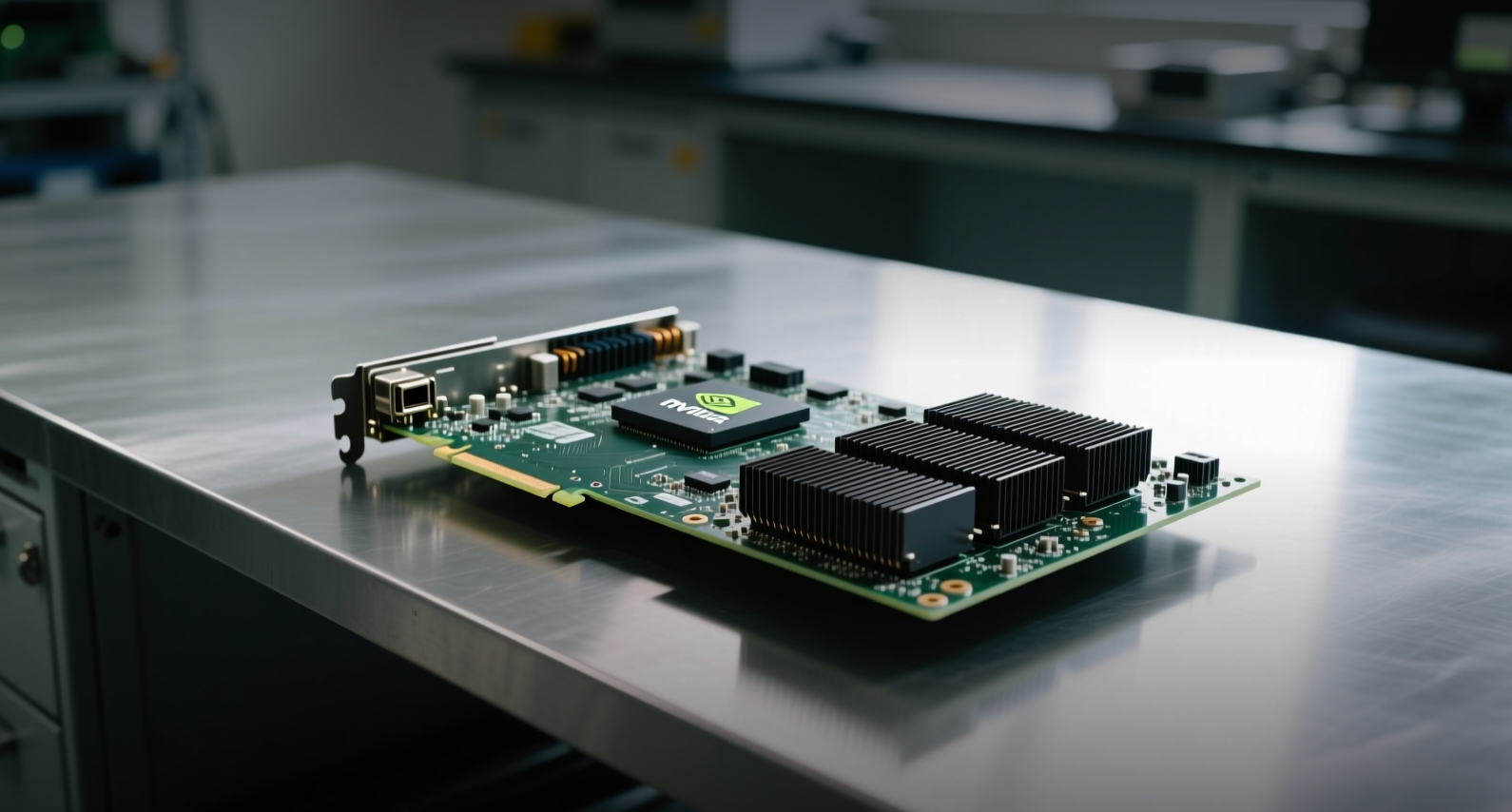
Nvidia's $12.9 billion purchase of Hugging Face puts the world's most valuable chipmaker in control of the hub where developers pick open-weight AI models, extending its reach from the GPUs that train them to the platform that routes them to hardware.
"Hugging Face will remain an open platform," Nvidia Chief Executive Officer Jensen Huang said in a Sept. 3 blog post. "Nvidia compute will not be required to build on or deploy through Hugging Face."
The deal, Nvidia's second-largest after the $20 billion purchase of Groq assets in December, values the startup founded in 2016 at roughly 86 times its reported $150 million in annualized revenue. Hugging Face was last valued at $4.5 billion in a 2023 funding round Nvidia joined; it had earlier declined a $500 million Nvidia investment that would have set a $7 billion valuation, the Financial Times reported. Chief Executive Officer Clément Delangue told CNBC he approached Huang over the summer and the two reached terms within weeks.
The acquisition lands as closed-source rivals OpenAI, Anthropic and Google push to build their own accelerators, and it revives the antitrust questions that sank Nvidia's $40 billion Arm takeover in 2022.
Microsoft paid $7.5 billion for GitHub in 2018 and promised independence it could keep at no engineering cost. Nvidia faces a sharper conflict. Hugging Face's Optimum libraries maintain documented paths onto AWS Trainium and Inferentia, Google TPUs, AMD Instinct, Intel Gaudi and Furiosa silicon — meaning Nvidia would fund work that makes competitors' accelerators easier to adopt.
Nvidia already publishes its Nemotron model family on Hugging Face rather than gating it behind its own NGC catalog, and its NIM deployment tooling pulls models from the hub. The company and AMD each released more than 200 new model repositories on Hugging Face in the first seven months of 2026, according to the platform's summer review. Owning the registry would let Nvidia steer that discovery layer toward its own NIM profiles, though much of Optimum is open source and AMD or Intel could maintain it themselves.
The Federal Trade Commission alleged in 2021 that Nvidia would gain the ability and incentive to disadvantage rivals dependent on Arm's neutral designs, and Nvidia abandoned the deal a year later. Hugging Face is easier to fork than Arm's architecture estate, which weakens a foreclosure case, but the platform's own data shows concentration: 1.5 percent of model repositories account for 99.2 percent of downloads.
The price sits far above the 2026 US premerger notification threshold, so agencies get a formal look. European Commission and Competition and Markets Authority jurisdiction turns on turnover tests Hugging Face has not published, leaving review there possible rather than assured.
For enterprises standardizing on a model registry, the practical test comes before regulators finish: whether non-Nvidia backends keep shipping on the same cadence and whether Hub search stops favoring models carrying a Nvidia profile. Nvidia shares, which have made it the world's most valuable company on GPU demand, face little near-term pressure from the deal, but a visible slip in release parity for AMD, Trainium or Gaudi paths would hand a credible rival hub its opening.
This article is for informational purposes only and does not constitute investment advice.
