

Nvidia CEO Jensen Huang announced a ~$1 trillion US AI infrastructure investment at the G20 summit, reinforcing the AI capex supercycle as the Trump administration pushes light-touch regulation.
Nvidia CEO Jensen Huang announced a ~$1 trillion US AI infrastructure investment at the G20 summit, reinforcing the AI capex supercycle as the Trump administration pushes light-touch regulation.
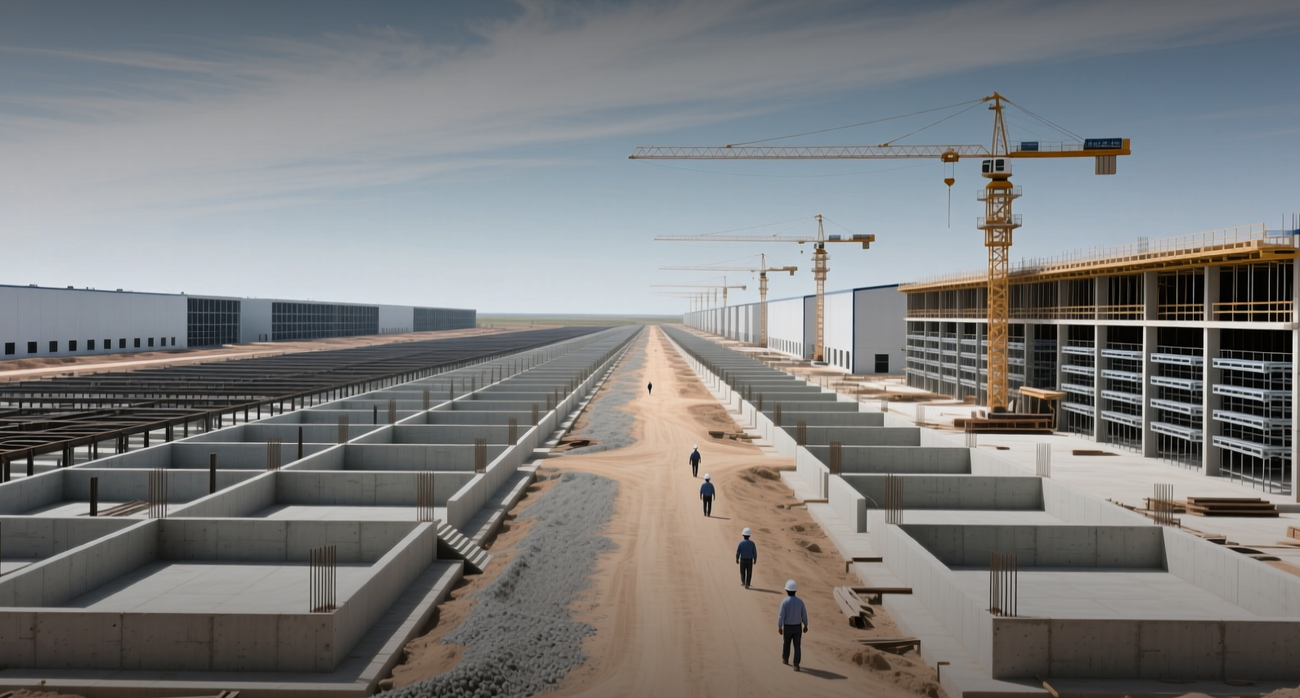
Nvidia will pour nearly $1 trillion into US AI infrastructure this year, CEO Jensen Huang told G20 ministers Wednesday, sending shares up more than 4 percent and reinforcing the AI capex supercycle.
"Every country needs to build infrastructure to support its own economy," Huang said during a sit-down with Commerce Secretary Howard Lutnick at the two-day summit in Chapel Hill, North Carolina. He compared AI to water and electricity — public infrastructure every nation must construct — and called it "the greatest equalizer."
The announcement follows Nvidia's fiscal second-quarter results showing revenue of $96.2 billion, more than double a year earlier, with data center revenue climbing 117 percent to $89 billion. The company has projected roughly 70 percent revenue growth in fiscal 2028. Nvidia shares traded up more than 4 percent intraday Wednesday, though the stock has gained just 12 percent this year, reflecting broader investor caution around the AI trade.
The $1 trillion figure — roughly 3.5 percent of US GDP — signals that the AI buildout is entering a scale-up phase where compute infrastructure becomes as foundational as the electrical grid. Huang urged governments to regulate "actual and concrete harms" rather than "theoretical and hypothetical ones," arguing that product safety should be the responsibility of companies, not government officials.
The Trump administration is using the G20 gathering to press member nations to adopt what it calls the "Carolina Principles," a framework that urges countries to refrain from creating new AI-specific regulatory bodies or rules. White House Office of Science and Technology Policy Director Michael Kratsios, co-hosting alongside Lutnick, is expected to tell attendees that "policymakers do not need to approach each innovation in isolation and should not treat every emerging technology as a first-of-a-kind policy problem."
The push comes as AI governance remains stalled across major economies. No federal AI legislation has passed in the US, while the European Union has delayed key compliance deadlines under its AI Act. Canada's delegation intends to push back, arguing AI development must be weighed against "public trust and safety," according to a government spokesperson.
Huang's regulatory stance aligns with the administration's approach. "The worst outcome for a country is to be left behind," he said, urging policymakers not to let fear of AI dominate the conversation.
Multiple tech executives used the summit to call for accelerated data center construction. SpaceX CEO Elon Musk, appearing via video link Tuesday, criticized the EU's "extremely high" regulatory standards as stifling growth. Even Anthropic co-founder Tom Brown, known for advocating AI safety guardrails, told G20 delegates that power and labor shortages are the binding constraint on AI development.
"We're facing severe power and labor shortages to meet AI demand," Brown said. He praised Trump's recent social media endorsement of data center projects as "a source of prosperity."
Nvidia has already deployed its balance sheet to accelerate the buildout. The company committed $105 billion to a massive compute campus in Ohio where OpenAI will be the tenant, and recently partnered with Wall Street firms to arrange up to $500 billion in data center financing. Huang defended these arrangements against criticism that they constitute "circular financing," arguing that frontier AI labs are "once-in-a-generation companies" that lack the financial track record to secure capital at low cost.
The capex wave extends beyond Nvidia's own commitments. Microsoft, Amazon, and Alphabet are each spending tens of billions annually on AI data centers, while AMD and other chipmakers compete for a share of the infrastructure spend. Nvidia trades at 17.5 times earnings, below its five-year average of 23 times and well under the S&P 500's 25 times. The G20 ministerial meetings in Chapel Hill are one stop on a circuit leading to the full G20 summit in Miami in December, where the Carolina Principles could gain broader adoption.
This article is for informational purposes only and does not constitute investment advice.
