

NVIDIA told investors its fiscal 2028 growth framework of 70 percent year-over-year is a floor, with growth above 100 percent possible if TSMC wafer and HBM capacity expands.
NVIDIA told investors its fiscal 2028 growth framework of 70 percent year-over-year is a floor, with growth above 100 percent possible if TSMC wafer and HBM capacity expands.
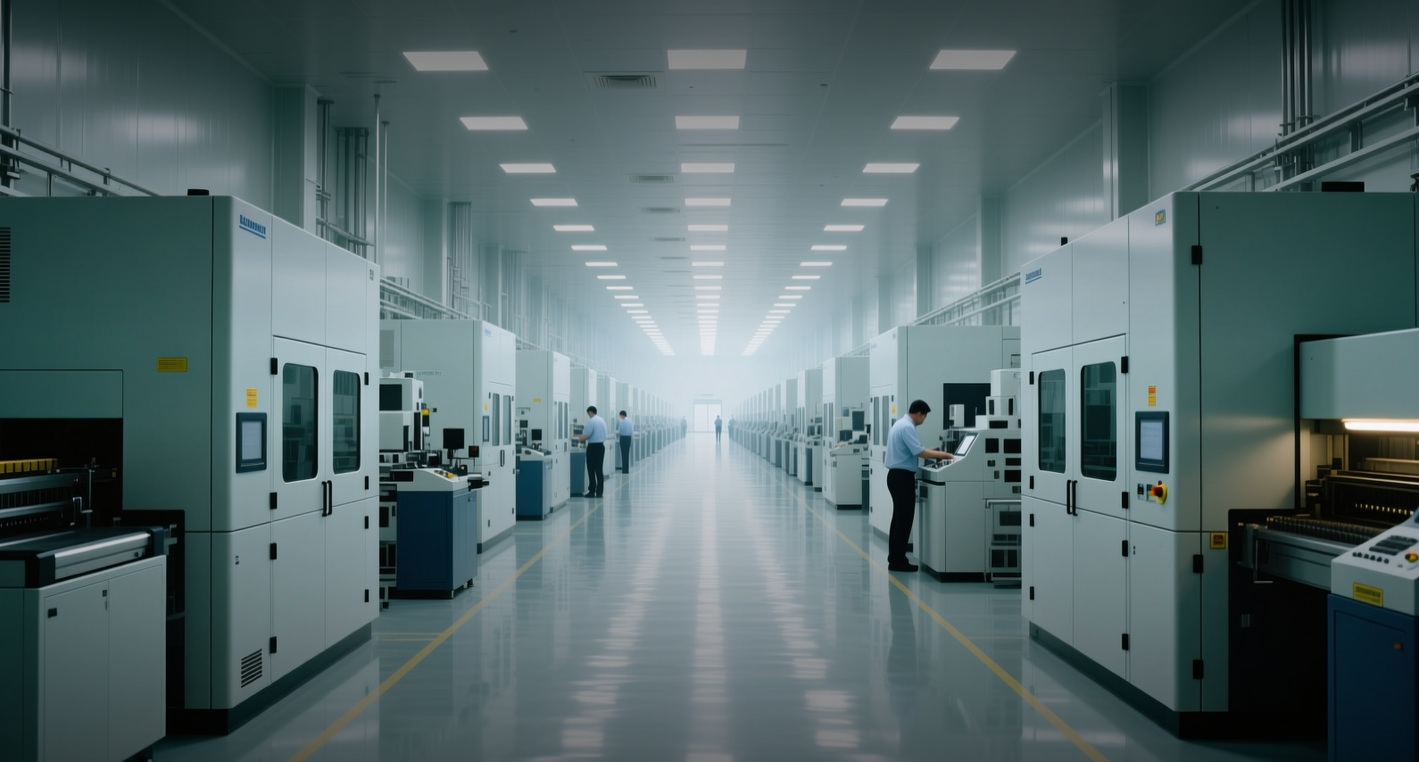
NVIDIA's 70 percent fiscal 2028 growth target is a floor, not a ceiling — management said growth could exceed 100 percent if wafer and HBM supply constraints ease, making production capacity the binding constraint.
"If there were no supply constraints, our business growth could have exceeded 100 percent," Toshiya Hari, NVIDIA's vice president of investor relations and strategic finance, said at a recent investor meeting, according to JPMorgan research.
The 70 percent framework reflects demand across hyperscalers, emerging cloud providers, AI labs, sovereign AI programs, and enterprise deployments rather than any single customer or workload. Inference revenue has overtaken training revenue roughly 18 months after the two were about equal, and emerging cloud providers now contribute more than 50 percent of NVIDIA's AI compute infrastructure revenue. OpenAI and Anthropic together represent about 20 percent of NVIDIA's business on an end-consumer basis, a share that could rise to about 25 percent by fiscal 2028.
The real constraint sits upstream. Hari identified advanced wafers from TSMC and high-bandwidth memory from Micron, SK Hynix, and Samsung as the two critical bottlenecks. TSMC's CoWoS advanced packaging capacity — the process that bonds logic dies with HBM stacks — has grown roughly ninefold since end-2023 to about 75,000 units per month in 2025, yet the supply-demand gap is still projected at about 10 percent by end-2026, according to TrendForce. Morgan Stanley estimates NVIDIA will secure about 595,000 CoWoS units in 2026, roughly 60 percent of global capacity, with Broadcom allocated about 185,000 units and AMD about 90,000.
The shift from training to inference marks a structural change in how NVIDIA's revenue behaves. Training workloads are episodic — tied to model development cycles — while inference represents continuous compute consumption as AI applications serve real users. Because Grace Blackwell GPUs can switch between training and inference workloads, NVIDIA does not break out the two precisely, but management said the gap will continue to widen.
Customer diversification reinforces the demand story. Emerging cloud providers now drive more than half of NVIDIA's AI compute infrastructure revenue, reducing the concentration risk that has weighed on the stock. OpenAI and Anthropic source most of their compute through cloud providers, so their roughly 20 percent end-consumer share does not translate directly into customer concentration for NVIDIA.
Management also addressed concerns over "circular financing" — the risk that NVIDIA's revenue-sharing agreements and its $500 billion private capital platform with Apollo, BlackRock, Blackstone, Brookfield, Goldman Sachs, and KKR could be inflating demand artificially. NVIDIA said the arrangements are controlled in size and scope, grounded in real end demand, returns across the AI infrastructure chain, and the creditworthiness of ultimate compute buyers.
The revenue-sharing model works by NVIDIA helping lock in baseline compute prices; when rental rates exceed agreed levels, NVIDIA shares in the upside. This gives the company recurring infrastructure income beyond one-time hardware sales.
For investors, the key variable is whether TSMC and HBM suppliers can ramp capacity fast enough to unlock NVIDIA's stated upside. TSMC plans to expand CoWoS capacity by more than 60 percent further by 2027, and industry-wide monthly capacity could approach 200,000 units with OSAT partner contributions. If those expansions materialize on schedule, NVIDIA's actual fiscal 2028 growth could land well above the 70 percent baseline — with positive read-throughs for Micron, SK Hynix, and Samsung, whose HBM allocations are effectively pre-sold against NVIDIA's demand visibility.
This article is for informational purposes only and does not constitute investment advice.
