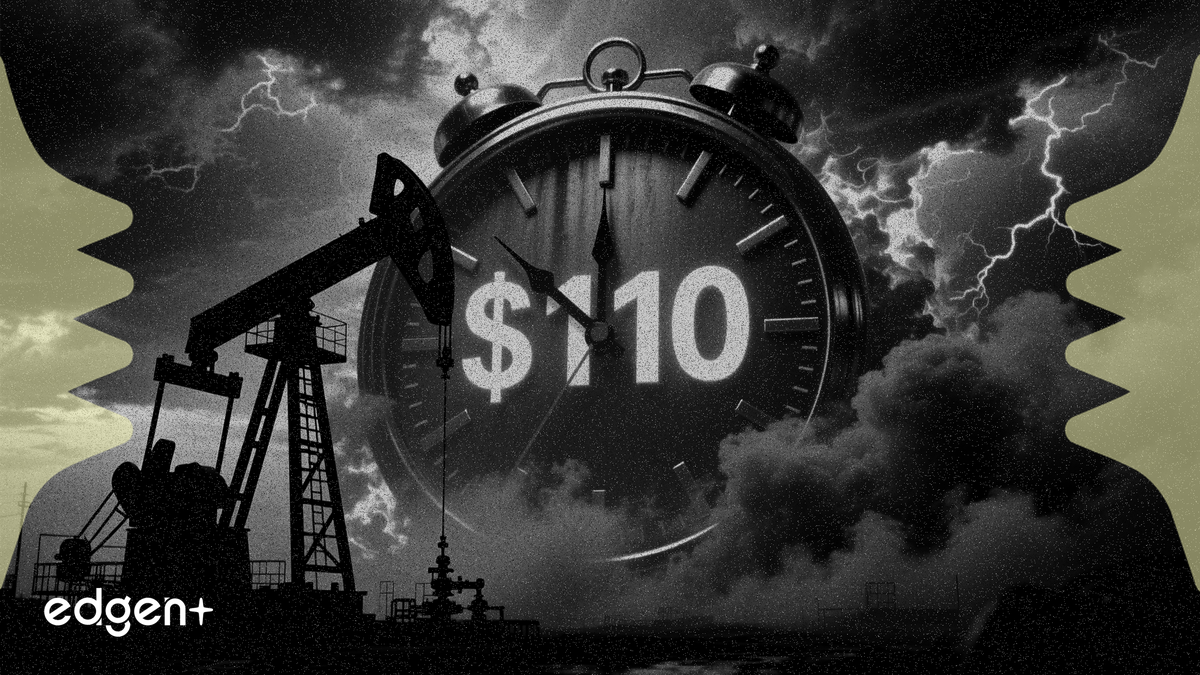
Heightened geopolitical risk in the Middle East sent crude oil prices surging, as stalled U.S.-Iran negotiations took a more confrontational turn.

Crude oil prices surged past $110 a barrel on Monday after former President Donald Trump warned Iran that the “clock is ticking” to reach a deal, intensifying fears of a wider conflict that could disrupt global energy supplies.
"For Iran, the Clock is Ticking, and they better get moving, FAST, or there won’t be anything left of them," Trump wrote on his Truth Social platform Sunday, adding "TIME IS OF THE ESSENCE!"
The sharp rhetoric follows a breakdown in talks and a recent drone strike on the United Arab Emirates’ Barakah Nuclear Power Plant. West Texas Intermediate crude for June delivery rose as much as 4.5 percent to $110.21 a barrel, the highest since March, while gold, a traditional safe-haven asset, climbed 1.2 percent.
The escalation threatens to unravel a fragile ceasefire in place since April 8, putting the 21 percent of global oil trade that passes through the Strait of Hormuz at risk and adding significant inflationary pressure to a global economy already grappling with hawkish central bank policies.
The latest threats come as negotiations to end the war have all but collapsed. A recent Iranian proposal, which included demands for full compensation for war damages and the removal of all sanctions, was summarily rejected by Trump. "Well, I looked at it, and if I don't like the first sentence, I just throw it away," Trump told reporters Friday.
In response, the United States has reportedly issued its own set of stringent demands, including the handover of nearly 900 pounds of uranium and the continuation of the war on all fronts being conditional on negotiations, according to Iran's semi-official Fars news agency. Iranian military officials have responded with defiance, with Brig. Gen. Abolfazl Shekarchi calling Trump "delusional" and warning of "crushing and severe blows" if attacks resume.
The war of words coincides with a tangible increase in regional hostilities. A drone strike on an electrical generator at the UAE's Barakah nuclear plant on Sunday, which the nation described as an "unprovoked terrorist attack," has heightened fears of a broader conflict. While no group immediately claimed responsibility, the incident underscores the vulnerability of energy infrastructure in the region.
Trump's comments followed a phone call with Israeli Prime Minister Benjamin Netanyahu, who has also struck a hawkish tone. "Our eyes are also wide open regarding Iran," Netanyahu said Sunday, adding that he was "prepared for any scenario."
The heightened geopolitical risk premium is now firmly priced into energy markets. The potential for further supply disruptions, whether through direct conflict, sanctions, or attacks on infrastructure, adds a layer of uncertainty that could keep energy prices elevated. This would complicate the task of central banks attempting to curb inflation without triggering a recession, and could lead to sustained volatility in equity markets, particularly for sectors sensitive to fuel costs.
This article is for informational purposes only and does not constitute investment advice.