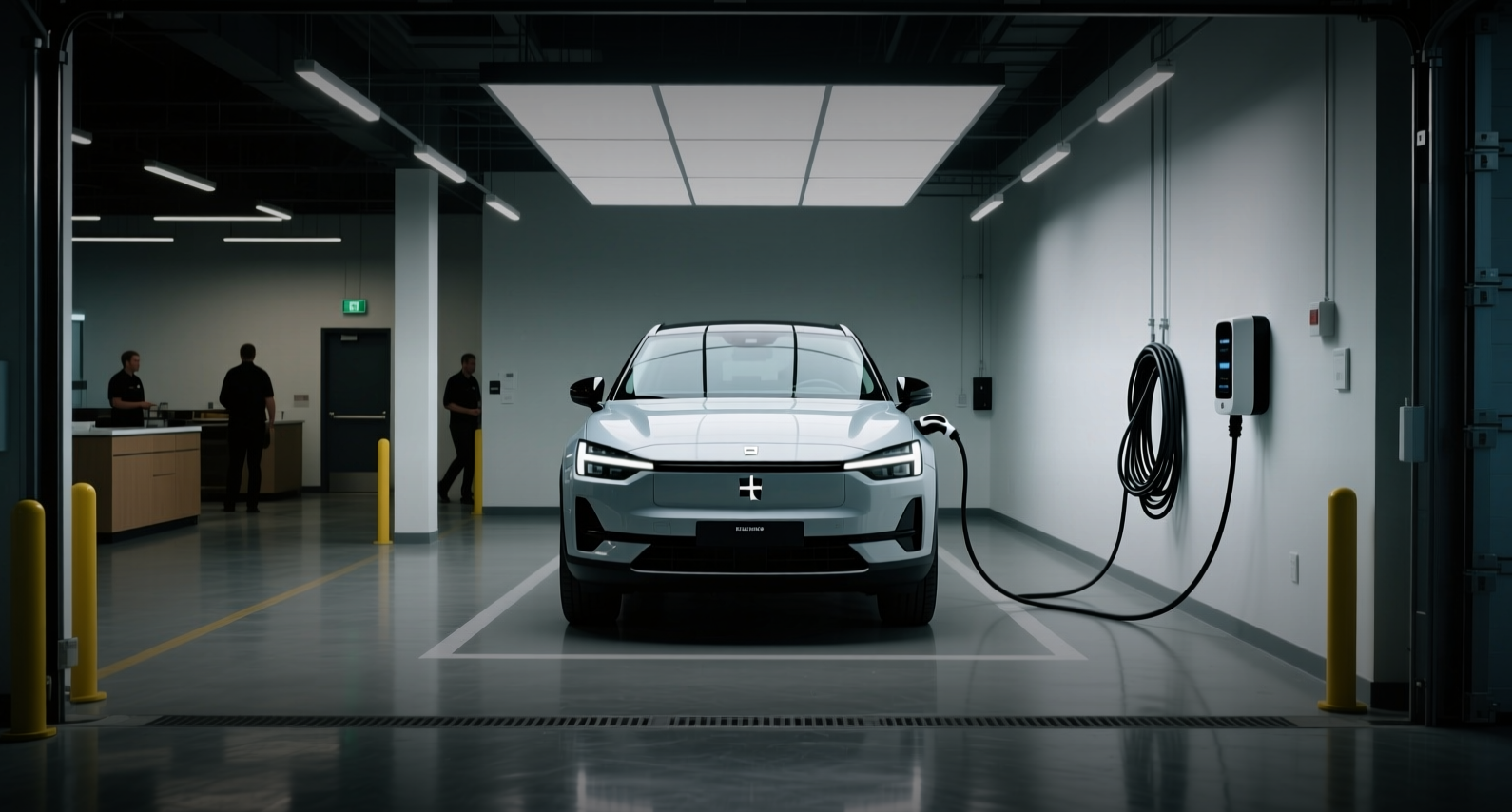
Polestar is exiting the U.S. market after the Commerce Department denied authorization for its 2027-model-year vehicles under the Connected Vehicle Rule.
Polestar, the Chinese-owned electric-vehicle maker, is exiting the U.S. market after the Commerce Department denied authorization for its 2027 model year, a decision the company told dealers it still does not understand.
Polestar said in an Aug. 18 letter to dealers, seen by The Wall Street Journal, that it still lacks an explanation for why it must cease U.S. sales while Volvo Cars, a corporate cousin selling a nearly identical vehicle, was allowed to remain. Volvo Cars shares fell 1.94 percent on the news.
The exit follows a lawsuit by Prestige Imports, which operates Prestige Polestar in New Jersey, seeking at least $25 million. The dealer alleges Polestar engineered its U.S. departure by failing to pursue regulatory options aggressively enough before the Commerce Department denied authorization for 2027-model-year vehicles under the federal Connected Vehicle Rule, which restricts vehicles and technology tied to China or Russia. Polestar is majority-owned by China's Geely.
The ban removes Polestar from one of the world's largest EV markets and raises the stakes for other automakers with China-linked ownership or supply chains. The Polestar 3 is assembled at Volvo's South Carolina plant, yet the restrictions reach beyond final assembly to ownership and technology relationships, a precedent that may push Ford and General Motors to localize more than factories.
A $25 Million Dealer Lawsuit
Prestige's lawsuit attacks the way Polestar is leaving, not merely the fact that it may leave. New Jersey franchise law generally requires advance notice and "good cause" before a manufacturer can terminate a franchise, and Prestige argues it did nothing wrong and should not carry the financial cost of Polestar's departure. The dealer is also seeking five years of continued parts and warranty support, a remedy that could directly matter to owners if granted.
The case is still at an early stage. A $25 million demand is not a $25 million judgment, and Polestar has declined to comment on the litigation.
What the Ban Means for Owners and the EV Sector
For current Polestar owners, the immediate risk is not that warranties disappear. Polestar's warranty terms cover manufacturing defects for four years or 50,000 miles, while the battery and electric motors are covered for eight years or 100,000 miles. Polestar has said its U.S. service network will remain in place, with many service points connected to Volvo dealerships.
The concern is what happens over time. If new-car sales end, dealerships have less financial incentive to maintain dedicated Polestar operations, potentially leaving owners with longer service trips, slower parts availability and more volatile resale values. Federal safety recall obligations do not vanish because a manufacturer stops selling new cars.
For other automakers, the case is a reminder that leaving America can be more complicated than stopping production or shipments. State franchise laws create obligations involving dealers, inventory, facilities and termination notices. Polestar also shows that assembling a car in America may not solve every regulatory problem — the connected-vehicle restrictions reach beyond final assembly to ownership and technology relationships.
That may encourage automakers to localize more than factories. Ford is moving some Lincoln production from China to the United States, while General Motors plans a similar move for the Buick Envision. Software, ownership and compliance increasingly matter alongside the factory address.
This article is for informational purposes only and does not constitute investment advice.