Washington's bet on Cuba is no longer about a quick regime change — it's a slow economic strangulation calibrated to produce results by the end of Trump's term in 2029.
Secretary of State Marco Rubio has imposed at least 40 sanctions on Cuban entities and officials since January, betting that economic suffocation — not military force — will push the island's 67-year-old Communist regime toward collapse by the end of the administration's term. "My level of confidence is that when this administration is over, at a minimum, Cuba will be on an irreversible glide path toward a different future," Rubio told Axios, explicitly rejecting President Donald Trump's repeated suggestions of a military operation.
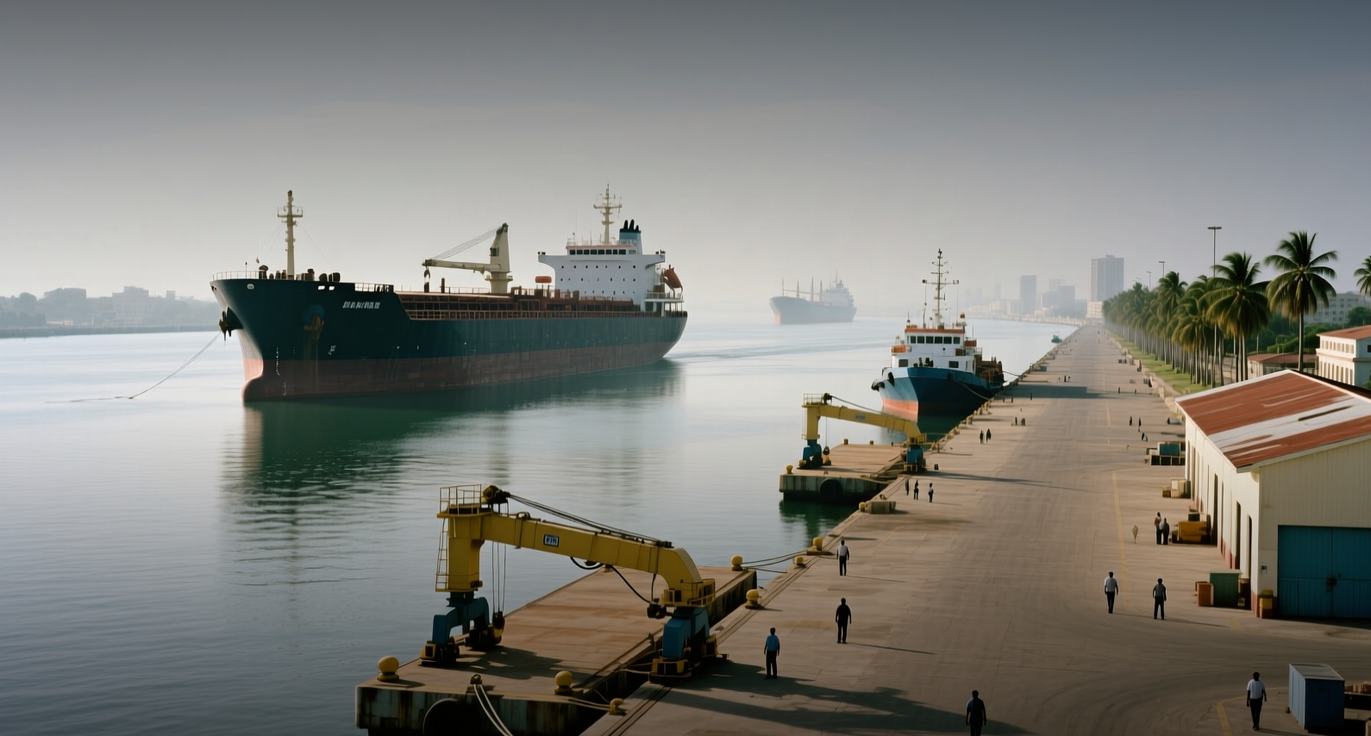
The pressure campaign has cut Cuba off from Venezuelan oil after the January 3 capture of Nicolás Maduro, banned all foreign oil shipments to the island, and targeted the military's business empire. Only one tanker — the Russian Anatoly Kolodkin, carrying about 100,000 tons of crude — has reached Cuba since the embargo took effect, enough for nine to 12 days of demand. GAESA, the military conglomerate run by Raúl Castro's family, holds roughly $18 billion in reserves even as ordinary Cubans face daily blackouts and food shortages.
The stakes extend beyond the Caribbean. A humanitarian collapse could trigger a new migration wave across the region, while a chaotic transition risks creating a failed state on America's doorstep — the very scenario that has made Washington hesitant to act faster. Spanish hotel chains Meliá and Iberostar and Canadian mining company Sherritt have already suspended Cuban operations entirely, withdrawing foreign investment from an economy already starved of hard currency.
Trump has oscillated between threats — "Cuba is next" in March, "we may stop by Cuba" in April — and acknowledgment that the island lacks the strategic value of Venezuela or Iran. Rubio, by contrast, has consistently framed the campaign as one of attrition. "What we're trying to teach them is there are no escape valves," he told Axios. "For the first time in Cuba's history, Cuba lacks two things they've always relied on: an outside sponsor and the U.S.'s lack of attention on it as a top priority."
The sanctions have expanded beyond traditional military targets. The latest round, announced Thursday, added Cuba's Ministry of Construction, eight state-owned entities spanning mining, metals, transportation and foreign trade, and three officials linked to the Cuban Institute of Friendship with the Peoples. The designations fall under Executive Order 14404, issued by Trump in May, which targets entities Washington considers responsible for repression or threats to U.S. national security. Cuban Foreign Minister Bruno Rodríguez condemned the measures, accusing Washington of deliberately worsening the country's economic difficulties.
The Back Channel and Its Limits
Rubio's main line into Havana runs through Raúl Guillermo Rodríguez Castro, Raúl Castro's 41-year-old grandson, nicknamed "El Cangrejo." The colonel, who once headed his grandfather's personal security detail, has met with U.S. officials to discuss Cuba's future. But U.S. officials who've dealt with him reportedly concluded his actual authority to broker a deal is limited — the Communist Party's inner circle remains largely impenetrable.
The administration has also floated potential successors, including Deputy Prime Minister Oscar Pérez-Oliva Fraga, a great-nephew of Fidel Castro, and National Assembly Vice President Ana María Mari Machado. But no credible replacement has emerged, and the State Department's 100-page report issued July 20 reads more as legal justification for the pressure campaign than a blueprint for transition.
Planning for the Day After
The question of what follows the regime is increasingly central to the debate. Rafael Romeu, president of the Association for the Study of the Cuban Economy, presented a "Cuba Day Zero" plan in July that envisions a five-member transitional board, private-sector investment and diaspora capital to stabilize the island. "Cuba's reconstruction must be funded by private-sector investment and Cuban diaspora capital — inside a disciplined, legally enforceable framework from Day One," Romeu said.
The plan addresses a key concern: that a post-Castro Cuba could descend into crony capitalism, as happened in post-Soviet Russia. Romeu recommends screening property for beneficial owners to prevent military insiders from acquiring assets at fire-sale prices, and forming public-private partnerships while markets discover true asset values. Cuba's highly centralized legal system would work to the advantage of new leadership — "new decrees can rewrite the economic rulebook in days, not years," he observed.
The timeline matters. With midterm elections in November and voters focused on the economy, analysts doubt Republicans will spend political capital on Cuba now. Ric Herrero, president of the Cuba Study Group, describes a window that opened and shut while Rubio weighs a possible presidential run in 2028. On the island, an El Toque survey found nearly 60 percent of roughly 25,000 respondents favored U.S. military action to remove the government — a mood that may shift as Washington's attention drifts.
John Kavulich of the U.S.-Cuba Trade and Economic Council predicts the real trigger won't be diplomacy but a photograph — "an old woman lying dead on a pile of garbage" on a Havana street, stark enough to force either government to act. For now, neither side is blinking.
This article is for informational purposes only and does not constitute investment advice.