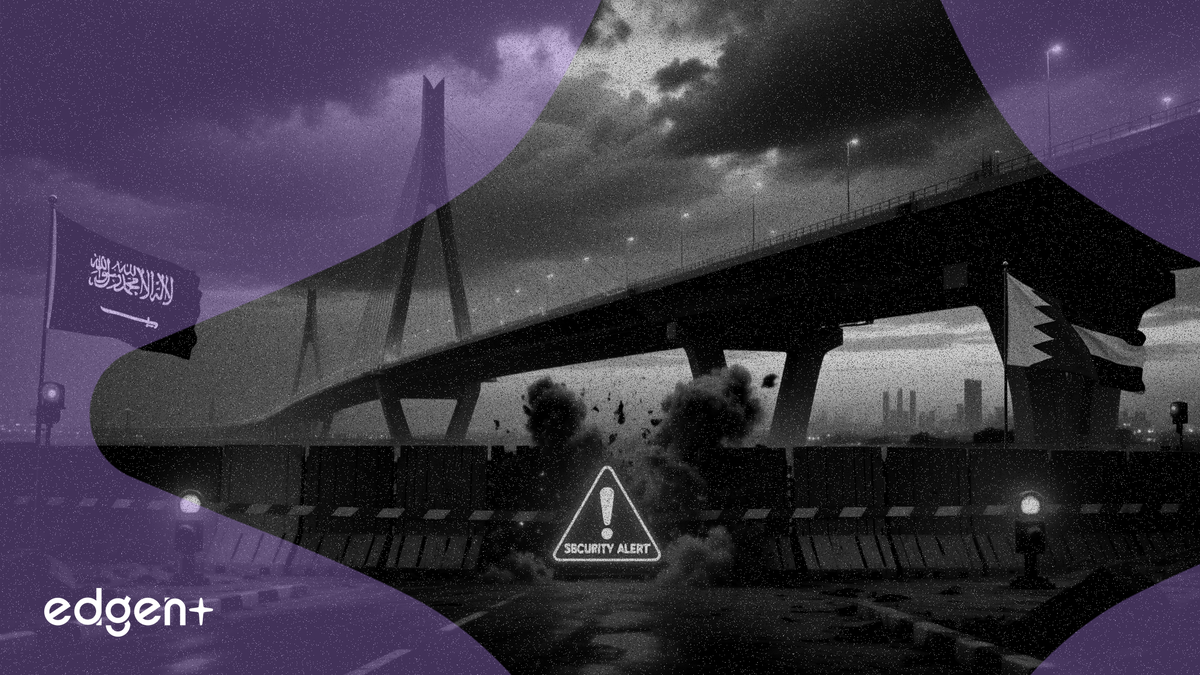
Heightened security risks in Saudi Arabia's oil-producing Eastern Province forced the closure of the King Fahd Causeway to Bahrain for a second time on April 7, signaling growing instability in the region.
The King Fahd Causeway Authority confirmed the second suspension in a social media statement on the evening of April 7, citing the alerts as the direct cause. The bridge had been closed earlier in the day for the same reason before briefly reopening.
While immediate market reaction was muted as the event occurred after market hours, the alert raises the specter of supply disruptions. The Eastern Province is home to the world's largest oil field, Ghawar, and the massive Ras Tanura export terminal. Any disruption here could impact a significant portion of the world's 100 million barrel-per-day oil market. The last major attack in the region, on the Abqaiq and Khurais facilities in 2019, temporarily knocked out nearly 5% of global oil supply.
The key risk for markets is a spike in the geopolitical risk premium for crude oil. A sustained closure or further escalation could see Brent crude prices challenge the $100 per barrel mark, complicating the global inflation outlook and potentially triggering a flight to safety into assets like gold and the U.S. dollar.
Why It Matters
The 25-kilometer King Fahd Causeway is more than just a bridge; it is a vital economic and social artery connecting Bahrain to the Arabian peninsula. Its closure, even temporarily, disrupts trade and travel, but the underlying reason for the shutdown is of far greater concern to global markets. The Eastern Province is the heart of Saudi Arabia's energy industry, and any perceived threat to its infrastructure can have an immediate and significant impact on oil prices.
This latest alert serves as a stark reminder of the persistent security challenges in the Middle East. For investors, it means that a higher risk premium must be factored into energy assets and regional equities. The event could lead to increased volatility in oil markets and a broader "risk-off" sentiment if tensions continue to escalate, affecting global equities.
This article is for informational purposes only and does not constitute investment advice.