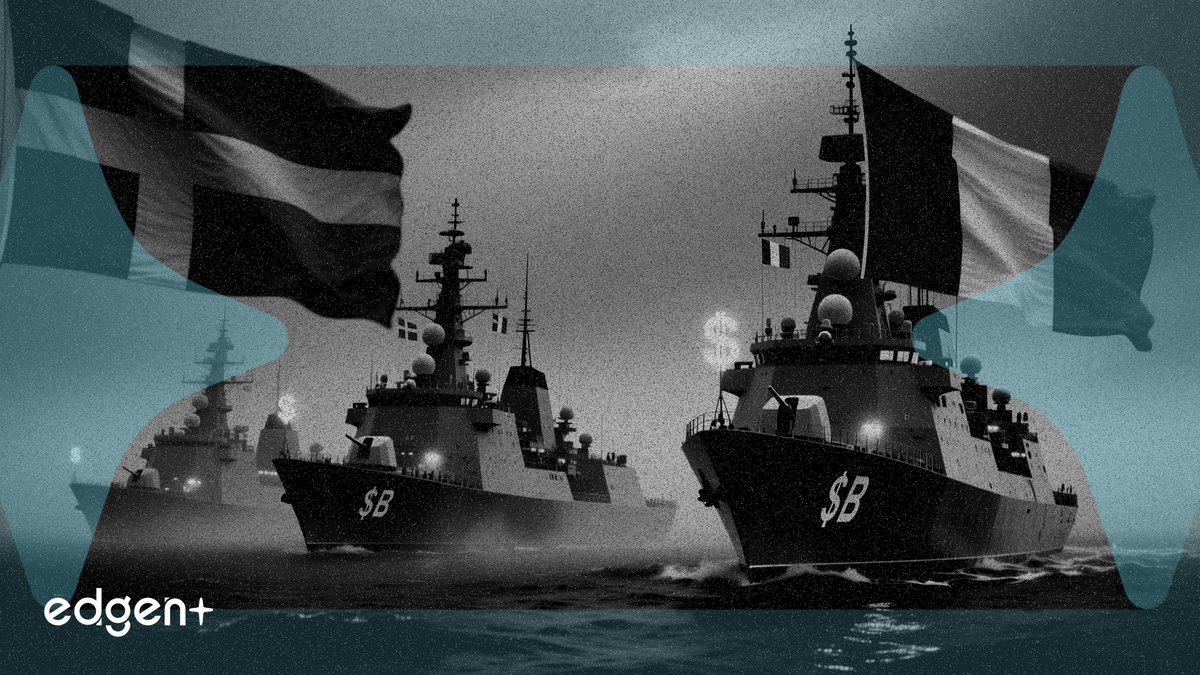
Sweden has selected French state-controlled Naval Group to build four new multi-mission frigates in a deal worth over $4 billion, a move designed to significantly bolster its naval power and meet expanded security commitments as NATO's newest member. The decision reinforces a broader European trend of increasing defense expenditures in response to regional security threats.
"With NATO membership, the role of the navy has changed," Chief of the Navy Johan Norlen said in a statement. "We must also contribute to the alliance’s needs outside our immediate vicinity, which requires larger ships with qualified air defense and longer endurance."
The FDI frigates, costing just over 10 billion Swedish kronor ($1.07 billion) each, will begin delivery in 2030. The acquisition will triple Sweden's naval air defense capabilities, providing new defenses against aircraft, drones, and ballistic missiles. As part of its NATO commitments, Sweden is increasing its defense spending to 2.8% of GDP this year, with plans to reach 3.5% by 2030.
The selection of Naval Group over competitors from Spain and a U.K.-Swedish consortium highlights the strategic importance of rapid delivery and proven technology in the current security climate. For Naval Group, the deal secures a major export order, while for Sweden, it represents a pivotal upgrade of its surface fleet, enabling it to project power across the Baltic Sea and contribute to NATO missions in the North Atlantic and Mediterranean.
The deal marks a significant modernization for the Swedish Navy, whose largest vessels are currently a fleet of smaller corvettes. The new frigates are substantially larger and equipped for long-range missions, a necessity for its expanded role within the North Atlantic Treaty Organization.
Prime Minister Ulf Kristersson stated the vessels are crucial for securing the Baltic Sea from Russian threats and will allow the navy to undertake missions further afield. The frigates will be equipped with Swedish-developed weapons systems from companies including Saab and the Swedish unit of BAE Systems, ensuring integration with domestic defense industries.
The choice of the French FDI (Frégate de Défense et d'Intervention) platform, already in service with the French and Greek navies, was based on quick delivery times and the benefits of a proven system, according to Swedish Defense Minister Pal Jonson. This commonality offers potential for future cost-sharing on maintenance and upgrades across the user nations.
The contract is a significant win for Naval Group, solidifying its position as a leading European naval contractor. It also underscores the growing trend of intra-European defense cooperation as the continent collectively re-arms. The losing bidders were Spain’s Navantia and a joint proposal from Sweden’s Saab and the U.K.’s Babcock.
This article is for informational purposes only and does not constitute investment advice.