
President Donald Trump’s dismissal of soaring gasoline prices comes as his administration grapples with the escalating economic and political fallout from the 11-week-old war with Iran.
President Donald Trump’s dismissal of soaring gasoline prices comes as his administration grapples with the escalating economic and political fallout from the 11-week-old war with Iran.
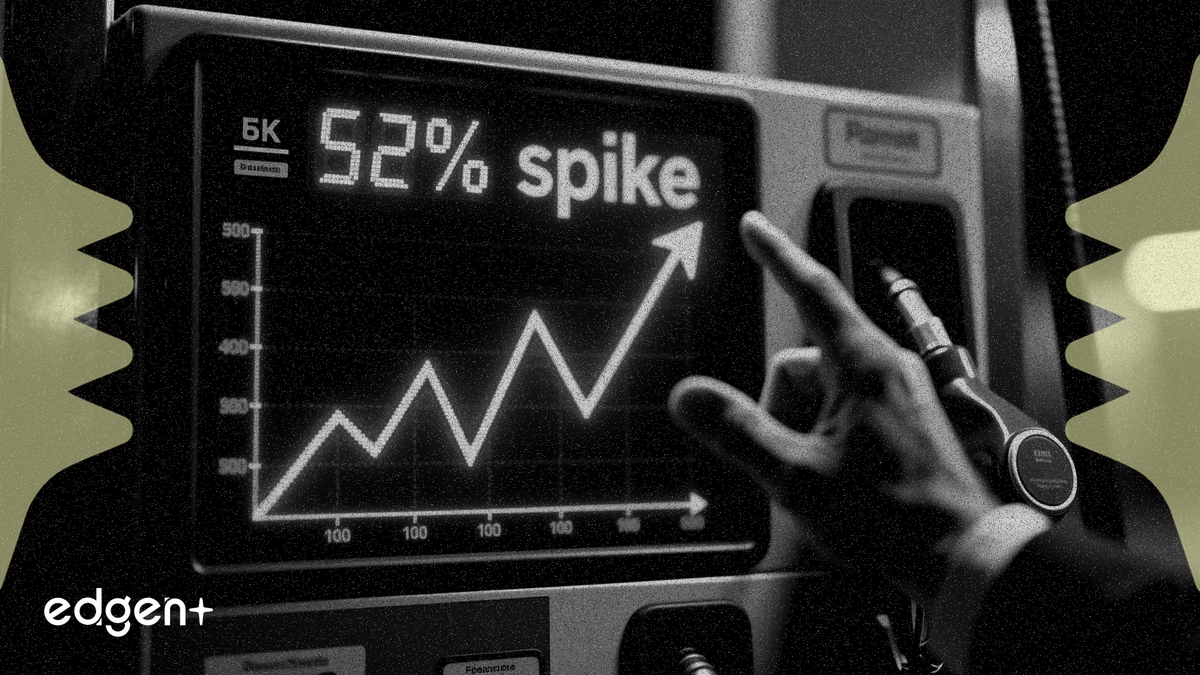
President Donald Trump characterized gasoline prices that have surged 52% since the start of the Iran war as “short-term pain,” a comment that downplays the financial strain on American consumers and reflects a strategic focus on geopolitical objectives over immediate economic relief.
“The goal of preventing nuclear proliferation is probably the single most important thing we can do to keep our people safe for the long term, it’s absolutely a worthy goal,” Vice President JD Vance said at a news conference, defending the president's priorities.
The national average for a gallon of gas has climbed to $4.53 from $2.98 on the eve of the war that began Feb. 28, according to AAA data. The increase follows Iran’s closure of the Strait of Hormuz, a critical waterway for a fifth of global oil supply, and a U.S. military blockade of Iranian ports that has redirected 75 commercial ships since it was launched on April 13.
The administration's stance creates a political gamble, betting that voters will tolerate high energy costs as a necessary sacrifice for the strategic aim of preventing a nuclear Iran. With an AP-NORC poll in March showing 45% of Americans are very concerned about affording gas, the "short-term pain" may have long-term political consequences.
The president’s comments on gas prices are part of a broader communications strategy that explicitly de-links the war’s economic impact from his negotiating position. “I don't think about Americans' financial situation. I don't think about anybody,” Trump told reporters on May 12 before departing for China, clarifying that his sole focus was ensuring Iran cannot obtain a nuclear weapon. While supporters see a commander-in-chief focused on national security, the remarks have provided ammunition for critics.
Key Republican allies have struggled to manage the message. Rep. Jim Jordan, an Ohio Republican, drew criticism after dismissing the price hikes by saying, “but, you know, that’s life, that’s dealing with world — the world we live in.” He later walked back the comment under questioning. The sentiment contrasts sharply with that of Sen. Lisa Murkowski, a Republican from Alaska, who sided with Democrats in a vote to rein in the president’s war authorities, citing a need for Congress to reassert its power.
The conflict is reshaping global energy alliances and trade flows. In a significant diplomatic development, Chinese President Xi Jinping has offered to help end the conflict and pledged not to provide military equipment to Iran, according to President Trump. China, which relies on the Strait of Hormuz for a significant portion of its oil imports, has a vested interest in regional stability.
The war may also be accelerating the decline of OPEC’s influence. Experts predict the oil cartel is poised to collapse, a development that could vindicate the Trump administration’s pressure campaign and lead to lower gas prices in the long run. The United Arab Emirates is reportedly seeking to challenge Saudi Arabia for regional leadership, a move that could break the production quotas that have kept oil prices artificially high.
Despite the economic and political blowback, President Trump has declared the military campaign a “total military victory,” citing the degradation of Iran’s naval and air capabilities after more than 13,000 U.S. bombing runs. The U.S. has lost 13 troops in what the Pentagon calls “Operation: Epic Fury,” while rights groups report over 1,700 civilian deaths inside Iran.
Yet a clear path to ending the conflict remains elusive. Trump recently rejected a peace offer from Tehran, stating its first sentence was “unacceptable” because it contained insufficiently strong guarantees on its nuclear program. The administration remains adamant that all “nuclear dust” — enriched uranium from bombed-out sites — must be removed, a feat Iran claims it lacks the technology to perform.
This article is for informational purposes only and does not constitute investment advice.
