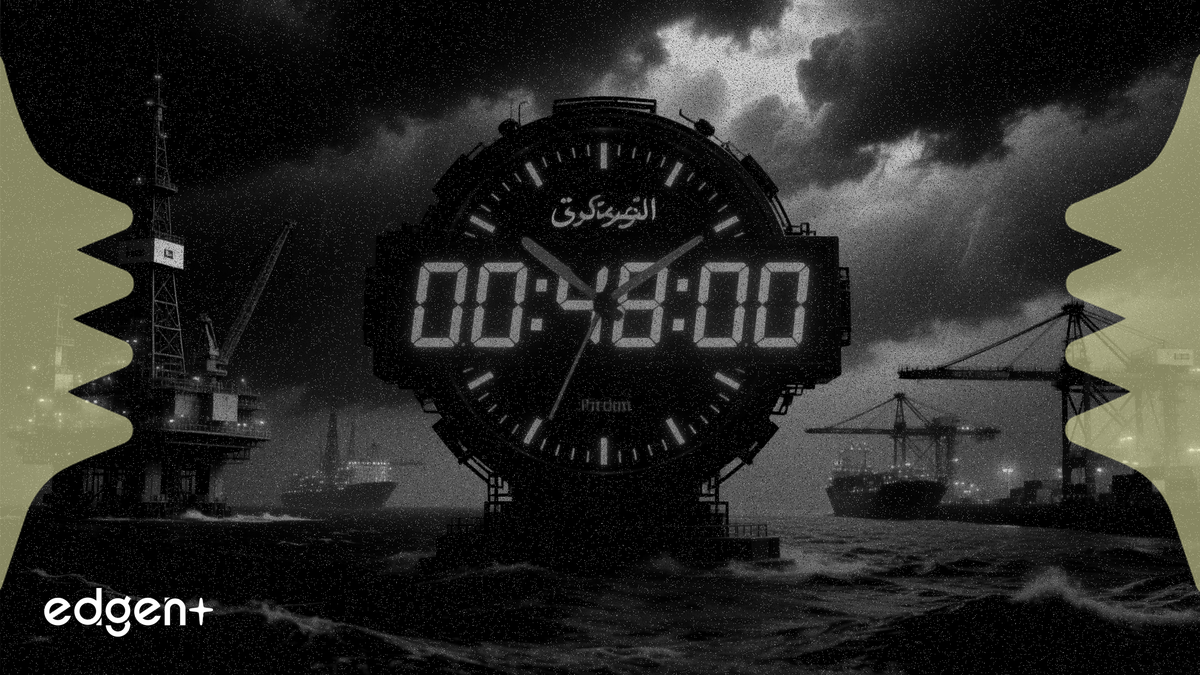
US President Donald Trump gave Iran a 48-hour ultimatum on Saturday to reopen the Strait of Hormuz, a move that escalates the military standoff and threatens the security of critical energy infrastructure across the Persian Gulf. The warning, which expires on April 6, follows an earlier US airstrike that partially destroyed a strategic bridge in Iran and prompted a defiant response from Tehran.
"Time is running out — 48 hours before all hell will rain down on them," Trump said in a statement on social media, reiterating previous threats to strike Iranian infrastructure, including power plants.
The confrontation has already spilled across borders. Kuwait accused Iran on April 4 of attacking a major desalination facility, while Tehran has reportedly published a list of eight strategic bridges in Kuwait, Saudi Arabia, the United Arab Emirates, and Jordan as potential retaliatory targets. The Strait of Hormuz, through which about a fifth of the world's oil supply passes, has seen significant disruption, contributing to a spike in global energy prices.
The immediate risk centers on whether the ultimatum passes without a resolution, potentially triggering direct military action on civilian infrastructure. An Israeli military official stated they are prepared to strike Iranian energy facilities and await a US green light for an operation that could unfold within the next week. This raises the stakes for a regional conflict that could severely disrupt global oil markets and economic stability.
Iran Vows Unrestricted Retaliation
Responding to Trump’s threats, the commander of Iran’s Khatam al-Anbia Central Headquarters, Gholam-Ali Rashid, stated that any attack on its infrastructure would be met with a "sustained and devastating" response. He warned that all US and Israeli infrastructure used to facilitate an attack would be considered legitimate targets.
The rhetoric follows a US airstrike that partially destroyed the B1 bridge connecting Tehran and Karaj, resulting in multiple casualties. While US officials have argued that such infrastructure could be used to transport military materials, former military legal experts have cautioned that this may not be a sufficient legal basis for targeting civilian facilities. Geoffrey Corn, a former Army legal advisor, noted that designating all of Iran's energy infrastructure as a legitimate target is "overly broad."
Gulf States Caught in the Crossfire
The escalating threats have alarmed neighboring Gulf Arab states, who fear their own energy and civil infrastructure will become targets in a wider conflict. Following a previous Iranian retaliatory strike on a Qatari natural gas field, which came after an Israeli strike on an Iranian gas field, Gulf officials have reportedly expressed their deep concerns directly to Washington.
Human rights organizations have also warned that strikes on facilities like power plants and desalination centers could have dire humanitarian consequences, affecting hospitals and water supplies. The crisis deepens as international bodies question the justification for such actions. Secretary of State Marco Rubio has acknowledged that Iran is not currently enriching uranium, and the International Atomic Energy Agency (IAEA) has seen no evidence that fissile material was moved from a previously attacked nuclear site.
This article is for informational purposes only and does not constitute investment advice.