
A high-stakes presidential summit in Beijing, accompanied by 14 of America’s top CEOs, seeks to navigate the precarious US-China relationship as President Xi Jinping explicitly warns of a potential fall into the “Thucydides Trap.”
A high-stakes presidential summit in Beijing, accompanied by 14 of America’s top CEOs, seeks to navigate the precarious US-China relationship as President Xi Jinping explicitly warns of a potential fall into the “Thucydides Trap.”
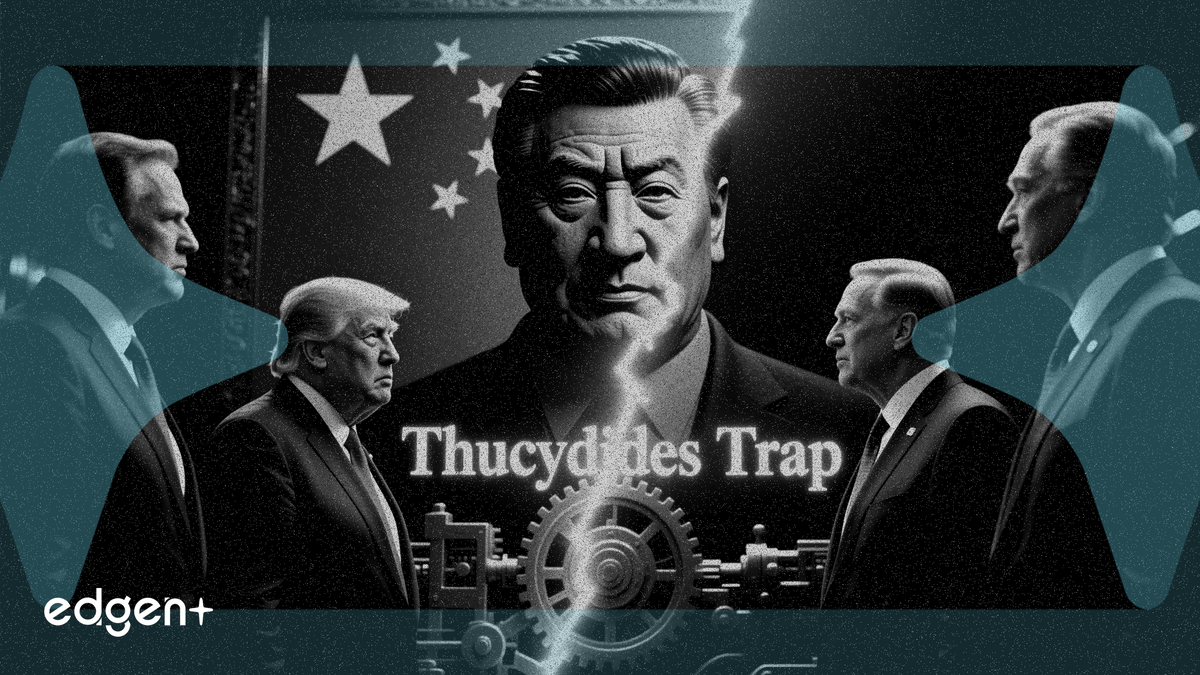
President Donald Trump and a delegation of 14 top American CEOs began a two-day summit in Beijing with Chinese President Xi Jinping, a critical meeting aimed at stabilizing a relationship rocked by trade disputes and geopolitical friction. The first U.S. presidential visit in nine years brought together leaders from Apple, Nvidia, and Tesla, underscoring the deep economic ties that persist amid strategic rivalry.
"Can China and the United States overcome the ‘Thucydides Trap’ and establish a new paradigm for relations between great powers?" Xi Jinping asked in his opening remarks, referencing the historical theory that a rising power will inevitably clash with an established one. The comment set a weighty tone for the talks, highlighting the underlying tensions.
The leaders discussed a wide range of contentious issues, including Taiwan, which Xi warned could lead to an “extremely dangerous situation,” according to state news agency Xinhua. The White House reported that both sides agreed on keeping the Strait of Hormuz open and preventing Iran from acquiring a nuclear weapon. On the commercial front, Trump told Fox News that Xi had agreed to order 200 airplanes from Boeing, though the company has not yet confirmed the deal.
At stake is the future of a global economic order that has been strained by years of tariffs and strategic competition in advanced technology. For the visiting executives, including Apple’s Tim Cook and Nvidia’s Jensen Huang, the summit’s outcome could directly impact supply chain security, market access, and a potential escalation of the trade war that has cost their companies billions.
Despite public praise and elaborate ceremony, the leaders’ contrasting messages revealed the deep-seated friction between the two powers. While Xi invoked ancient Greek history to caution against conflict, Trump took to social media to push back against what he interpreted as a suggestion of American decline. "When President Xi very elegantly referred to the United States as perhaps being a declining nation, he was referring to the tremendous damage we suffered during the four years of Sleepy Joe Biden," Trump posted on Truth Social.
Xi’s reference to the "Thucydides Trap" is a recurring theme in his foreign policy, often presented as a cautionary tale that China wishes to avoid. Chinese state media has framed the summit as a sign of China’s rising global stature, with the People’s Daily noting that dialogue now occurs on a “more equitable basis” following the trade war.
The presence of a powerful CEO delegation, including Tesla’s Elon Musk and Apple’s Tim Cook, signaled a focus on tangible economic outcomes. Beyond the potential Boeing deal, Treasury Secretary Scott Bessent announced that the U.S. and China would establish a protocol for keeping powerful artificial intelligence models out of the hands of non-state actors. Nvidia CEO Jensen Huang, in a brief interview, said that AI has already brought new opportunities for China.
The talks occurred against a backdrop of recent aggressive U.S. actions against China, including new sanctions on Chinese firms for allegedly aiding Iran and charges against a California mayor for acting as an illegal agent for Beijing. These moves suggest that hawkish elements within the Trump administration continue to push for a harder line, even as the president seeks a détente.
For ordinary Chinese citizens, the summit has brought a mixture of hope for stability and resentment over economic pressures. A New York Times report from four Chinese cities found residents blaming U.S. tensions for a slowing economy and rising fuel prices. "It would be better to avoid tariff wars and just cooperate amicably, without all this back and forth," said Chen Gang, a 42-year-old steel trader in Fuzhou.
Others expressed a sense of national pride and a belief that China no longer needs to bow to U.S. pressure. “The fact that he’s taking the initiative to visit China means that China can control him, right?” said Zhang Lei, a taxi driver in Jinan. This sentiment, amplified by state media, reflects Beijing's narrative of a power shift in the global order. As the leaders continue their talks, the world watches to see if the two economic giants will find a path to coexistence or continue down a road toward confrontation.
This article is for informational purposes only and does not constitute investment advice.
