
A full U.S. naval blockade of the Strait of Hormuz is set to begin Monday, threatening to halt all remaining oil shipments after ceasefire talks with Iran collapsed over the weekend.
A full U.S. naval blockade of the Strait of Hormuz is set to begin Monday, threatening to halt all remaining oil shipments after ceasefire talks with Iran collapsed over the weekend.
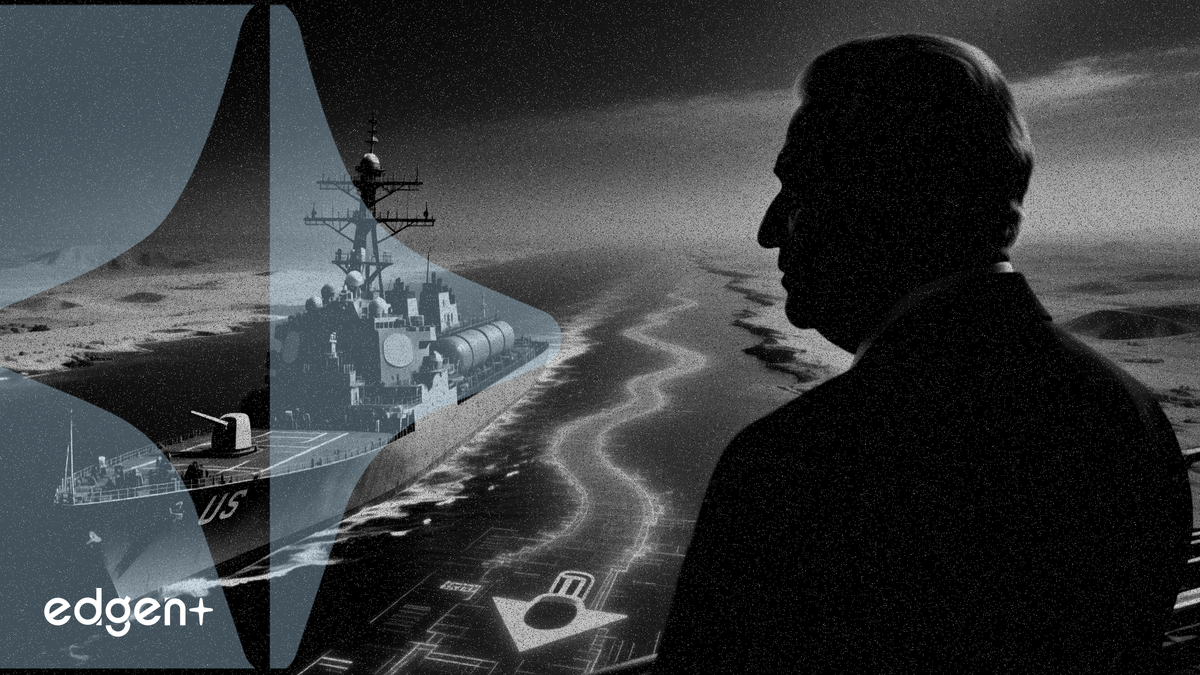
President Donald Trump ordered the U.S. Navy to blockade the Strait of Hormuz, a critical artery for global energy supplies, after high-stakes ceasefire negotiations with Iran ended without an agreement Sunday. The move, which follows Iran's own effective closure of the strait, threatens to remove an additional one to two million barrels of oil per day from an already tight global market.
"Effective immediately, the United States Navy, the finest in the world, will begin the process of blockading any and all ships trying to enter, or leave, the Strait of Hormuz," Trump said in a statement on his social media platform. "No one who pays an illegal toll will have safe passage on the high seas."
U.S. Central Command confirmed the blockade will target all maritime traffic to and from Iranian ports starting Monday at 10 a.m. EDT, while allowing passage for vessels transiting to other destinations. The announcement follows the failure of 21 hours of negotiations in Islamabad, where U.S. demands for Iran to dismantle its nuclear program and end support for regional proxies were rejected. Oil prices, already elevated by the conflict, are expected to climb further as the dual blockade chokes off the waterway responsible for 20% of pre-war global oil trade.
The escalation marks a dramatic turning point in the conflict, shifting from a fragile ceasefire to a direct U.S. enforcement action that could have severe economic consequences. A protracted closure of the strait could sustain higher oil prices through 2026, fueling global inflation and forcing continued fuel rationing measures in major economies. The next move depends on whether commercial shippers comply with the blockade, and how Iran and its key trading partners, like China, react to the interdiction threat.
The plan to interdict neutral shipping paying tolls to Iran risks significant diplomatic friction. An opposed boarding of a commercial vessel is an act of war against its flag state, which could include major powers like China or India. While a direct military conflict is unlikely, such actions would violate the sovereignty of neutral nations and carry severe diplomatic and economic consequences.
"Trump's plan to use the Navy to block the strait is unrealistic and he will have to concede on some issues with Iran," said Andreas Krieg, a senior lecturer in security studies at Kings College London. "There isn't any tool in the toolbox in terms of the military lever that he could use to get his way."
The breakdown in talks centered on what a U.S. official called non-negotiable "red lines," including the complete and verifiable dismantlement of Iran's uranium enrichment facilities. Iranian Parliament Speaker Mohammad Bagher Qalibaf, who led the negotiations, retorted upon his return to Tehran, "If you fight, we will fight."
Traffic through the Strait of Hormuz had already plunged by 90% from its pre-war volume of over 100 vessels per day. During a brief and tense ceasefire last week, only a trickle of ships, mostly linked to Iran and China, made the passage. Shipping giant Maersk noted that while the ceasefire created "transit opportunities, it does not yet provide full maritime certainty."
The new U.S. blockade aims to halt even that limited flow. The move follows a U.S. Navy transit of two destroyers through the strait on Saturday, which CENTCOM described as a prelude to mine-clearing operations. Iran's state media claimed its forces had repelled the warships. The conflicting reports highlight the immense military risk within the narrow waterway, which is heavily fortified by Iranian coastal defenses.
This article is for informational purposes only and does not constitute investment advice.