
A 113-page disclosure reveals a volume of presidential trading not seen in the modern era, raising questions about conflicts of interest.
A 113-page disclosure reveals a volume of presidential trading not seen in the modern era, raising questions about conflicts of interest.
A 113-page disclosure reveals a volume of presidential trading not seen in the modern era, raising questions about conflicts of interest.
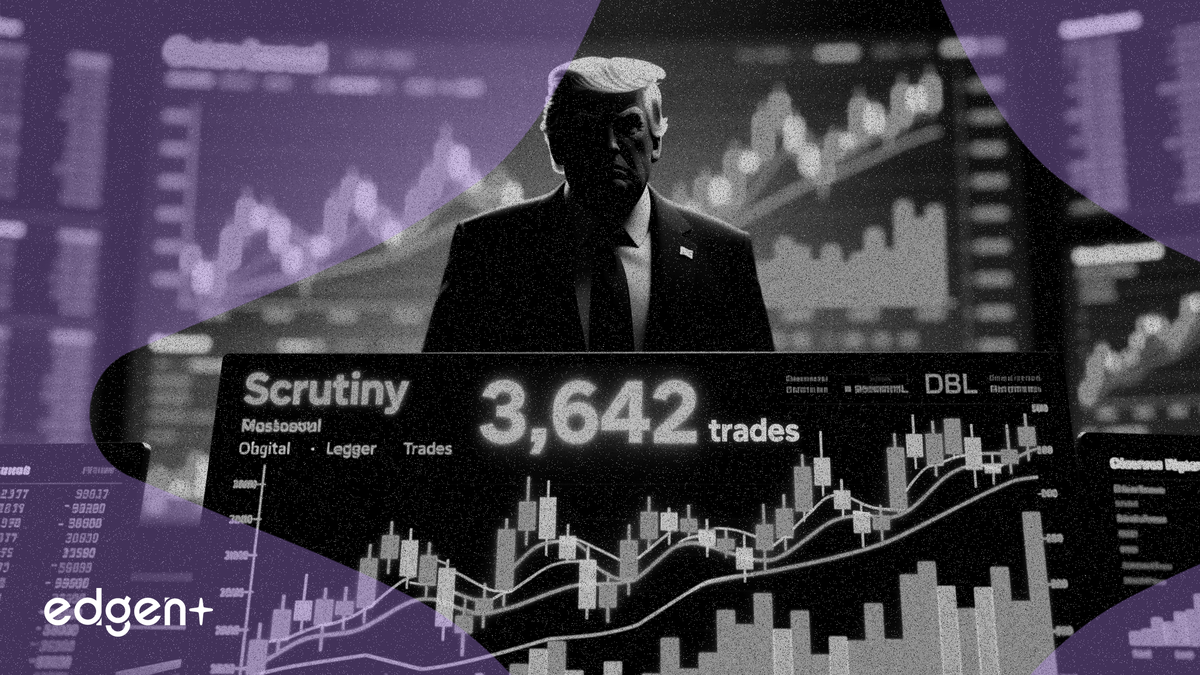
President Donald Trump executed 3,642 securities trades in the first quarter of 2026, a disclosure that breaks with decades of precedent and intensifies debate over the ethics of executive-branch stock trading while in office.
"I am pushing for a ban on single-stock trading in Congress," Treasury Secretary Scott Bessent said in a public statement. "Public service should be about serving the people, not getting rich."
The 113-page OGE Form 278-T filing details purchases in tech and finance giants including Nvidia, Microsoft, and Goldman Sachs, with many falling in the $1 million to $5 million range, while sales reached up to $25 million per transaction.
The pattern of trading, which aligns with administration policy priorities from semiconductors to cryptocurrency, challenges the 2012 STOCK Act's effectiveness and may force a formal review by congressional ethics committees over potential conflicts of interest.
The sheer volume of trading, averaging roughly 60 transactions per market session, marks a sharp departure from the practices of modern U.S. presidents. Since the Lyndon B. Johnson administration, presidents have almost universally placed personal holdings into qualified blind trusts to avoid even the appearance of a conflict of interest.
Past presidents have taken significant steps to distance themselves from their finances. Jimmy Carter sold his family peanut farm, while Barack Obama held only Treasury notes and broad index funds. Joe Biden also utilized a blind-trust arrangement. The current disclosure, however, reveals an actively managed portfolio with a posture that pivoted sharply away from bonds seen in earlier 2026 reports.
Scrutiny of the report has focused on the alignment between the portfolio's holdings and the administration's policy initiatives.
Major holdings include semiconductor firms like Nvidia (NVDA), Broadcom (AVGO), and AMD, a sector that has directly benefited from a White House push to increase domestic chip manufacturing capacity and shifting tariffs aimed at Asian supply chains. The portfolio also includes significant positions in financial firms such as JPMorgan, Goldman Sachs, and Visa during a period of financial deregulation.
Perhaps the most direct overlap involves Dell Technologies (DELL). The filings show multiple seven-figure purchases of Dell stock beginning February 10. On May 8, President Trump publicly praised the company at a White House event, and the stock gained roughly 12 percent that day. The disclosure comes after the Dell family pledged $6.25 billion to the Trump Accounts retirement program in December 2025.
Similarly, buys of crypto-related companies like Coinbase (COIN) and Robinhood (HOOD) occurred during an active pro-crypto policy window that has included executive orders and the creation of a federal Bitcoin reserve. Robinhood serves as the initial trustee for the Trump Accounts program, an overlap critics have flagged as a significant conflict risk.
While the White House has defended the filings as compliant with the law, the disclosure has reignited a debate on executive branch trading rules. The 2012 STOCK Act requires executive branch officials to disclose trades but does not prohibit them.
The current disclosure satisfies that law, but it lands in a political environment where lawmakers in both parties, and even members of the administration like Secretary Bessent, have called for an outright ban on stock trading for members of Congress. The arguments for such a ban are now increasingly being applied to the executive branch. Whether the trading patterns trigger a formal review will be up to the House and Senate ethics committees and the Office of Government Ethics itself.
This article is for informational purposes only and does not constitute investment advice.
