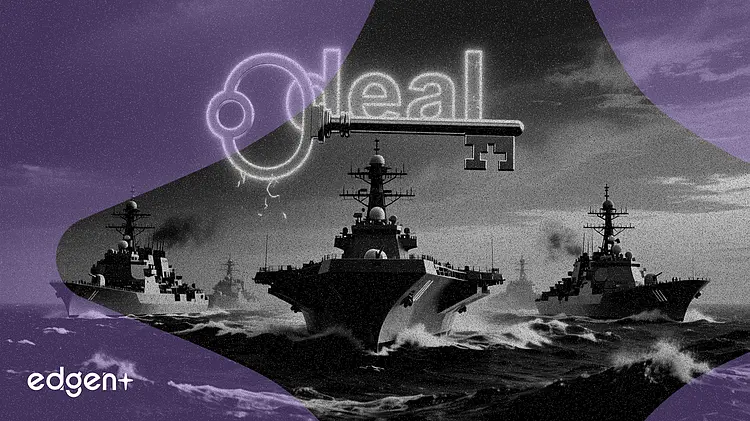
With Pakistani mediators shuttling between Washington and Tehran, the US has redirected 94 ships from Iranian ports while Brent crude hovers over $100 a barrel.

A fragile hope for de-escalation in the Middle East emerged Friday after President Trump said Iran is “very eager” to reach a peace settlement, as Tehran confirmed it is reviewing the latest US proposals to end a nearly three-month war that has roiled global energy markets.
President Trump’s optimistic tone followed a week of tense brinkmanship, where he claimed to have been just “an hour away” from ordering new strikes. “If I can save war by waiting a couple of days, I think it's a great thing to do,” the president said Wednesday, adding that his team was “pretty impressed” by the Iranian negotiators. Secretary of State Marco Rubio acknowledged there had been “slight progress” in the talks, according to a recent statement.
The economic and military pressure remains intense. Brent crude, the global oil benchmark, swung between gains and losses, settling at $102.58 a barrel after briefly touching $109 on Thursday, reflecting market uncertainty over the conflict. US Central Command confirmed its blockade has “redirected” 94 commercial vessels from Iranian ports, while Iran has countered by demanding all ships coordinate with its military for passage through the vital Strait of Hormuz, through which 21% of global oil trade flows.
At the heart of the conflict lies Iran’s nuclear ambitions, representing the most significant hurdle to a lasting peace. Reports from Reuters, citing senior Iranian sources, suggest the new Supreme Leader Mojtaba Khamenei has forbidden the removal of the country’s highly enriched uranium stockpile, estimated at nearly 900 pounds. This directly contradicts a core US demand, although an Iranian official later denied the report to Al Jazeera, calling the nuclear material “the subject of talks in the next stage.”
While direct talks remain elusive, diplomatic efforts are intensifying on multiple fronts. Pakistan has taken a leading role as mediator, with its Army Chief Asim Munir visiting Tehran to advance negotiations. “I believe the Pakistanis will be traveling to Tehran today. So hopefully that'll advance this further,” Secretary of State Rubio told reporters on Thursday. The current exchanges are reportedly based on an initial 14-point framework from Iran calling for a definitive end to the war and the release of frozen financial assets.
The international community remains fractured. Rubio renewed criticism of NATO allies for not supporting the US-Israeli war effort, saying they “refuse to do anything.” This comes even as France and the UK have led separate efforts to build a coalition to secure the Strait of Hormuz after hostilities cease.
President Trump is also facing a restive Congress, where support for his war policy shows signs of slipping. House Republican leaders were forced to scrap a vote on a war powers resolution that appeared to have enough bipartisan support to pass, compelling a withdrawal from the conflict. “The Republican-controlled House continues to behave like a wholly-owned subsidiary of the Trump administration,” Democratic leaders said in a joint statement after the vote was pulled. The move highlights the growing political challenge for the White House in maintaining backing for a war launched without initial congressional approval.
Away from the negotiating table, the region remains a tinderbox. Israel and the Iran-backed group Hezbollah continue to trade fire in southern Lebanon despite a ceasefire, with Israeli strikes killing at least two people on Friday. An earlier strike wounded nine and damaged a hospital, according to Lebanese officials. The conflict’s ripple effects are also being felt in Iraq, which condemned attacks allegedly launched from its territory toward Saudi Arabia and the UAE, where several Iran-backed militias operate.
This article is for informational purposes only and does not constitute investment advice.