
President Donald Trump said Iran retains only limited military capability and predicted US gasoline prices would fall to $2.50 a gallon, as his administration pursues a dual-track strategy of de-escalation and consumer relief.
President Donald Trump said Iran retains only limited military capability and predicted US gasoline prices would fall to $2.50 a gallon, as his administration pursues a dual-track strategy of de-escalation and consumer relief.
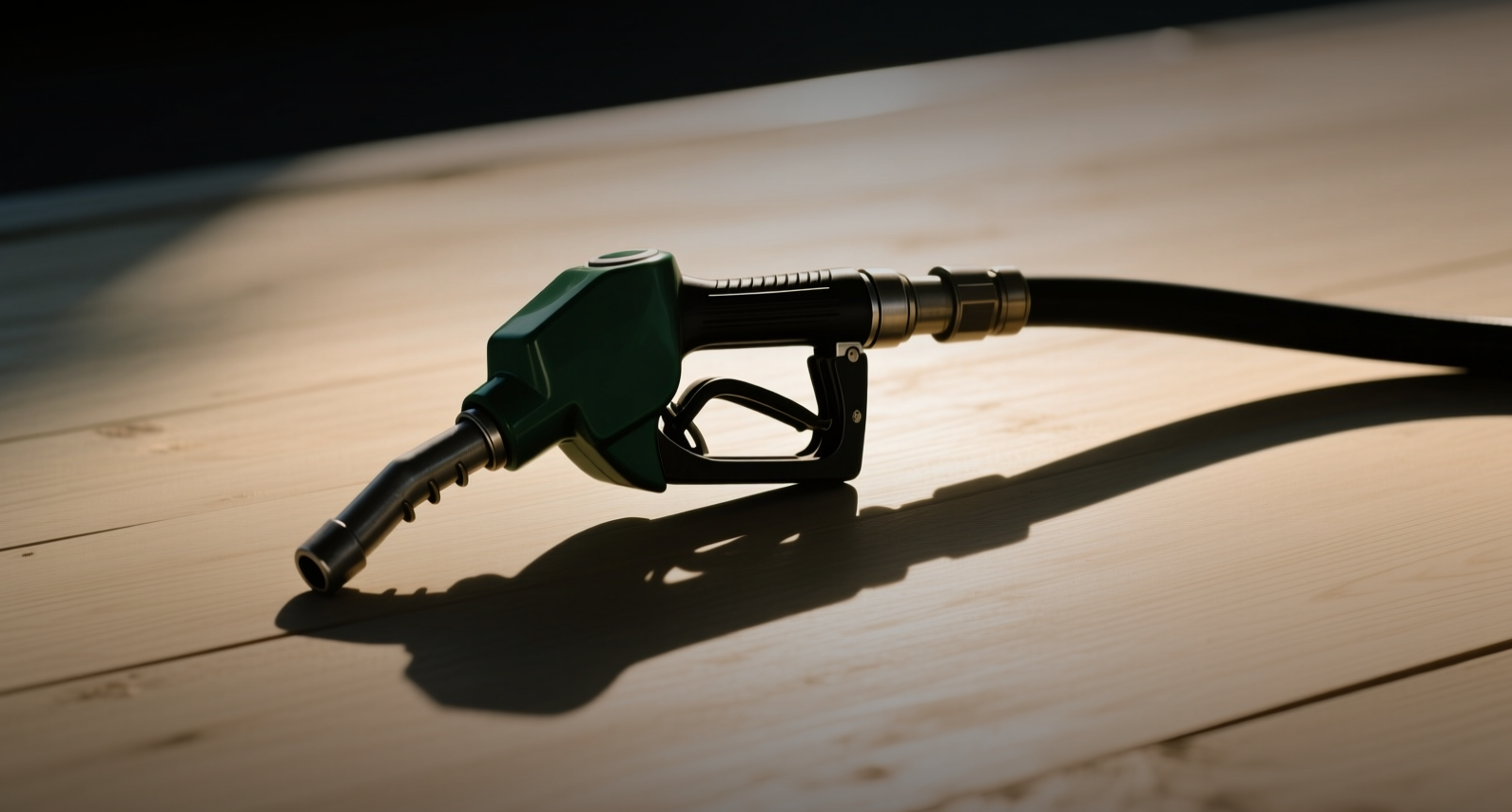
President Donald Trump said Iran retains only limited military capability and predicted US gasoline prices would fall to $2.50 a gallon, as his administration pursues a dual-track strategy of de-escalation and consumer relief.
Trump's assessment that Iran's military capacity is "not too big" and his forecast of $2.50-a-gallon gasoline reflect a White House calculation that post-war normalization is proceeding faster than markets currently price.
"Gas prices will soon be down to $2.50 a gallon," Trump told reporters, adding that Iran "still has some capabilities, but not too big." The remarks came as the national average stood at $3.92, according to AAA data.
The national average has fallen 59 cents from $4.51 a month earlier, though it remains 94 cents above the $2.98 pre-war level recorded before the Feb. 28 outbreak of hostilities. GasBuddy data shows prices are declining 1.94 cents per day — 5% faster than the pace after the 2022 peak.
If Trump's $2.50 target materializes, it would represent a 36% drop from current levels and mark the lowest national average since January 2021. But analysts see a more modest trajectory: Oil Price Information Service expects $3.75 by July 4, while GasBuddy projects $3.35 by late summer, barring hurricane disruptions or renewed Strait of Hormuz tensions.
Trump's characterization of Iran's remaining strike capability as limited aligns with the preliminary understanding signed this month, under which Tehran agreed to reopen the Strait of Hormuz to commercial shipping. The waterway normally handles about a fifth of global oil trade, and its disruption during the conflict sent crude above $100 a barrel.
Yet Iran's deputy foreign minister, Kazem Gharibabadi, warned Friday that safe passage through the strait "cannot be guaranteed" for vessels operating under arrangements that bypass Tehran's role as the coastal state. The warning came a day after a drone struck a cargo vessel near Oman, an incident Trump called a "foolish violation" of the ceasefire.
The IAEA's Rafael Grossi also called for a "very strong system of verification" to monitor Iran's nuclear program, saying "intentions are not enough" to ensure Tehran does not pursue weaponization. The agency's demand highlights the gap between Trump's optimistic framing and the operational reality on the ground.
For Trump's $2.50 target to be reached, WTI crude would need to fall substantially from current levels, as retail gasoline prices track crude costs with a lag of two to three weeks. The last time the national average was at $2.50 was Jan. 2, 2021, when WTI traded near $48 a barrel — less than half its pre-war level of around $100.
Denton Cinquegrana, chief oil analyst at Oil Price Information Service, said the current decline is "as quickly as one would expect" given the supply shock's reversal. But he noted that summer-grade gasoline is more expensive to produce than winter blends, and retailers must clear higher-cost inventory before passing on savings. "If I paid $3.50 per gallon for my latest delivery, I cannot sell those gallons below my cost," he said.
The Department of Justice has opened a price-gouging investigation into ExxonMobil, Chevron, Shell and BP, though Cinquegrana said such probes "typically yield very little evidence of price gouging" and may be "a play to get prices down by midterms."
If the Strait of Hormuz remains open and the US-Iran understanding holds, gasoline prices could approach $3 by autumn. Any re-escalation — whether through Iranian harassment of shipping, Israeli strikes on Lebanese targets, or a breakdown in nuclear verification — would reverse the decline and push prices back above $4.
This article is for informational purposes only and does not constitute investment advice.
