
President Donald Trump signed an executive order Tuesday requiring AI companies to give the U.S. government early access to new models for pre-release safety evaluation.
President Donald Trump signed an executive order Tuesday requiring AI companies to give the U.S. government early access to new models for pre-release safety evaluation.
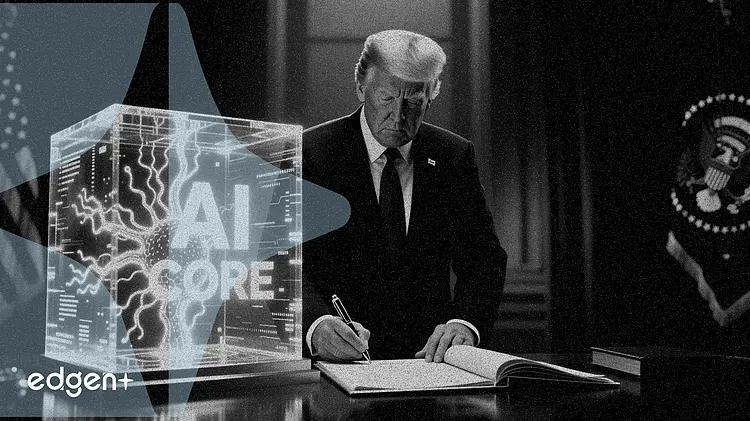
President Donald Trump signed an executive order Tuesday requiring AI companies to give the U.S. government early access to new models for pre-release safety evaluation.
President Donald Trump signed an executive order Tuesday requiring artificial intelligence companies to provide the federal government early access to new models for pre-release evaluation, the White House said in a statement.
"The order is aimed at promoting advanced artificial intelligence innovation and security," the White House said. The directive requires companies developing frontier AI systems to grant government officials access before public release, with evaluations focused on national security risks, bias and safety concerns.
The signing came weeks after Trump postponed a planned ceremony with prominent tech CEOs, telling reporters he "didn't like certain aspects of it." The order was signed in private at the White House rather than at a public event, according to a Reuters photograph showing Trump holding the signed document in the Oval Office.
The executive order signals a shift toward greater federal oversight of the AI industry, potentially creating compliance requirements for companies including OpenAI, Google, Anthropic and Meta. While increased regulation could slow deployment timelines and raise costs, it also provides regulatory clarity that may benefit established players with dedicated compliance teams.
The directive applies to frontier AI models — the most advanced systems capable of performing a wide range of tasks — and covers both proprietary and open-weight releases. Companies must submit new models for government review before making them available to the public.
Compliance Costs and Competitive Dynamics
For AI developers, the pre-release review requirement introduces a new regulatory checkpoint that could extend product launch timelines. OpenAI, which has pushed for federal AI standards, may face less disruption than smaller competitors with fewer compliance resources. Meta's open-source approach with its Llama models could be particularly affected if the review requirement extends to open-weight releases.
The order also directs federal agencies to develop AI procurement standards and invest in government AI infrastructure, according to the White House. This could create new revenue opportunities for cloud providers and AI infrastructure companies serving the public sector.
Market Implications
The executive order comes as global AI investment continues to accelerate, with corporate spending on AI infrastructure projected to exceed $200 billion in 2026, according to industry estimates. The regulatory framework could provide the clarity investors have sought, potentially reducing the uncertainty premium priced into AI stocks.
However, compliance costs remain unclear. The order does not specify funding mechanisms or enforcement penalties, leaving key questions for Congress to address. Lawmakers in both parties have proposed competing AI legislation, though no comprehensive bill has advanced through both chambers.
This article is for informational purposes only and does not constitute investment advice.
