
As the U.S.-Iran war enters its 75th day, President Trump's hardline stance intensifies while a leaked report reveals China may be exploiting the conflict to its own advantage.
As the U.S.-Iran war enters its 75th day, President Trump's hardline stance intensifies while a leaked report reveals China may be exploiting the conflict to its own advantage.
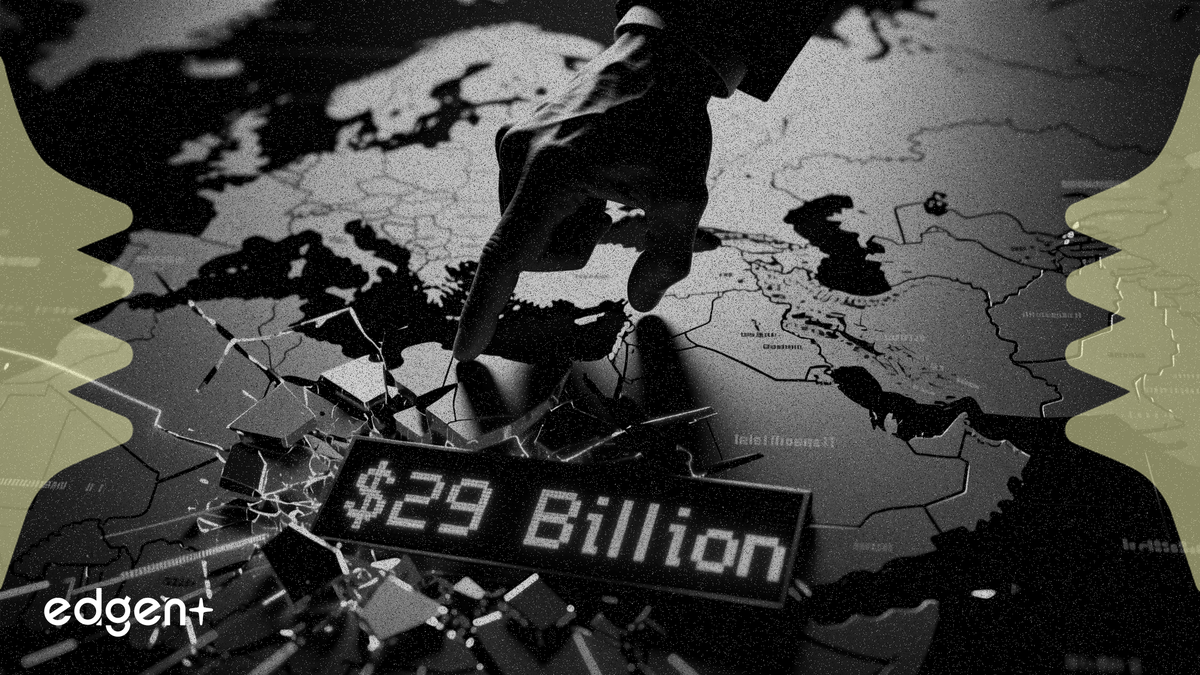
President Donald Trump said he will continue to destroy Iran’s military, a statement that escalates geopolitical tensions as the war’s cost to U.S. taxpayers surpasses $29 billion and April inflation hits a 3.8% annual rate.
During a visit to Beijing for a summit with Chinese President Xi Jinping, Trump said his counterpart committed to withholding military equipment from Iran. "He said he’s not going to give military equipment. That’s a big statement," Trump told Fox News.
The conflict, which began February 28, has led to a U.S. naval blockade and Iran's near-closure of the Strait of Hormuz, a chokepoint for a fifth of global oil. The disruption contributed to a 117-million-barrel drawdown in global oil stocks in April, according to the International Energy Agency, and pushed U.S. wholesale prices up 6.0% year-on-year, the highest since December 2022.
While the White House seeks to project strength and secure diplomatic support, a leaked Pentagon report suggests China is using the conflict to portray the U.S. as a declining power and strengthen ties with nations hit by the energy crisis, potentially altering the global balance of power.
Publicly, China has expressed a desire for de-escalation. President Xi told Trump he "would love" to help resolve the conflict and that the Strait of Hormuz must remain open, according to a White House official. China is the world's largest purchaser of Iranian oil and is sensitive to the war's impact on global trade. However, a confidential U.S. intelligence analysis reported by The Washington Post indicates Beijing is exploiting the war to improve its geopolitical position at America's expense.
The Pentagon report notes that China is condemning the U.S. action as an "illegal" war while studying U.S. military operations and the resulting drain on munitions stockpiles. This intelligence could influence Beijing's calculations regarding a potential invasion of Taiwan. Furthermore, China has been selling weapons to Gulf countries and offering green energy technology to U.S. allies affected by the oil crisis, a move one analyst described as "seizing on an opportunity to drive wedges between America and its traditional partners."
The economic consequences of the 75-day war are becoming increasingly clear. The conflict has cost U.S. taxpayers $29 billion so far, acting Pentagon comptroller Jules Hurst told lawmakers. These costs are filtering through to the broader economy, with the Consumer Price Index accelerating to a 3.8% annual rate in April, its highest since May 2023. The Labor Department noted that surging energy prices accounted for 40% of the total increase.
The disruption in the Strait of Hormuz, where Iran has largely blocked shipping and U.S. forces maintain a blockade on Iranian ports, remains the primary driver of economic pain. The IEA warned that "rapidly shrinking buffers amid continued disruptions may herald future price spikes ahead" after global oil inventories were drawn down at a record pace in March and April. The situation remains tense, with the United Kingdom Maritime Trade Operations reporting a vessel was boarded off the UAE and directed toward Iranian waters on May 14.
This article is for informational purposes only and does not constitute investment advice.
