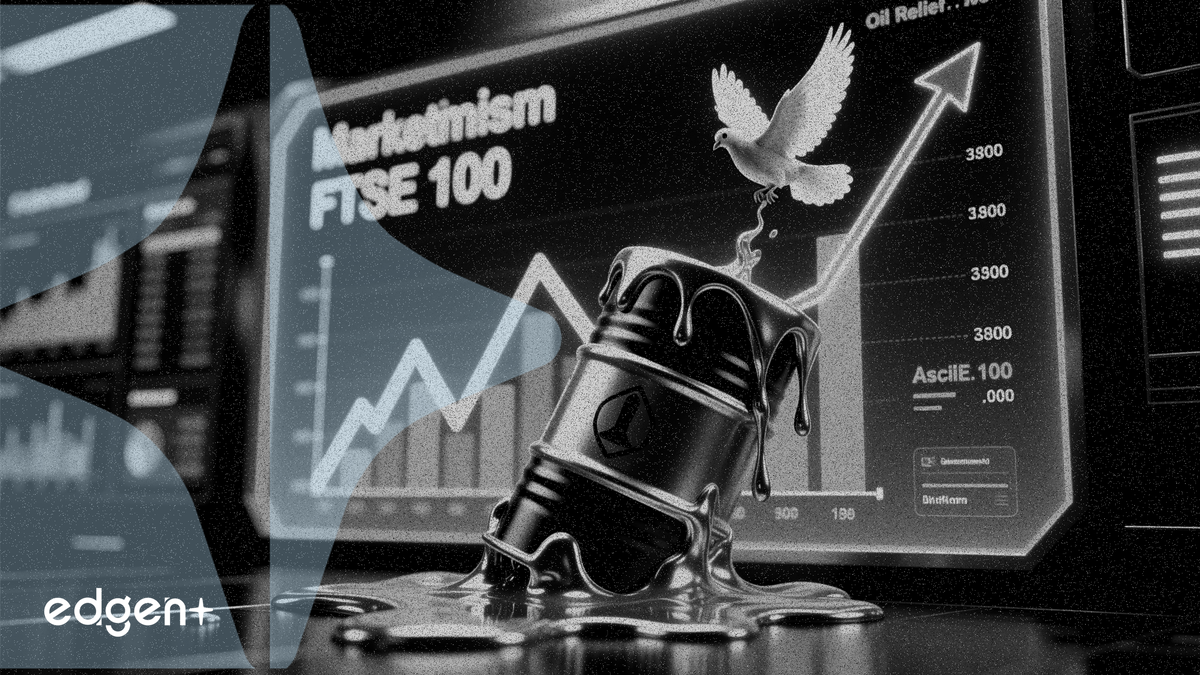
London-listed stocks surged on May 6 after signs of a potential U.S.-Iran agreement lowered geopolitical tensions and sent oil prices tumbling, with the benchmark FTSE 100 index climbing 2.4 percent. The move was triggered by growing investor optimism that a diplomatic resolution could end months of conflict in the Gulf region.
The market's optimism was fueled by a social media post from former President Donald Trump, who said "great progress" had been made towards a "complete and final agreement" with Iranian representatives. The statement coincided with the U.S. pausing its "Project Freedom" naval escort operation in the Strait of Hormuz at the request of Pakistani mediators.
The FTSE 100's rally was mirrored by the midcap FTSE 250 index, which rose 2.6 percent to its highest in two weeks. The improved sentiment was also reflected in prediction markets, where the probability of an Israel-Iran Permanent Peace Deal by June 30, 2026, rose to 12 percent, according to market data.
A potential U.S.-Iran deal could significantly reduce the risk of a wider conflict, which has disrupted global trade through a naval blockade of Iranian ports costing an estimated $500 million daily. For investors, a sustained de-escalation would likely lead to lower oil prices, easing global inflationary pressures and providing a tailwind for equities.
Diplomatic Thaw Follows Tense Standoff
The positive market reaction follows a period of high tension, including a fragile ceasefire and ongoing low-level military exchanges in the Strait of Hormuz. The U.S. has maintained a naval blockade on Iranian ports, while Iran has retaliated with its own blockade using mines and drones.
Just days before the apparent diplomatic progress, Iranian President Masoud Pezeshkian had called U.S. demands for unconditional surrender “impossible and unattainable,” showing the significant ground that negotiators have had to cover. The current talks, led by Pakistan, appear to be the most promising diplomatic effort yet to resolve a conflict that has seen direct military exchanges and persistent cross-border attacks between Israel and Hezbollah in Lebanon.
Oil Prices and Market Bets
The drop in oil prices was the most direct financial consequence of the deal hopes, unwinding a risk premium that had built up during the conflict. The U.S. Treasury had recently sanctioned several Iranian foreign currency exchange houses to restrict oil revenue flowing to China, a move that was consistent with upward pressure on WTI crude prices. Wednesday's reversal suggests traders are now betting on a reopening of the critical Strait of Hormuz, which handles over 20 percent of global oil trade.
This article is for informational purposes only and does not constitute investment advice.