
Top trade officials from the U.S. and China met in Suzhou to affirm commitments from the recent presidential summit, seeking to stabilize economic ties amid a shifting geopolitical landscape.
Top trade officials from the U.S. and China met in Suzhou to affirm commitments from the recent presidential summit, seeking to stabilize economic ties amid a shifting geopolitical landscape.
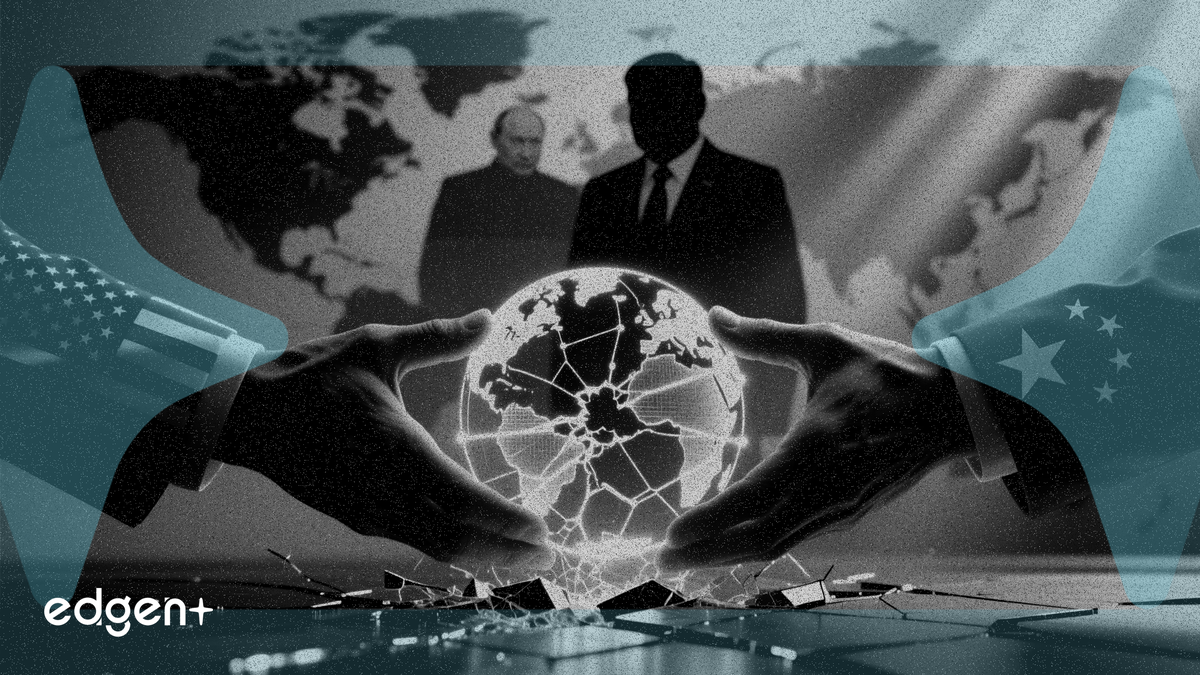
U.S. and Chinese trade representatives met on May 21 to stabilize deeply intertwined economic relations, just days after a summit between Vladimir Putin and Xi Jinping produced a 10,000-word declaration of their deepening strategic alignment against Washington.
"The driving force behind economic cooperation is Russian-Chinese collaboration in the energy sector," Putin told journalists after the meeting, highlighting a partnership that saw bilateral trade exceed $200 billion for three consecutive years.
While the U.S.-China meeting in Suzhou focused on implementing existing consensus from the recent presidential summit, the Russia-China meeting extended a 2001 friendship treaty and pledged new cooperation on everything from artificial intelligence to joint Pacific military patrols, with Russia explicitly backing Beijing’s stance on Taiwan.
The flurry of diplomacy underscores the high stakes for global markets, as Beijing attempts to balance its crucial trade relationship with the U.S. against a "no-limits" partnership with Moscow that provides energy security and a bulwark against Western pressure.
The meeting between Commerce Minister Wang Wentao and U.S. Deputy Trade Representative Switzer was framed by both sides as a constructive effort to implement leadership consensus. In contrast, the Putin-Xi summit was a projection of growing strategic depth. The nearly 10,000-word joint statement from Beijing was significantly longer and more explicit in its geopolitical aims than a similar document in 2021.
This partnership has a firm economic foundation. Bilateral trade between Russia and China has surpassed $200 billion for three straight years, with Chinese manufacturers selling approximately $110 billion in goods to Russia last year, filling the void left by Western firms. However, for all the expansive language, Russian President Vladimir Putin left Beijing without a finalized deal on the Power of Siberia 2 pipeline, a key project to boost Moscow's gas revenues.
China's diplomatic balancing act is heavily influenced by its energy needs. The recent Iran war and disruptions in the Strait of Hormuz, through which China imports more than 40 percent of its oil, have increased the appeal of secure, overland energy supplies from Russia and Central Asia. "China can no longer safely rely on energy flows from the Gulf," said Christopher Weafer, CEO of Macro Advisory.
This reality has somewhat improved Moscow's bargaining position, though analysts maintain it remains an unequal partnership favoring Beijing. For Chinese leaders, who are preparing for potential future confrontation with the U.S. over Taiwan, Russian energy pipelines are seen as a safer long-term option, reducing vulnerability to maritime chokepoints.
The talks in Suzhou represent a positive signal for de-escalation. However, the lack of new, concrete agreements from the U.S.-China meeting means market uncertainty persists for sectors heavily reliant on stable trade, including manufacturing, technology, and agriculture. The underlying geopolitical currents, particularly the strengthening Sino-Russian axis, suggest that stabilizing economic ties will remain a complex and ongoing challenge.
This article is for informational purposes only and does not constitute investment advice.
