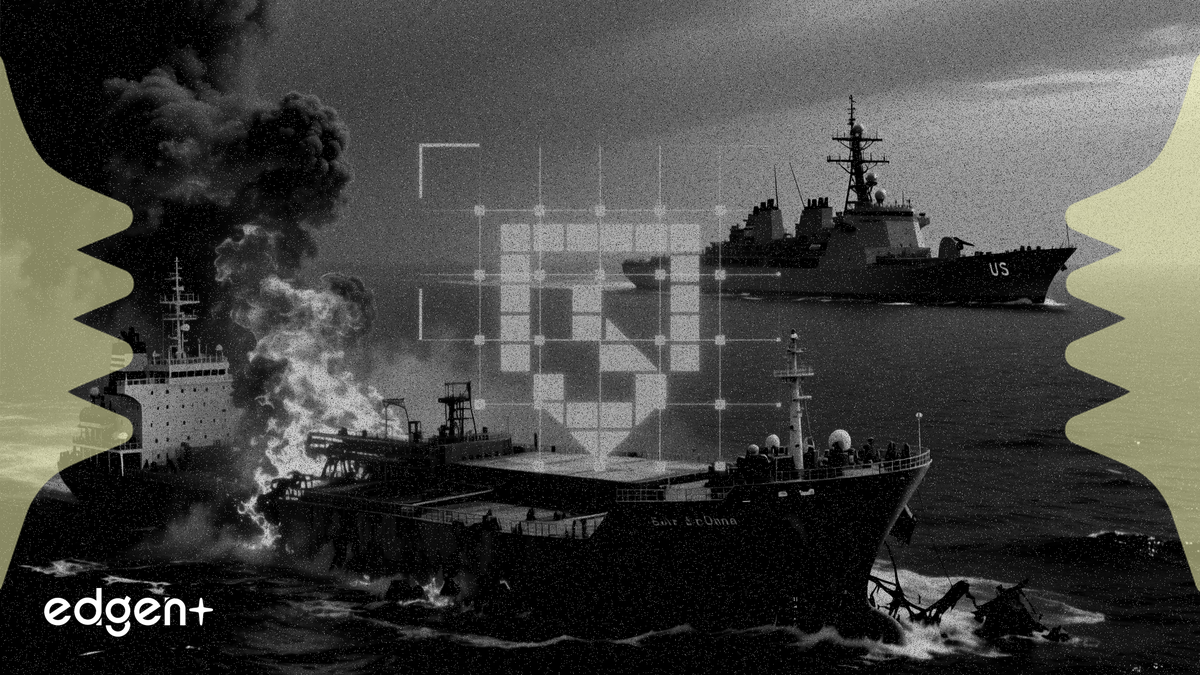
The U.S. military disabled two Iranian oil tankers in the Gulf of Oman on Wednesday, sharply escalating a naval blockade intended to cut off Tehran’s energy exports and heightening risks for global crude supplies.
U.S. Central Command said in a statement that F/A-18 Super Hornet jets from the USS George H.W. Bush aircraft carrier fired precision-guided munitions to disable the empty vessels, identified as the “Sea Star III” and “Sevda,” preventing them from reaching an Iranian port.
The move comes amid a wider U.S. blockade of the Strait of Hormuz that has turned around 52 vessels, according to CENTCOM. While U.S. officials have cited ongoing talks for a potential deal, the direct military action against Iranian-flagged ships marks a significant increase in enforcement. The two tankers were targeted after attempting to violate the blockade measures.
With approximately 21% of global petroleum liquids consumption passing through the Strait of Hormuz, the direct military engagement raises the specter of a wider conflict that could disrupt supply chains and trigger a surge in oil prices. The heightened geopolitical risk may also spur a flight to safety in broader markets, benefiting assets like gold and the U.S. dollar as investors weigh the potential for further escalation.
This article is for informational purposes only and does not constitute investment advice.