
The most severe energy supply disruption in history is creating clear geopolitical winners and losers, with the US and Israel positioned to capitalize on a reordering of global trade.
The most severe energy supply disruption in history is creating clear geopolitical winners and losers, with the US and Israel positioned to capitalize on a reordering of global trade.
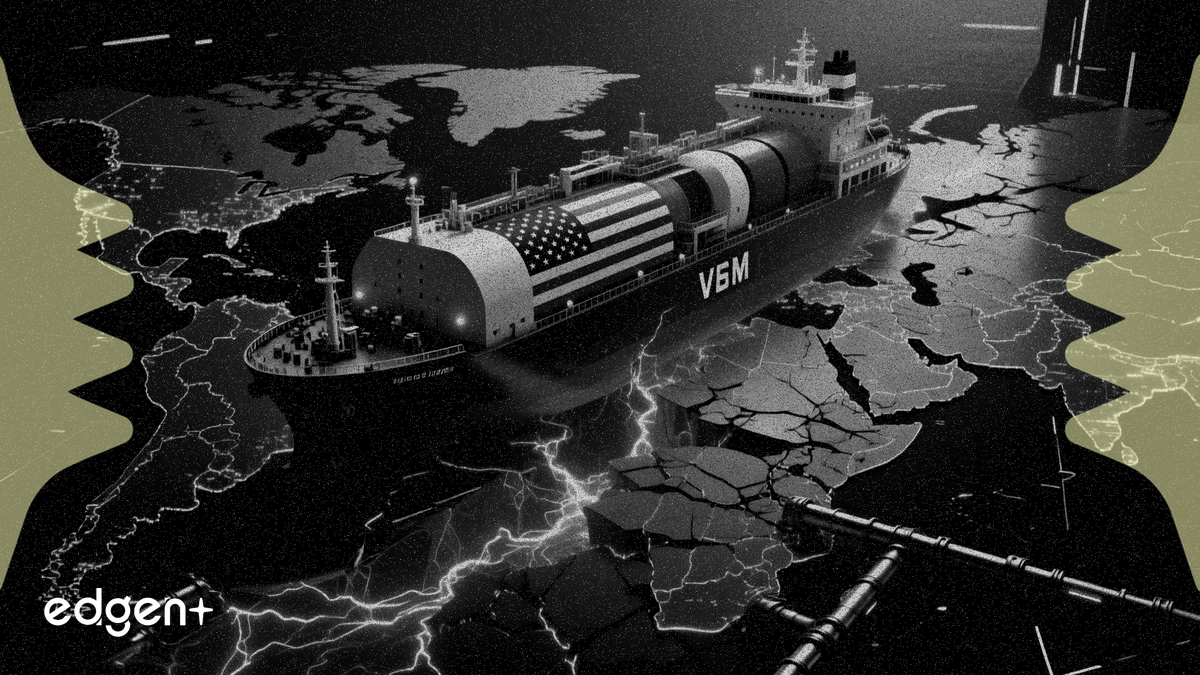
(P1) The de facto closure of the Strait of Hormuz, which has halted nearly 25 percent of the world’s seaborne oil, is cementing America’s role as a key energy supplier while advancing Israel’s ambition to become a vital trade corridor. The disruption has sent Brent crude and European gas prices to record highs, threatening to push many energy-dependent nations into technical recessions by late 2026.
(P2) "This isn't just a temporary supply shock; it's a permanent realignment of global energy flows," said Najm Al-Din, a geopolitical analyst, in a recent blog post. "The longer the strait remains closed, the more leverage the U.S. gains over allies and adversaries alike, while corridors that bypass these chokepoints become existentially important."
(P3) The blockage has stopped a quarter of global seaborne oil and a fifth of its liquefied natural gas (LNG) trade, while also halting a third of the world's fertilizer components. In response, U.S. LNG exports surged to 11.7 million metric tons in March 2026, with Europe absorbing 64 percent of that volume. To consolidate its market share, the U.S. is set to add 3.5 billion cubic feet of daily LNG capacity by the end of the year.
(P4) With the International Monetary Fund downgrading its global growth forecast, the crisis threatens to trigger worldwide stagflation. The primary risk is a long-term blockade that not only inflates energy and food prices but also allows strategic actors to lock in new trade routes and supply contracts, altering the geopolitical landscape for decades.
A primary beneficiary of the Hormuz disruption is the United States, which is leveraging the crisis to contain China and establish itself as the energy supplier of last resort. A naval blockade directly targets Beijing's main vulnerability: its dependence on seaborne energy, with roughly half its crude and a third of its LNG typically passing through the strait. The resulting energy inflation slows China's manufacturing-heavy economy, aiding the Trump administration's goal of decoupling supply chains.
Beyond geopolitics, the economic incentives are clear. As Middle Eastern supplies falter, U.S. LNG sellers are securing massive profits and using the supply shock to lock in long-term contracts with European and Asian buyers. This strategy aims to ensure that the nation's expanding export capacity remains fully utilized for years, even as Europe pivots to renewables. To further seize market share, the administration may tap the Strategic Petroleum Reserve and anchor Canadian heavy crude to U.S. facilities, bypassing global chokepoints.
The Hormuz crisis has also created an urgent need to bypass Iranian-controlled waterways, breathing new life into Israel's vision for the India-Middle East-Europe Economic Corridor (IMEC). This multi-modal network would transform Israel into a strategic hub connecting the Indian Ocean to the Mediterranean, directly challenging Egypt’s Suez Canal monopoly and sidelining Iran.
A functional Eilat-Ashkelon energy pipeline is central to this plan, which would reroute trade through Israeli ports and turn the nation into a key node in the global energy system. Framed as a competitive alternative to China’s Belt and Road Initiative, IMEC has strong backing from the U.S., which seeks to prevent nations from becoming solely dependent on Chinese-built infrastructure. The ongoing disruption provides the perfect catalyst to accelerate investment and diplomatic efforts to make the corridor a reality.
This article is for informational purposes only and does not constitute investment advice.