
Conflicting reports from Washington and Tehran emerge over a high-stakes US rescue mission in western Iran, with the US claiming success while Iran asserts it repelled the operation and downed multiple aircraft.
Conflicting reports from Washington and Tehran emerge over a high-stakes US rescue mission in western Iran, with the US claiming success while Iran asserts it repelled the operation and downed multiple aircraft.
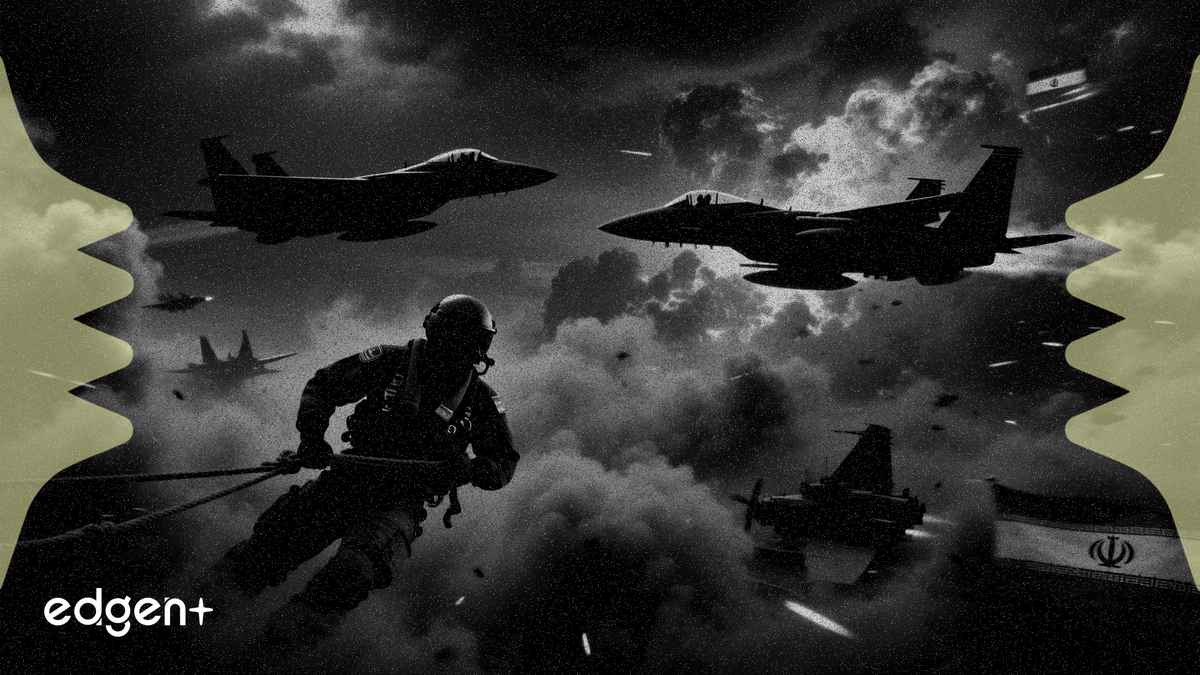
The US military successfully rescued a second downed F-15 pilot after more than 24 hours in the Zagros mountains, President Trump announced, an operation that escalated kinetic engagements with Iranian forces and resulted in the loss of multiple US aircraft.
"The U.S. Military sent dozens of aircraft, armed with the most lethal weapons in the World, to retrieve him," President Trump said on Truth Social, calling it "one of the most daring Search and Rescue Operations in U.S. History."
The operation involved the loss of an A-10 attack jet and the intentional destruction of two other US transport planes that malfunctioned, according to US officials. Iran claimed to have shot down two Black Hawk helicopters and a C-130 transport plane, calling the American mission a "failure," a claim not confirmed by the U.S.
The incident threatens to prolong a six-week-old conflict that has already killed 13 US service members and over 3,000 Iranians, adding pressure to oil markets as the Zagros region holds approximately 35% of Iran's oil and gas reserves. The last major US combat search and rescue operation of this scale was the 1993 "Black Hawk Down" incident in Mogadishu.
The rescued pilot, a weapons officer with the rank of colonel, reportedly evaded capture for over a day in the treacherous Zagros mountain range in western Iran, a region historically known as the "Persian Gate" for its difficult terrain. According to the New York Times, the pilot was armed with only a pistol before special operations forces extracted him.
While the White House lauded the mission's success and proof of "overwhelming Air Dominance," the operation was not without losses. In addition to the downed F-15E, an A-10 Thunderbolt II pilot was forced to eject over Kuwait after being hit during the rescue. Two other US helicopters took fire but returned to base.
Tehran has presented a starkly different narrative. Iranian state media claimed its forces successfully thwarted the rescue attempt, downing several US aircraft in the process. These reports, which could not be independently verified, specifically mentioned shooting down a C-130 transport plane and two helicopters in Isfahan province.
The high-profile rescue and associated combat come as the war with Iran, which began February 28 with a joint US-Israeli strike that killed Supreme Leader Ayatollah Ali Khamenei, enters its sixth week. The conflict has seen the US fly more than 13,000 combat sorties and strike over 12,300 targets.
President Trump stated on April 1 that the US was "on track to complete all of America's military objectives shortly," but this recent escalation suggests continued significant military operations. The concentration of the rescue mission in the Zagros mountains, which holds a significant portion of Iran's energy reserves, raises the risk of supply disruptions that could impact global oil prices.
Thirteen American service members have been confirmed dead in the war to date, with more than 300 wounded. A US-based human rights group estimates Iranian fatalities have surpassed 3,000.
This article is for informational purposes only and does not constitute investment advice.