
A US-sanctioned supertanker capable of carrying 2 million barrels of oil has entered Iranian waters, raising the stakes for global energy markets in the critical Strait of Hormuz.
A US-sanctioned supertanker capable of carrying 2 million barrels of oil has entered Iranian waters, raising the stakes for global energy markets in the critical Strait of Hormuz.
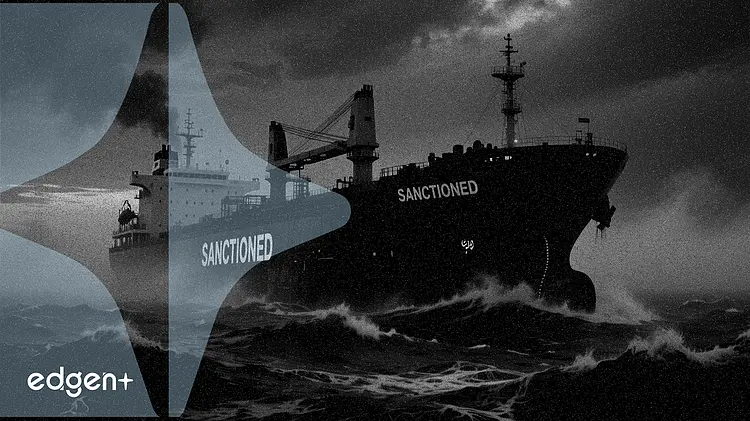
A very large crude carrier previously sanctioned by the US passed through the Strait of Hormuz on April 15, entering Iranian territory and signaling a direct challenge to American restrictions on Tehran's oil trade. The move threatens to increase tensions in a region vital to global energy security.
"This is a calculated move by Iran to test the enforcement of sanctions, creating significant uncertainty for oil transit," said an analyst at a maritime security consulting firm. "Any disruption in the Strait of Hormuz, however minor, has an immediate impact on prices."
The vessel, a very large crude carrier (VLCC) with a capacity for approximately 2 million barrels of crude, was observed with its location transponders active, a deviation from the common practice of "going dark" to evade detection. It was accompanied by a bulk carrier reportedly carrying food supplies. The passage through the chokepoint, which handles about a fifth of the world's oil supply, occurred without any reported interference from US or allied naval forces.
The event injects fresh geopolitical risk into the oil market, which remains highly sensitive to potential supply disruptions. For oil traders, this raises the question of whether the US will respond, potentially escalating naval tensions in a waterway vital for global economic stability. The market is now watching for any signs of increased military presence or new maritime advisories from the US Fifth Fleet, which patrols the region.
The appearance of a sanctioned VLCC in Iranian waters is a notable development in the ongoing economic standoff between Washington and Tehran. US sanctions have long targeted Iran's oil exports, a primary source of revenue for the country. By successfully navigating a sanctioned vessel through the world's most important oil chokepoint, Iran is demonstrating its ability to circumvent these measures. The move could embolden other actors to test the limits of sanctions enforcement, potentially leading to a gradual increase in illicit oil flows that operate outside of mainstream market channels.
The Strait of Hormuz is a narrow channel, at points only 21 miles wide, between the Persian Gulf and the Gulf of Oman. Its security is paramount for the stability of global energy markets. Approximately 21 million barrels of oil per day, or about 21% of global petroleum liquids consumption, passed through the strait in 2023.
This is not the first time tensions have flared in this critical waterway. In 2019, a series of attacks on tankers and the seizure of a British-flagged vessel by Iran sent a shockwave through markets, causing the price of Brent crude to jump by as much as 4% in a single day. The latest event serves as a stark reminder of the potential for conflict to erupt with little warning, directly threatening a significant portion of the world's oil supply. The lack of an immediate US naval response will be closely analyzed by market participants and regional powers for signals of shifting US policy or enforcement posture.
The event's impact is primarily bullish for oil prices, as outlined by the initial market assessment. Heightened geopolitical risk premiums are likely to be priced into near-term contracts for Brent crude, the international benchmark most sensitive to Middle Eastern developments. This comes at a time when the oil market is already contending with a delicate balance. Supply is constrained by ongoing OPEC+ production cuts, while demand forecasts remain uncertain amid mixed economic signals from China and the West. The addition of renewed tension in the Persian Gulf adds another layer of complexity and a clear upside risk to prices.
This article is for informational purposes only and does not constitute investment advice.