
Washington's latest sanctions package targets Iran's financial lifelines across China, Hong Kong and Europe, drawing a threat of retaliation from Beijing.
Washington's latest sanctions package targets Iran's financial lifelines across China, Hong Kong and Europe, drawing a threat of retaliation from Beijing.
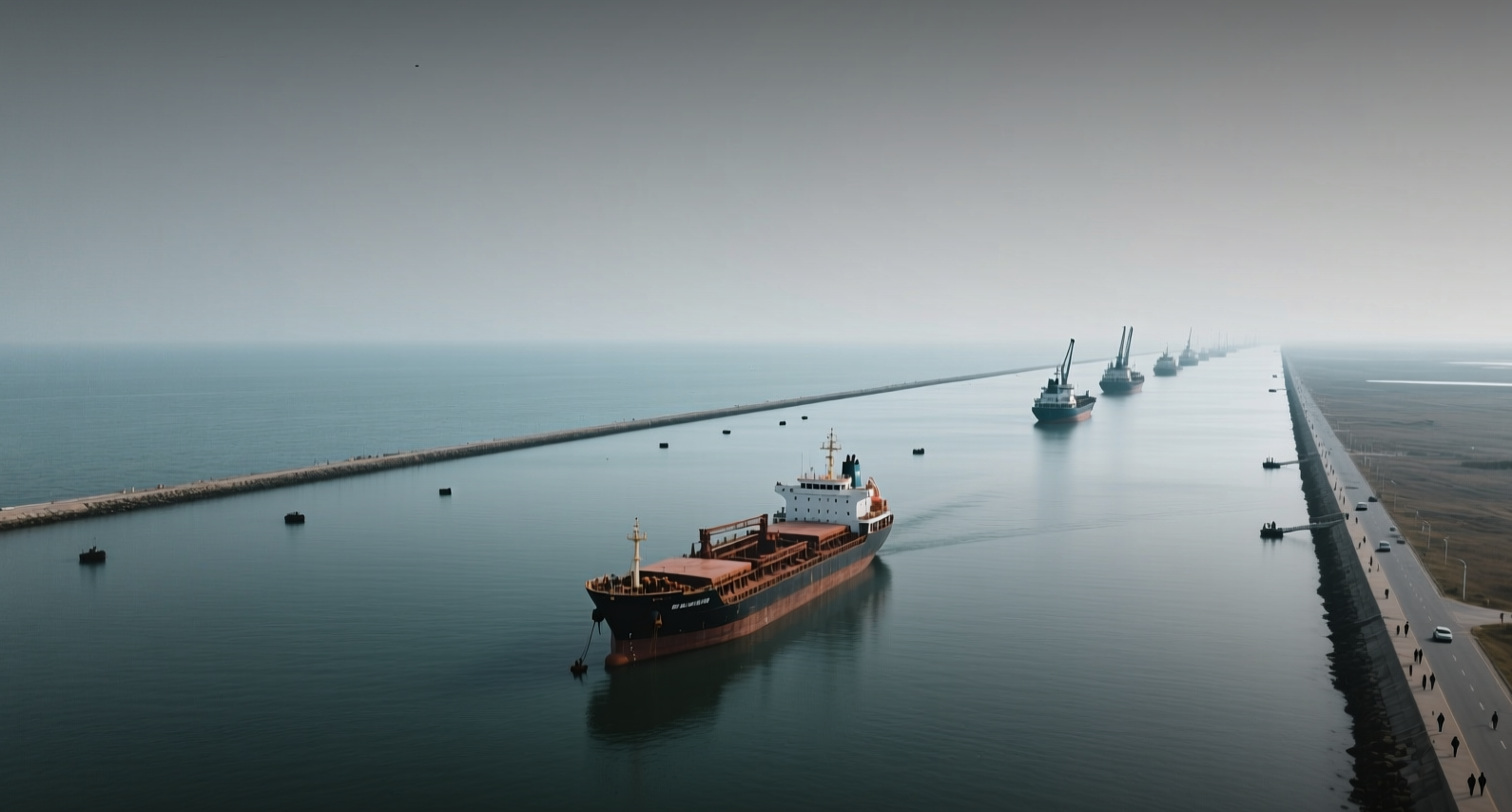
The US Treasury sanctioned nearly 60 Iran-linked entities, people and vessels Monday, targeting networks across China, Hong Kong, the UAE and Europe, while threatening secondary sanctions against any country continuing business with Tehran.
"We are launching an economic onslaught against Iran's financial connections around the globe. Our objective is to sever every economic lifeline that sustains this tyrannical regime until Tehran stands alone," Scott Bessent, US Treasury Secretary, said at a press conference in Washington.
The sanctions hit broker companies and shadow-fleet vessels across the UAE, Hong Kong, China, Singapore, Switzerland and Europe, and targeted the digital assets, technology, gold, aviation and shipping sectors for potential secondary sanctions. The Treasury also suspended general licenses that had allowed some remittance payments to Iran.
The escalation comes as the US war with Iran approaches its six-month mark, with the Strait of Hormuz still blocked and energy prices elevated. China, Iran's second-largest trading partner in 2025, has threatened retaliation, raising the risk of a broader economic confrontation between Washington and Beijing.
China's response came swiftly. Foreign Ministry spokesman Lin Jian said Beijing would "take all necessary measures to firmly safeguard its own rights and interests" and that cooperation with Iran "should not be interfered with or disrupted." Beijing has consistently advocated for a ceasefire and insisted that unilateral sanctions will not resolve the conflict.
The sanctions package notably avoided targeting major Chinese financial institutions despite including Hong Kong-based entities, suggesting Washington is seeking to raise the cost of doing business with Tehran without triggering a full-scale economic confrontation with Beijing. China buys the bulk of Iran's oil exports and was its second-largest trading partner in 2025, behind the United Arab Emirates, which has said it cut all economic ties with Tehran after accusing it of firing ballistic missiles at its territory.
"Economic D-Day" and the secondary sanctions threat
Bessent described the measures as an "economic D-Day," saying it's "no longer acceptable to operate in the gray spaces" of the conflict. Asked whether Chinese banks would be targeted, he said "no one is above the reach of US sanctions."
The Treasury has mapped the networks, facilitators and financial channels that Iran uses to smuggle oil and evade sanctions, and said Washington would work with partners to target any source of Iran's "illicit revenue." Iran has weathered sanctions for decades, using complex international financial networks to evade restrictions. Before the war, it continued to export millions of barrels of oil, mostly to China.
The secondary sanctions threat extends beyond oil. The Treasury issued determinations against five sectors — digital assets, technology, gold, aviation and shipping — that the Iranian government is using to prop up its economy. This broadens the scope of potential enforcement beyond traditional banking channels into areas where Chinese and European companies have significant exposure.
Market implications
The sanctions escalation adds to upward pressure on energy prices, with the Strait of Hormuz — which handles roughly 21 percent of global oil trade — remaining blocked. President Donald Trump said Iran is "completely collapsing" economically, while Treasury officials framed the campaign as Iran's "economic D-Day."
The last time Washington imposed sweeping secondary sanctions on Iran-linked networks was in 2018, when the Trump administration reimposed sanctions after withdrawing from the JCPOA. Iranian oil exports fell by roughly 1.5 million barrels per day within a year, according to data from the International Energy Agency.
For China, the stakes are significant. Beijing has advocated for a ceasefire and insisted US sanctions will not resolve the conflict. The threat of secondary sanctions could disrupt trade flows and create uncertainty across commodity and energy markets, potentially pressuring Chinese equities and companies with Iran-related exposure. Shipping and vessel companies with exposure to Iranian crude routes face particular scrutiny as the Treasury expands its shadow-fleet targeting. The suspension of remittance licenses also adds friction to financial flows between Iran and its trading partners, potentially accelerating the economic pressure campaign that Trump has described as Iran's "economic D-Day."
This article is for informational purposes only and does not constitute investment advice.
