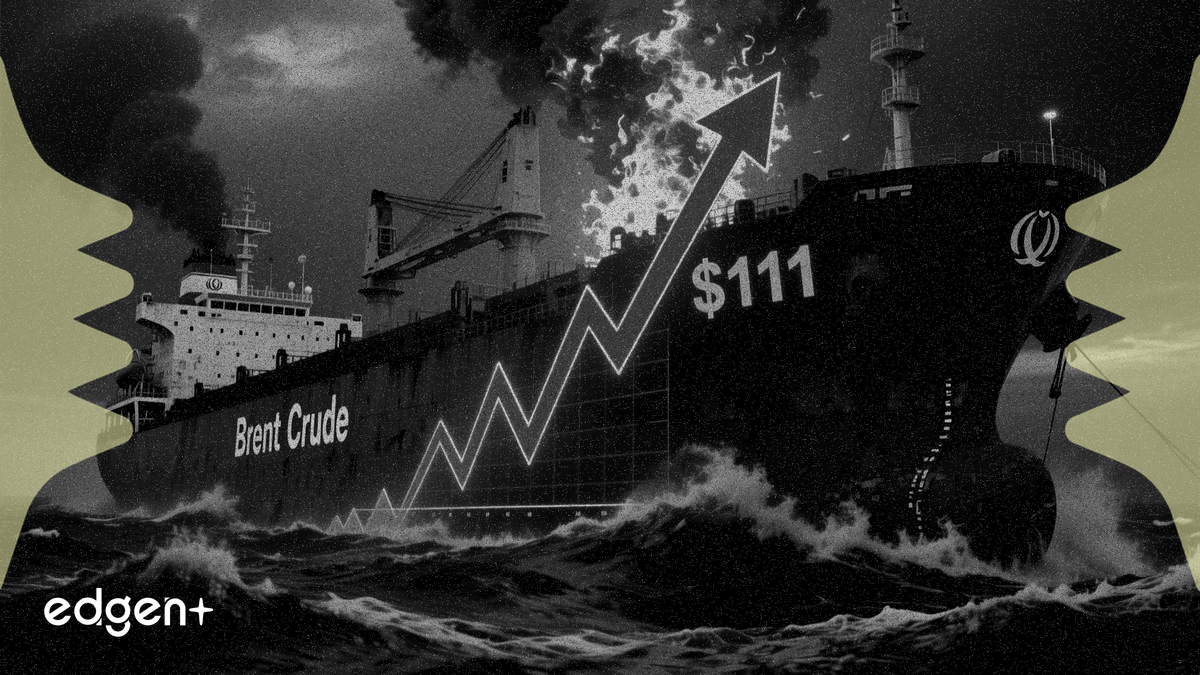
The United States seized an Iranian-linked oil tanker in the Indian Ocean, pushing global oil prices up by 2 percent as the move intensifies geopolitical friction in the Middle East. The seizure comes just a day after a drone strike on a United Arab Emirates nuclear facility, an attack the UAE has blamed on Iran or its proxies.
The UAE called the drone attack near its Barakah nuclear plant a "dangerous escalation," according to a report from Investing.com. While the strike caused a fire, no direct damage to the plant was reported. The event underscores the fragile security situation that has kept energy markets on edge for weeks.
In response to the rising tensions, Brent crude futures for July delivery jumped 2 percent to $111.45 a barrel, a two-week high, while West Texas Intermediate crude futures climbed 2.2 percent to $103.26 a barrel. The seized tanker, the Skywave, was reportedly carrying more than one million barrels of Iranian crude loaded at Kharg Island in February, according to ship-tracking data cited by The Wall Street Journal.
The seizure threatens to unravel a precarious ceasefire that U.S. President Donald Trump recently said was on “massive life support.” With Iran’s blockade of the Strait of Hormuz already choking off roughly 20 percent of the world’s oil supply, any further escalation could trigger a more severe energy shock and increase volatility across global markets.
The Skywave tanker had been sanctioned by the U.S. in March for its role in transporting Iranian oil, a key source of revenue for Tehran. The interdiction represents a significant step-up in U.S. enforcement actions, moving beyond the Middle East to the wider Indian Ocean. It follows reports that the U.S. military was preparing to board Iran-linked vessels in international waters.
President Trump has maintained a strategy of economic pressure on Iran, though he recently stated that a planned military attack was put on hold following a request from Gulf leaders to allow for negotiations. However, attempts at a peace deal have so far failed to gain traction, leaving the region’s critical shipping lanes vulnerable.
Adding to global supply concerns, a U.S. sanctions waiver on Russian seaborne oil lapsed over the weekend, forcing major importers like India to find alternative crude sources. The ongoing war in Ukraine, where Ukrainian drones have repeatedly targeted Russian oil infrastructure, continues to add another layer of uncertainty to the global energy outlook.
This article is for informational purposes only and does not constitute investment advice.