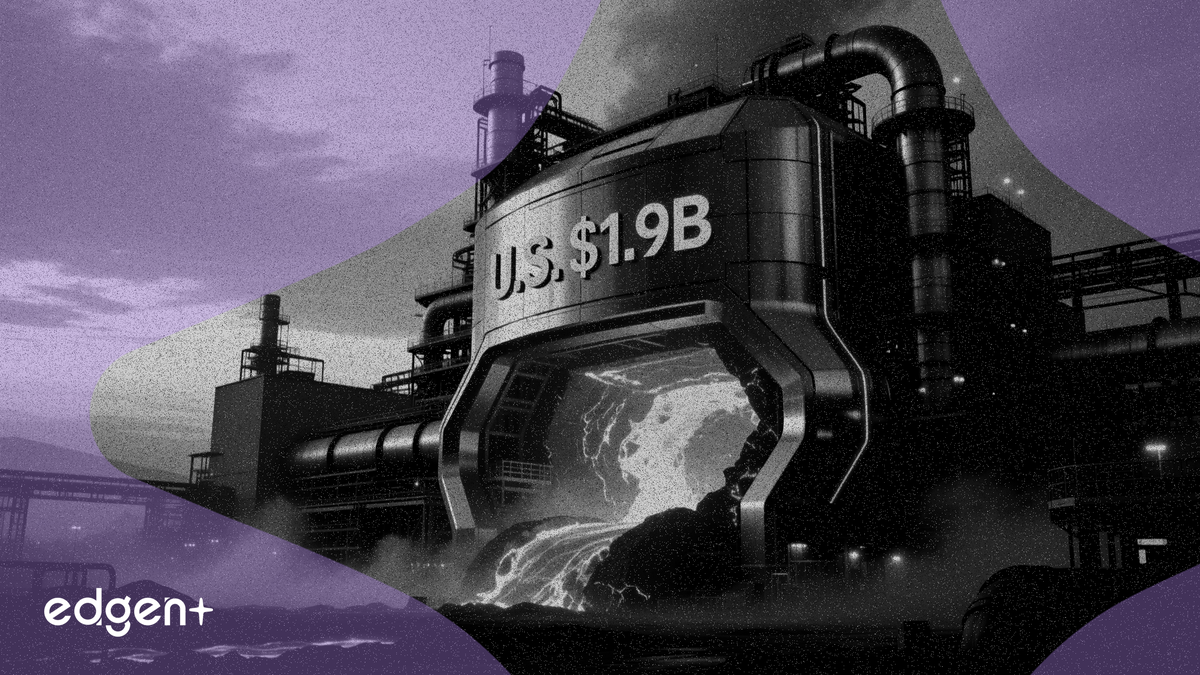
United States Steel Corp. will invest $1.9 billion to construct a direct reduced iron (DRI) facility at its Big River Steel Works in Arkansas, the first of its kind in the US, to modernize its steelmaking operations. The move signals a significant commitment to next-generation steelmaking technology and strengthens the company's domestic supply chain.
"From iron ore in Minnesota to steel production in Arkansas, this $1.9 billion investment strengthens our ability to create steel that is truly mined, melted, made in America, from start to finish," U.S. Steel President and Chief Executive Officer David B. Burritt, said in a statement. "Our partnership with Nippon Steel helped accelerate this investment years sooner than would have otherwise been possible."
The new facility will process direct reduced-grade pellets from U.S. Steel's Keetac plant in Minnesota. This vertical integration is expected to create a more efficient and controlled supply chain, eliminating the need to transport DRI to the Big River Steel Works, which houses four electric arc furnaces (EAFs). The project is expected to create approximately 200 full-time jobs at the plant and 35 contractor roles, in addition to 2,000 temporary construction jobs.
This move positions U.S. Steel to enhance its competitive advantage in producing more environmentally friendly steel, a growing demand in the automotive and construction industries. The investment contrasts with competitors like Cleveland-Cliffs, which recently pivoted away from a federally funded hydrogen-based decarbonization project back toward traditional coal-fired blast furnace technology.
Vertical Integration from Mine to Mill
The investment deepens U.S. Steel's vertical integration strategy, creating a direct link between its Minnesota Ore Operations and its most advanced steelmaking facility. By producing the EAF feedstock on-site at Big River Steel, the company secures a competitive sourcing advantage and reduces logistical costs and complexities. This follows a 2022 investment to boost direct reduced-grade pellet capabilities at its Keetac plant.
The scale of the investment dwarfs other recent projects in the American steel sector. For comparison, Adrian Steel recently announced a $43.4 million expansion in Michigan, its largest since 1953, which is expected to add 40 jobs. The U.S. Steel project represents a capital injection more than 40 times larger, highlighting a major strategic pivot.
Steel Industry Navigates Decarbonization
The adoption of DRI technology is a key pathway for the steel industry to reduce its carbon footprint. DRI production, when paired with EAFs, generates significantly lower emissions than traditional integrated mills that rely on coal-fired blast furnaces. U.S. Steel has committed to reaching net-zero greenhouse gas emissions by 2050.
The industry's path to decarbonization is not uniform. While U.S. Steel forges ahead with its DRI plant, Cleveland-Cliffs has opted to refurbish a 1950s-era blast furnace at its Middletown works, according to a recent air permit application. The company had previously been awarded over $500 million in federal funds to convert the plant to use hydrogen, but has since stated it will continue to use coal and natural gas, citing a lack of hydrogen availability.
This article is for informational purposes only and does not constitute investment advice.